Inner Silence
Week 1 – Promise of the Resurrection is NOW!
Week 2 – The Kingdom of God is Within You!
Week 3 – You Must Be Born Again of the Spirit!
Week 4 – Awakening the Inner Spirit
Week 5 – The Breath of Life
Week 6 – The Heart Awakens
Week 7 – Descend of the Spirit
Week 8 – The Fruits of the Spirit
Week 9 – Freedom from Fear
Week 10 – Inner Silence
Week 11 – Living in Divine Presence
Week 12 – Joy of the Spirit
Week 13 – Overcoming the Ego
Week 14 – Purification of the Mind
Week 15 – The Light Within
Week 16 – Union with the Divine
Week 17 – Living as a New Creation
Week 18 – Spiritual Community
Week 19 – Serving Humanity
Week 20 – Awakening Others
Week 21 – Living the Resurrection
Summary
Week 10 teaches that inner silence is discovered naturally in the interval between thoughts. The mind is not forced into nonexistence; attention ceases to be ruled by its habitual commentary. The Christian content of this stillness is not self-absorption but receptivity to God. Scripture portrays stillness as an occasion for knowing God, receiving peace, and discerning the Spirit’s work; the formation interprets this experience as the Spirit’s direct, subtle guidance. The decisive test is ethical: authentic silence returns the seeker to the world more peaceful, lucid, humble, and ready to love.
| Week 10 theme | Christian theological meaning | Discernment question |
|---|---|---|
| Stillness beyond thought | Alert, receptive attention rather than repression or dissociation | Does the practice increase clarity without denying difficult realities? |
| Inner sanctuary | A place of prayerful availability before God | Does silence lead toward communion with Christ rather than self-enclosure? |
| Guidance of the Paraclete | The Spirit teaches, recalls Christ’s words, and intercedes in weakness | Is perceived guidance consistent with truthfulness, humility, and love? |
| Peace | A gift that guards heart and mind, not the absence of all feeling | Does peace endure in ethical action and relationship? |
Table of Contents
- Week 10: The Threshold of Stillness
- Stillness Is Not Suppression
- “Be Still, and Know”: Silence Before God
- The Sound of Sheer Silence and Receptive Discernment
- The Paraclete and Prayer Beyond Words
- Thoughtless Awareness: The Formation’s Confessional Language
- What Research Can—and Cannot—Say
- Testing Silence by Its Fruit
- The Resurrection of Attention
- Practicing Inner Silence Without Escaping Life
- Conclusion: Peaceful Awareness as Life in the Spirit
- References
1. Week 10: The Threshold of Stillness
Week 10 marks a necessary transition in the formation’s account of spiritual awakening. The seeker has encountered the Spirit and now confronts a more intimate obstacle: the continual internal traffic of thought. Memories replay themselves, anxiety projects an imagined future, judgments seize on the present, and the mind repeatedly converts experience into commentary. The week does not ask the seeker to become unintelligent or indifferent. It asks whether consciousness can be freed from enslavement to this mental movement long enough to receive God without distortion. [1]
The series names this freedom Nirvichara Samadhi, translated in its presentation as “thoughtless awareness.” The experience described is not unconsciousness. It is awareness without compulsive identification with every thought. Nor is it a hostile war against the mind. The source describes natural rest in the space between thoughts: a condition of alertness joined to peace, in which the Spirit can be perceived more subtly.
2. Stillness Is Not Suppression
The language of thoughtless awareness can be misunderstood as emotional numbing or cognitive suppression. It means neither. Thoughts can remember, reason, solve problems, examine conscience, and serve love. The issue is not thought itself but attention’s domination by unexamined thought. A mind crowded by fear, resentment, comparison, and mental rehearsal may prevent the person from perceiving reality as it is and responding faithfully to God and neighbor.
| Distortion | Inner silence as Week 10 intends it |
|---|---|
| Suppressing distressing thoughts | Letting thoughts arise and pass without compulsive allegiance |
| Escaping conflict or duty | Returning to conflict and duty with less reactivity and more truthfulness |
| Treating calm as spiritual superiority | Receiving peace as grace and becoming more humble |
| Identifying silence with passivity | Becoming more attentive to God, neighbor, and moral responsibility |
| Trusting every inner impression | Testing impressions through Scripture, conscience, community, and fruit |
Silence serves restoration when it permits the person to stop defending the ego long enough to receive the Spirit’s peace and correction. It has failed if it makes the seeker less able to bear another person’s pain, fulfill commitments, receive truth, or practice love.
3. “Be Still, and Know”: Silence Before God
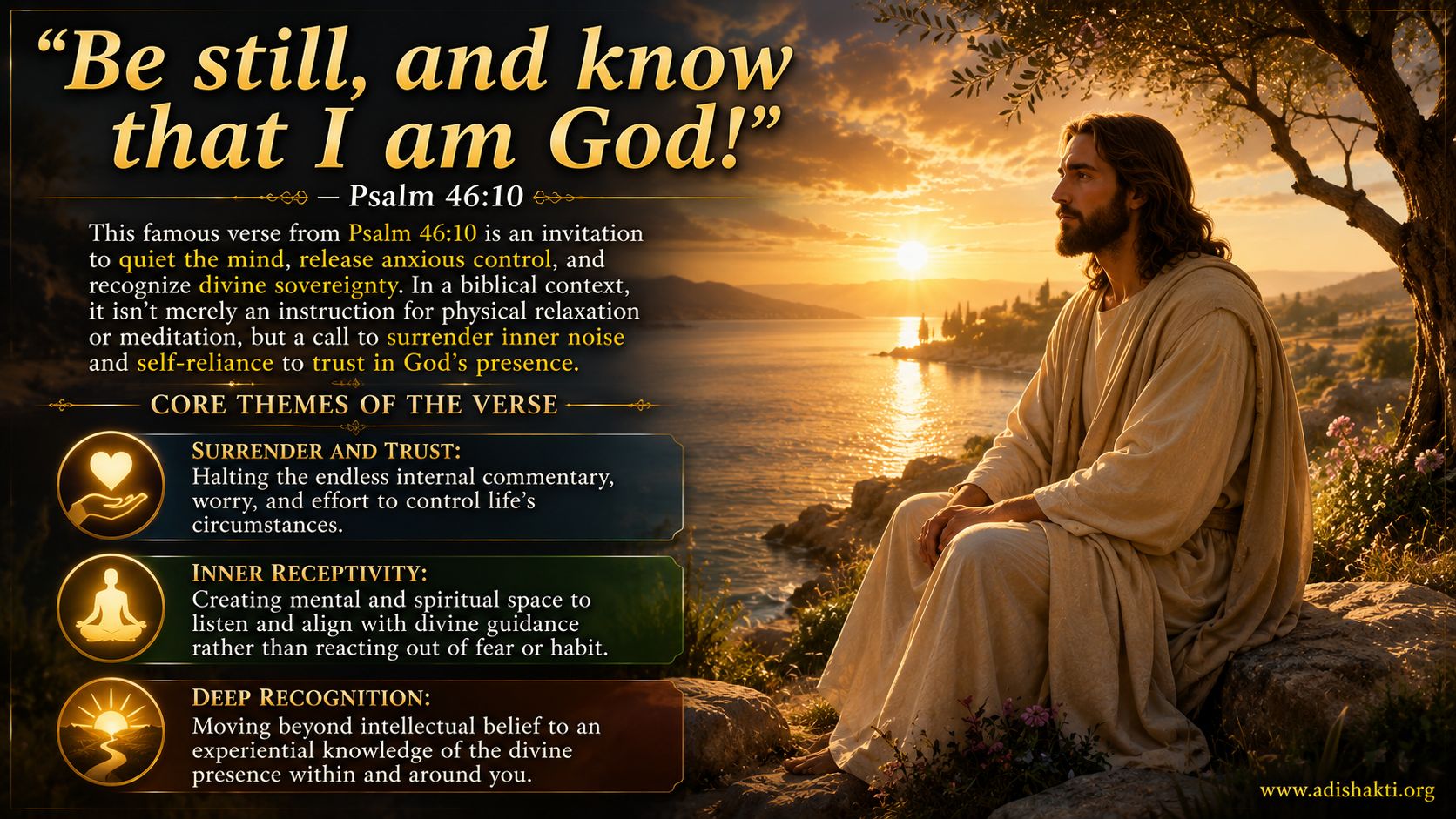
Psalm 46:10, “Be still, and know that I am God,” provides a concise biblical grammar for inner silence. The verse is not a secular instruction in relaxation. It is a summons to recognize divine sovereignty amid upheaval. Stillness is therefore theological before it is psychological: it is the cessation of anxious self-assertion before the God who remains God.
Philippians does not promise that believers will never face anxiety; it directs them to make their requests known to God, after which God’s peace guards heart and mind in Christ Jesus. [2] Peace is not denial. It is protection and reordering of the inner life in a relationship of trust. The person does not silence fear by pretending that fear has no object; the person brings fear into prayer and receives a peace that is not reducible to circumstance.
4. The Sound of Sheer Silence and Receptive Discernment
Elijah at Horeb offers a second decisive image. Elijah encounters wind, earthquake, and fire, but the Lord is not said to be in these overwhelming phenomena; afterward comes “a sound of sheer silence” (1 Kings 19:11–13). The text should not be flattened into a universal technique of divine communication. Yet it gives Week 10 a profound theological image: God’s presence cannot be reduced to external spectacle or mental noise.
The formation’s “inner sanctuary” is not an imaginary chamber into which the seeker retreats from reality. It is disciplined openness in which the demand to control, interpret, and dominate every moment begins to loosen. In that receptivity, the seeker may notice what the mind’s endless commentary eclipses: conscience, grief, gratitude, the need for forgiveness, and the quiet call to love.
5. The Paraclete and Prayer Beyond Words
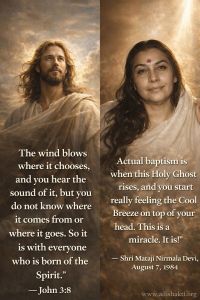
Week 10 identifies inner quiet as the place in which the Paraclete’s subtle wisdom may be perceived. In John, Jesus promises the Advocate, the Holy Spirit, who will teach and remind the disciples of all that He has said (John 14:26). In the series’ confessional interpretation, the Paraclete is rendered with feminine pronouns: She and Her. The biblical text’s crucial point remains Christ-centered: the Spirit’s guidance recalls and makes present the words of Jesus rather than authorizing private spiritual autonomy. [3] The verified internal article likewise frames the Spirit’s activity as hidden and self-effacing, reading John 3:8 through the semantic range of pneuma as wind, breath, and spirit. [8]
Romans adds a second dimension. In human weakness, the Spirit intercedes “with sighs too deep for words.” This is not a rejection of language; it is hope for prayer when language is inadequate. Week 10’s movement beyond mental chatter can be read as humble prayer: the seeker no longer imagines that God is accessible only through verbal or conceptual mastery.
6. Thoughtless Awareness: The Formation’s Confessional Language
Within the series, Nirvichara Samadhi names alert stillness in which thought no longer dominates awareness; it is associated with the awakening of Kundalini, perception of the Cool Breeze, and direct realization of the Spirit. The 21-week formation makes a specific Christian-confessional synthesis: it identifies the Paraclete with Shri Mataji Nirmala Devi and understands awakening as the embodied experience of new birth.
These are the formation’s theological claims. They must not be attributed directly to the canonical Bible, to all Christian traditions, or to neuroscience. The responsible question is practical and Christological. Does claimed thoughtless awareness make the person less captive to fear and ego? Does it deepen reverence for Christ, quiet receptivity to truth, and love of neighbor? Does it produce the fruit of the Spirit? If so, its spiritual significance can be explored without coercion. If it becomes proof of status or an excuse to dismiss others, the practice contradicts the freedom it claims to offer.
7. What Research Can—and Cannot—Say
Academic research can describe reported experience and examine associations; it cannot settle the identity of the Spirit or establish a theological interpretation. Kathleen M. Holley’s grounded-theory study of thirty-six long-term Christian contemplative-prayer practitioners describes their experience through the ministry of the Holy Spirit, spiritual formation, soul care, faith, and holistic healing. [6] This supports a modest claim about reported lived experience, not a universal clinical or theological conclusion.
A 2020 PLOS ONE study by Hernández and colleagues compared twenty-three long-term Sahaja Yoga practitioners with twenty-three matched non-meditators. Its introduction defines Nirvichara Samadhi as “mental silence” or “thoughtless awareness,” and its results report associations between long-term practice and differences in grey-matter volume. [7] The cross-sectional design and small sample mean the study cannot show that meditation caused the observed differences. It says nothing that proves the Paraclete, Resurrection, or any religious identity.
8. Testing Silence by Its Fruit
Galatians names the fruit of the Spirit as love, joy, peace, patience, kindness, generosity, faithfulness, gentleness, and self-control. [4] These are not decorative outcomes. They are the decisive criteria by which Week 10’s inner silence must be judged. A person may report unusual sensations or long periods without thought. If that person becomes cruel, proud, dishonest, impulsive, or indifferent to suffering, the experience cannot be treated as evidence of mature life in the Spirit.
This criterion prevents three evasions: emotional withdrawal mistaken for calm, fear of contradiction mistaken for peace, and passivity mistaken for spiritual attainment. The silence of the Spirit makes a person more present, not less. The seeker may therefore ask: what did this silence make possible? Was a harsh word withheld? Was an old resentment released? Did prayer become more truthful? Did another person receive better attention? These are modest but decisive signs that attention is being freed from fear.
9. The Resurrection of Attention
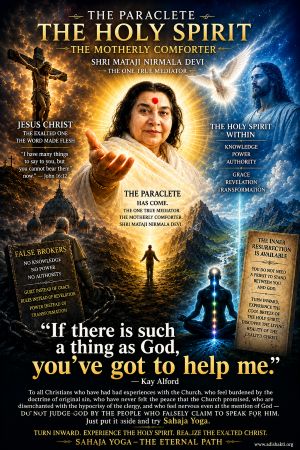
The 21-week formation understands Resurrection as an inner reality through which the seeker is born again of the Spirit before physical death. Week 10 brings this claim into the smallest unit of lived experience: the next moment of attention. When attention is governed by fear, memory, prediction, and egoic commentary, the person repeatedly inhabits inner captivity. The present is never received; it is continually overwritten.
Inner silence does not erase history or responsibility. It raises attention out of captivity to them. The seeker learns to meet the present without immediately converting it into a threat, possession, or performance. In Christian terms, this is participation in the freedom of the Spirit. The mind becomes less a fortress of the false self and more a receptive place in which Christ’s peace can be known.
10. Practicing Inner Silence Without Escaping Life
The practice of Week 10 should be simple, non-coercive, and ethically integrated. The seeker may sit quietly, bring attention gently to the present, and allow thoughts to come and go without chasing or condemning them. The purpose is not to force an inner vacancy. It is to offer the whole person to God: body, breath, conscience, memory, fear, and desire. If a thought persists, it may be acknowledged and entrusted to Christ rather than fought.
Periods of silence should be joined to Scripture, ordinary prayer, truthful self-examination, and acts of repair. Jesus withdrew to pray, yet His prayer returned Him to healing, teaching, and service (Luke 5:16). [5] Silence is not the alternative to action. It is the place from which action becomes less reactive and more obedient to love.
No person should be pressured to produce a sensation, adopt a conclusion, or treat temporary difficulty with silence as spiritual failure. Where serious distress, trauma symptoms, dissociation, mania, psychosis, or compulsive rumination are present, contemplative practice should be accompanied by appropriate pastoral and qualified clinical support. Inner silence is not a substitute for care; it is one dimension of a life ordered toward God, truth, and healing.
11. Conclusion: Peaceful Awareness as Life in the Spirit
Week 10 does not celebrate an empty mind. It describes the conversion of attention. The seeker learns that thought need not be an unquestioned ruler, that stillness can be alert rather than inert, and that peace can be received without avoiding reality. Psalm 46 directs the person to stillness before God; Elijah’s story honors the divine encounter beyond spectacle; John and Romans describe the Spirit who teaches, recalls Christ’s words, and intercedes beyond the reach of speech.
Core takeaway. Inner silence is a Christ-centered readiness in which the seeker stops serving the mind’s endless noise and becomes available to the Spirit’s peace. Its authenticity is tested not by the absence of thoughts, but by the presence of fruit: a freer attention, a truer prayer, a humbler self, and a more faithful love.
Within the 21-week formation’s confessional account, Nirvichara Samadhi, Kundalini awakening, and the Cool Breeze name the experiential grammar of this stillness. The Resurrection becomes increasingly lived—not as escape from the world, but as freedom to meet the world in the peace of God.
References
- [1] “A 21-Week Formation in Living the Resurrection Promised by Jesus.” AdiShakti.org, 2026.
- [2] “Psalm 46:10; 1 Kings 19:11–13; Philippians 4:6–7.” New Revised Standard Version Updated Edition, Bible Gateway, accessed August 18, 2026.
- [3] “John 14:26; Romans 8:26–27.” New Revised Standard Version Updated Edition, Bible Gateway, accessed August 18, 2026.
- [4] “Galatians 5:22–23.” New Revised Standard Version Updated Edition, Bible Gateway, accessed August 18, 2026.
- [5] “Luke 5:16.” New Revised Standard Version Updated Edition, Bible Gateway, accessed August 18, 2026.
- [6] Holley, Kathleen M. “Christian Contemplative Prayer: An Embodied Spirituality of Healing and Well-Being Through the Ministry of the Holy Spirit.” Journal of Spiritual Formation and Soul Care, vol. 17, no. 2, 2024, pp. 301–320. https://doi.org/10.1177/19397909241247177.
- [7] Hernández, Sergio Elías, et al. “Larger Whole Brain Grey Matter Associated with Long-Term Sahaja Yoga Meditation: A Detailed Area by Area Comparison.” PLOS ONE, vol. 15, no. 12, 2020, e0237552. https://doi.org/10.1371/journal.pone.0237552.
- [8] “The Pneumatological Activity of the Paraclete: Cool Breeze, Hidden Spirit, and the Reconciliation of Clashing Cognitive Claims.” AdiShakti.org, 2026.
💬 Interactive Chat
Access an intelligent analysis environment where you can explore texts, ask questions, and discover connections between ideas.
Open chat →