The Authenticity of Kash’s Mystical Witnessing of the Third Eye
A Focused Historical Assessment of the April 21, 1995 Flower Episode, Closed-Eye Perception, Sensory Leakage, and the Evidence Required to Establish Authenticity
Abstract
This paper reassesses Kash’s April 21, 1995 Third Eye testimony as a focused problem of information access. Its evidential core is not the general religious idea of inner vision, but the claim that Kash, while physically eyes-closed in meditation, accurately reported his father returning flowers to the altar. The case is potentially significant because the target was an ordinary external event, yet its force depends on documentary chronology, the precision of the earliest wording, the exclusion of hearing and routine inference, and the reliability of the observation that Kash’s eyes remained closed. The paper therefore distinguishes testimony, anomalous information, and the theological interpretation of Third-Eye perception rather than treating them as a single conclusion.
The Case Of The Double Vision
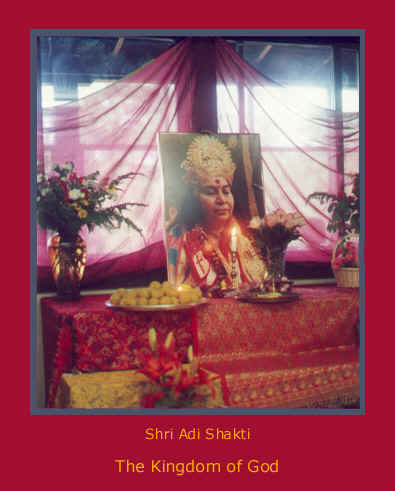
Kash can always see what is happening in the room while meditating on Earth, but
before
going into Nirvikalpa Samadhi with the Great Adi Shakti in the Sahasrara. In other words, though his physical eyes are completely closed during meditation in the external material world, the metamorphosis into the spirit being internally enables him to start seeing with the spiritual eyes from
within
himself. This is what the ancient Hindus referred to as the Third Eye. If anyone walks in or does anything else in the meditation room he or she is witnessed, even if the physical eyes are closed in deep meditation. This is because in Sahasrara the eyes of the spiritual body are still open, and the meditation only begins when Shri Mataji Nirmala Devi says so. Thus, for a few minutes Kash is able to see with his two spiritual eyes
within
, while the physical eyes are closed without.
There were numerous incidents when Kash watched activities taking place around him, together with Shri Mataji and the Spirit Beings of the Holy One. He had on many occasions witnessed his father, mother or brothers walking around him or doing other things, although he was in Samadhi. He was meditating in the macrocosm (Earth) but in the microcosm (Kingdom of God) he still had to go into meditation. Only when Shri Mataji requests meditation does he close his spiritual eyes. Then he does not see anything.
There was an incident that properly illustrates this dimension.
On April 21, 1995, at 6:55 a.m. his father took the flowers from the altar room to the balcony outside for watering. While they were watered Kash went into the room to meditate. When the flowers were brought back the father noticed that Kash was already in meditation, eyes closed in deep concentration. After he had finished about 15 minutes later his father asked if he had noticed anything. He casually replied that he (father) was seen bringing the flowers and putting them back on the altar. The Great Holy Spirit and all the Immortal Beings also witnessed this entire episode as they had yet to begin meditation. (Shri Mataji may have been waiting for the flowers to be brought back and placed on the altar before She commenced meditation.)
When asked how this was possible with his eyes closed, he explained that in the Sahasrara they were still open as all the Spirits of the Holy One Messengers of God were waiting for Shri Parameshwari Shri Nirmala Devi to initiate meditation.
Other examples have been given about how Kash observed food being placed before the altar. This happened on many occasions and he always witnessed the earthly actions of his human family with a quiet detachment.
These may be miracles to humans but for him it was just the normal Reality in the Kingdom of Khudda within . He has always maintained that this Reality is more real than the physical world he lives in. The basis for this opinion may be because of the fact that he was able to experience both worlds simultaneously, and make better judgment. It may be also be because he was able to witness the physical world from the spiritual world, and two worlds are better than one. However, from the physical dimension he was not able to perceive the spiritual dimension within . It always had to be the other way round.
Incredible as it seems but all these mythical experiences tallies with the proclamation of Shri Jesus 2,000 years ago that the Kingdom of God is as small as a mustard seed, and within all humans! Modern scientists are also proclaiming that the entire universe sprung out of something that was smaller than an atom! The Great Primordial Mother is proclaiming all this and much more. However, She cannot enlighten further because humans do not have the capacity to understand the Reality they cannot see, just as ancient Jews were unable to comprehend Shri Jesus’ Kingdom of God parable! This crippling human handicap has made us blind, in all sense of the word, to the infinite glory of our inner Reality. Our evolution demands that we progress spiritually by joining hearts, minds and souls together to lift the consciousness of His Human Family, and begin the pioneering task of creating Heaven on Earth. We have all taken birth on this Earth for a far greater purpose, that is, to fulfil His Plan.
Jagbir Singh, 1999, p. 553
Contents
Introduction · Claimed Baseline · Flower Episode · Information Asymmetry · Conditions for Anomaly · Ordinary Alternatives · Documentary Chronology · Graded Assessment · Evidence That Would Strengthen the Case · Conclusion · References
Introduction — Why This Case Is Testable
Many mystical experiences are difficult to investigate historically because their content is private, symbolic, or impossible to compare with an external fact. The Third Eye episode is different. It concerns an ordinary physical event: a father moved flowers from an altar room to a balcony and then returned them. Kash reportedly described that activity while his physical eyes had been closed in meditation. Because the target event was concrete and externally observable, the case can be examined as an information problem rather than only as a theological claim.
The proper authenticity question is therefore narrow. Did Kash genuinely report seeing the flower activity? Were his physical eyes actually closed? Could he have heard, inferred, anticipated, or otherwise learned what happened through normal channels? Was the statement recorded close enough to the event to rule out later sharpening? Only after those questions are addressed should the paper ask whether “Third Eye” perception is the best theological explanation.
The Claimed Baseline: Eyes Closed, Awareness Continuing
The source describes a recurring pattern in which Kash entered meditation with his physical eyes closed yet allegedly continued to perceive events in the room until Shri Mataji began meditation within the Sahasrara experience. In the family’s interpretation, this represented a two-stage process: the ordinary eyes were closed while the spiritual eyes remained active, and then the spiritual eyes also closed when meditation formally began in the inner realm.
For authenticity purposes, the theological mechanism is secondary. The critical baseline is simply whether Kash’s physical eyes were fully closed and whether his state was deep enough that normal visual perception was unavailable. If either of those conditions fails, the case loses most of its anomalous force. Accordingly, eyewitness observation of his posture, eyelids, position in the room, and opportunity for ordinary vision becomes more important than later philosophical discussion of the “eye of contemplation.”
April 21, 1995 — The Flower Episode
Core Report
On April 21, 1995, at approximately 6:55 a.m. , Kash’s father reportedly took flowers from the altar room to the balcony for watering. Kash entered the room after the flowers had been removed and began meditation. When the father later returned the flowers, Kash was already sitting in deep concentration with his eyes closed. Approximately fifteen minutes later, the father asked whether Kash had noticed anything. Kash reportedly replied that he had seen his father bringing the flowers back and placing them on the altar.
Published source: Jagbir Singh, Shri Adi Shakti: The Kingdom of God (1999), p. 553.
This episode is much more evidentially useful than a vague report such as “someone was nearby” or “I sensed movement.” The claimed observation contains a specific action involving identifiable objects: the father returned with flowers and replaced them on the altar. The greater the specificity of the match, the less explanatory power can be assigned to broad post-event interpretation.
Information Asymmetry and Specificity
The core structure is one of information asymmetry . The father knew what he had done; Kash allegedly did not have ordinary visual access to it. If that separation was genuine, Kash’s report contained information that had not been intentionally communicated to him. This makes the case structurally similar to the strongest concealed-information episodes in the wider corpus, although the possibility of sensory leakage is much more immediate here because father and son occupied the same physical environment.
The distinction between a specific and a generic observation matters. Saying that the father had entered the room would be weak because footsteps, routine, or expectation could explain it. Saying that he brought flowers back and placed them on the altar is more discriminating. The authenticity value therefore rises or falls with the precision of the earliest recorded wording.
What Must Be True for the Case to Be Anomalous?
The Third Eye claim becomes evidentially anomalous only if several conditions hold simultaneously. Kash’s eyes must have been fully closed; his position must have prevented ordinary sight; the flower movement must not have been visible beforehand; he must not have known the father’s exact plan; the activity must not have been inferable from a highly predictable routine; no one must have told him what happened; and the wording of his report must have been recorded accurately rather than reconstructed later.
This is why the episode should not be called a controlled experiment. It resembles a blind-information test in one limited respect—the witness is claimed to have lacked ordinary visual access—but there was no randomized protocol, sealed condition, independent observer controlling sensory leakage, pre-registered target, or repeated trial sequence. The more defensible description is an informal blind-information episode or proto-experimental devotional incident .
Sensory Leakage, Routine, Inference and Coincidence
Sensory leakage is the strongest ordinary alternative. Even with closed eyes, Kash could potentially have heard footsteps, flowerpots being moved, the balcony door, water, or the sound of objects being replaced on the altar. A person in meditation need not be acoustically unconscious. Unless the earliest record shows that the relevant actions were silent or otherwise unavailable to hearing, the possibility cannot be dismissed.
Routine inference is also important. If Kash knew that his father regularly removed flowers for watering at that hour and returned them shortly afterward, he could have inferred what had occurred without consciously seeing it. The evidentiary value is therefore much stronger if the exact activity was unusual, unpredictable, or differed from normal household routine.
Coincidence is possible, especially if the target action was predictable. The case becomes more persuasive only when the reported details are sufficiently precise and when similar episodes occur under different circumstances. A single correct inference cannot carry the same weight as repeated, specific observations under conditions that progressively reduce ordinary information pathways.
Fabrication and Retrospective Sharpening.
Deliberate fabrication by Kash or by the recorder is logically possible, but extraordinary content alone is not evidence of fraud. A fabrication hypothesis should be tested against motive, chronology, consistency, and the development of the wider record. The more serious historical concern is often retrospective sharpening : an originally vague exchange can become more precise after repeated retelling, especially when incorporated into a later theological narrative.
The 1999 publication is relatively close to the 1995 incident, but four years is long enough for memory reconstruction to matter. If a dated April 1995 note already contains the time, the flower sequence, closed eyes, the fifteen-minute interval, and Kash’s specific wording, retrospective sharpening becomes much less plausible. If these details first appear in 1999, the historical case remains interesting but weaker.
Repeated Reports and Cumulative Value.
The source states that the flower event was not isolated. Kash reportedly observed family members moving around the room and on other occasions saw food being placed before the altar while he was meditating. Repetition matters because a series of specific observations is less easily dismissed as a single lucky guess. Yet repetition increases evidential value only if the separate incidents are independently documented and the same ordinary explanation does not account for all of them.
For example, if every successful observation occurred during familiar household routines with audible cues, multiple episodes would not necessarily establish anomalous perception. By contrast, if early records preserve several highly specific observations involving unpredictable actions, fully closed eyes, and limited auditory access, the cumulative case would become substantially stronger.
Third-Eye Theology as Secondary Interpretation.
The source places Kash’s experiences within a broad contemplative framework involving the “third eye,” Ken Wilber’s “eye of contemplation,” Hindu ājñā symbolism, Buddhist wisdom traditions, Christian language about the eye of the soul, and Sufi references to the eye of the heart. These comparisons demonstrate that inner spiritual perception is an established cross-traditional category rather than an invention created solely to explain Kash’s experiences.
However, theological precedent is not the primary proof of the April 21 event. The fact that religions speak of spiritual vision does not establish that Kash perceived the flowers through a non-physical faculty. The historical case must first stand on the event’s chronology, specificity, sensory controls, and documentation. Only then can “Third Eye” function as a theological interpretation of the reported anomaly.
Documentary Chronology: The Decisive Test
The most important next step is archival. The 1999 book fixes a developed version of the incident in print, but the strongest evidence would be records created on or near April 21, 1995. Dated handwritten notes, computer files, correspondence, diaries, or contemporaneous witness statements could establish whether the core details were present before years of theological interpretation and retelling.
The archive should answer several concrete questions: Was the time 6:55 a.m. recorded contemporaneously? Was the fifteen-minute interval written down then? Did the earliest account say that Kash’s eyes were fully closed? Was the wording “bringing the flowers and putting them back on the altar” preserved at once? Were other people present? Was flower watering routine? Were there audible cues? These questions matter far more to authenticity than adding further comparative mysticism.
Graded Authenticity Assessment
The Third Eye case should be assessed in separate layers because documentary authenticity, experiential sincerity, anomalous information, and metaphysical interpretation are not identical claims.
Authenticity Verdict
Published documentary authenticity — Strong: the April 21 narrative is securely fixed in the 1999 publication.
Contemporaneous 1995 authenticity — Potentially strong: this depends on whether dated records from 1995 preserve the event substantially as later published.
Experiential authenticity — Strong as testimony: the account presents Kash as calmly reporting a concrete observation rather than offering an elaborate supernatural performance.
Information specificity — Strong: “bringing the flowers back and placing them on the altar” is more discriminating than a vague impression that someone was nearby.
Sensory exclusion — Not yet established: closed eyes exclude ordinary vision only if eyelid opening, peripheral sight, reflections, hearing, and other cues can be reasonably ruled out.
Anomalous information correspondence — Moderate to potentially strong: it becomes significant if the target action was unpredictable and normal sensory access can be substantially excluded.
Third-Eye perception — Theologically coherent but historically underdetermined: the event is compatible with the family’s Third Eye interpretation but does not by itself prove extrasensory vision.
Laboratory proof — Not established: the event lacks the controls required for a scientific experiment.
What Evidence Would Strengthen the Case?
The first priority is to locate and reproduce the earliest surviving 1995 record of the incident. The second is to document the physical setting: Kash’s exact position, distance from the altar, lighting, doorway, balcony location, sound environment, and whether any reflective surface could have supplied visual information. The third is to reconstruct the father’s normal flower-watering routine so that prior expectation can be assessed rather than assumed away.
The fourth priority is to identify every other alleged closed-eye observation and catalogue it in the same format: date, target event, what Kash knew beforehand, exact report, delay before recording, witnesses, possible sensory pathways, and whether the hit was specific or generic. This would transform a collection of anecdotes into a structured series capable of cumulative comparison.
Finally, failures should be preserved alongside successes. If Kash sometimes failed to identify activity correctly or reported things that did not occur, those incidents are essential for assessing the true evidentiary weight of the successful cases. A transparent record of hits, misses, uncertainty, and ordinary cues would strengthen the paper far more than selective presentation.
Conclusion — What the Flower Episode Can Establish
The Third Eye case is strongest because its central claim concerns an ordinary external event rather than an unverifiable symbol. The father moved flowers; Kash’s eyes were reportedly closed; Kash later described the father returning the flowers to the altar. That structure creates a genuine historical question about information access.
The evidence is not sufficient to classify the episode as a controlled paranormal experiment. Hearing, routine inference, peripheral visual access, coincidence, and retrospective sharpening remain serious alternatives. But those limitations do not make the episode worthless. If contemporaneous documentation establishes the precise report, if Kash’s ordinary sensory access can be substantially excluded, and if the activity was not predictable from routine, the event becomes a meaningful case of apparently anomalous information acquisition.
The most defensible conclusion is therefore focused: the April 21, 1995 flower episode is a potentially strong authenticity case because it links a specific physical event with a report allegedly made while Kash lacked ordinary visual access. It strongly supports the authenticity of the report as testimony, while the further conclusion that Kash perceived the event through a genuine spiritual Third Eye remains a theological interpretation requiring stronger controls and a larger body of independently documented cases.
References
- Primary published source: Jagbir Singh, Shri Adi Shakti: The Kingdom of God (1999), p. 553.
- Principal dated event: April 21, 1995, approximately 6:55 a.m.
- Comparative context: traditions of contemplative or inner vision, including the “eye of contemplation” framework cited in the supplied source.
- Archival priority: any surviving 1995 handwritten notes, computer records, correspondence, diary entries, or independent witness statements documenting the flower episode and other closed-eye observations.
💬 Interactive Chat
Examine the April 21, 1995 flower episode, closed-eye perception, sensory leakage, information asymmetry, documentary chronology, and the distinction between anomalous information and Third-Eye interpretation.
Open chat →