
Logion 8: “Humankind is like a wise fisherman who cast his net into the sea and drew it up from the sea full of little fish.”

Shri Mataji Nirmala Devi (1923-2011): Christian by birth, Hindu by marriage and Paraclete by duty.
“The Spirit of God thus generates a force field of love in which people strive so that all things might "work for good" for their "neighbors.” In an international situation in which whole countries are politically and judicially neglected, in which the ideology of scarceness triumphs and in which the struggle to prevail economically is the order of the day, this "Comforter" may appear to be an illusion. Yet in truth the Spirit acts in such an international situation as the revealer of "judgment" on the powers that rule the world. From the perspective of structural patterns of life plunged into misery, the Spirit bears witness that this international situation has no staying power, no validity, that contrary to all self-righteousness of both the "pious" and the "impious," it is marked by unbelief, distance from Christ, and nothingness, and is dependent on the delivering power of the Spirit.” (Welker 1994, 227)
“The Spirit of God thus generates a force field of love in which people strive so that all things might "work for good" for their "neighbors.” In an international situation in which whole countries are politically and judicially neglected, in which the ideology of scarceness triumphs and in which the struggle to prevail economically is the order of the day, this "Comforter" may appear to be an illusion. Yet in truth the Spirit acts in such an international situation as the revealer of "judgment" on the powers that rule the world. From the perspective of structural patterns of life plunged into misery, the Spirit bears witness that this international situation has no staying power, no validity, that contrary to all self-righteousness of both the "pious" and the "impious," it is marked by unbelief, distance from Christ, and nothingness, and is dependent on the delivering power of the Spirit.” (Welker 1994, 227)
“A wise person will take in whatever is the wisdom. He won't accept anything nonsensical. You go on reading the books, one after another one, after another one. So many books you read and where will you end up with that? You find you are reading books which are no good for you, useless but if you are fond of reading, you go on reading.”
The Paraclete Shri Mataji
“At this time, I would like to say very humbly, that one should not discard this knowledge as useless because it is coming from a developing country like India. The Western culture has now advanced greatly as far as outward scientific life is concerned. Western civilisation is like a very big tree which has outgrown its own size. But one has to find the roots. If the roots are in India, or any other country, why do we not accept that a tree cannot exist without roots and roots have no meaning unless they nourish the trees.”
The Paraclete Shri Mataj
“But now give up all nonsensical ideas about your seeking and useless ramblings. Seeking means not knowing about anything but becoming something.
For that, Christ crucified Himself. He resurrected Himself so that you all could be resurrected, so you have to, today, thank Him for giving you the lead of resurrection and in this lifetime only, you are going to be resurrected and you are going to see, with your own eyes, your resurrection as the disciples saw the resurrection of Christ. This is being all promised and this must happen to all of you.
So we should rejoice and be happy that the time has come for the resurrection and such a great event we are facing. We are such a people-give up our small visions and our petty hankerings, our small little lives in which we live like frogs. Expand yourself and think that today you are facing the drama of mass resurrection, not only that, but you are maneuvering it. So rejoice and be happy that what Christ did 2,000 years back, today we are going to do it. That's why Easter is a special day for all of us. It really is a very special day because in our lives the death has died and we are resurrected.”
THE MOTHER: Messiah-Paraclete-Ruh-Devi
London, UK—April 6, 1980
8 33,28b-34, 3a
And he says: (1) ‘The person is like a sensible fisherman,
who cast his net into the sea
and drew it from the sea filled with little fish.
(2) Among them the sensible fisherman
found a large, fine fish.
(3) He threw all the little fish back into the sea, (and) he chose the large fish effortlessly.
(4) Whoever has ears to hear should hear.’
‘The parable has its analogy in Matt 13:47-50: Again the kingdom of heaven is like a net that was thrown into the sea and caught fish of every kind; when it was full they drew it ashore, sat down, and put the good into the baskets but threw out the bad. So it will be at the end of the age. The angels will come out and separate the evil from the righteous and throw them into the furnace of fire, where they will be weeping and gnashing of teeth.
In the Gospel of Thomas we find several divergences from this version: The sensible (wise) fisherman seems to act illogically. He throws his catch back to the sea and keeps only one large fish. It is because the large fish, like the large branch in logion 20:4, the largest sheep in logion 107:2, and the pearl in logion 76:1, represents the revealed mystery of the divine core of humanity-the human soul. The wise fisherman is an archetypal figure, like the vigilant master of the house (log. 21:5) or the prudent merchant from logion 76:2. Everyday experience, re-formed and transformed, helps the reader find orientation in human life.
The concluding exhortation, ‘Whoever has ears to hear should hear,’ leads the reader to deeper self-understanding in the face of the proclamation of God's kingdom. It does not hint at any coded meaning hidden under the surface of the text, as has often been thought.
The well-known parable is presented in a form stressing the value of the human soul. This is most probably a secondary development in comparison with the Matthean version, which stresses the last judgment...
A similar transformation from eschatology to a new self-understanding is evident in the concluding exhortation, which originally belonged to an apocalyptic tradition (Mark 4:9; Rev 2:7; cf. log. 21:5-11).’
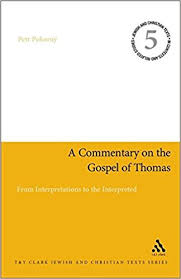
A Commentary on the Gospel of Thomas
Petr Pokorny, T&T Clark; Reprint edition (December 22, 2011) p. 47-8
“Following his life as a failed ascetic and false teacher, Marici experiences a large number of intervening births, very often as a brahmin who becomes once again a trida??in ascetic. Eventually he is born in a royal family and becomes an ascetic. His ascetic practices result in him having a rather emaciated appearance, for which he is mocked by his cousin. Angered by this, Marici vows to have the strength to kill his cousin in a future life, and indeed he does this two births later, when he is born as the first Vasudeva, or half-cakravartin, named Triprsta. His cousin has meanwhile been reborn as a lion, which Trip???a proceeds to kill with his bare hands. He then enacts the standard narrative for each of the vasudevas: he battles with and kills his multi-life adversary - the prativasudeva - while his half-brother the baladeva remains detached and eventually attains mok?a. As is inevitable for all vasudevas, his violent actions result in rebirth in a hell realm. After this Mahavira-to-be experiences a large number of animal and hell rebirths, before eventually attaining human birth once more and acquiring some good karma. Next he becomes a cakravartin, then a god, and once more a king-turned-ascetic; in this birth he finally binds tirthankana-karma. Thus we see from Mahavira’s story that a desire to attain jinahood is not a positive motivating force. Instead Mariuci’s prediction to jinahood leads him to undue pride which results in him binding a large amount of negative karma.” (Appleton 2014, 110)
8. And he said: “The man is like a thoughtful fisherman who threw his net into the sea and pulled it out full of little fish. Among all the little fish, that thoughtful fisherman found one fine large fish that would be beneficial to him and, throwing all the little fish back into the sea, he easily chose to keep the large one. Whoever has ears to hear let him hear.”
Saying 8 focuses on the act of finding. The discovery of the great fish is accidental; it is part of an ordinary catch drawn from the sea in the ordinary way, but the wisdom of the fisherman is to recognize and to choose the finest part. The great fish is, therefore, a symbol of something already out there in the world whose discovery can occur in the ordinary course of events. Realizing the value of what has been found is the real accomplishment.
Stevan Davies & Andrew Harvey, Gospel of Thomas Annotated and Explained Reviews, Skylights Path (2006) pp. 7-8
Saying 8
And he said, "“ human one is like a wise fisherman who cast his net into the sea and drew it up from the sea full of little fish. Among them the wise fisherman discovered a fine large fish. He threw all the little fish back into the sea, and easily chose the larger fish. Anyone here with two good ears had better listen!"
The parables present an interesting interpretative problem. At the literary level, this one consists of a narrative within a simile that is explained by a narrative: the narrator's voice ("And he said") introduces a simile ("The human one is like") that inaugurates another narrative (“A wise fisherman who cast his net into the sea"). The perspectives on the meaning of parables reflect the complexity of literary angles within them: they will bear more meaning than appears at first, and, they provide readers (and seekers) a rich field with which to play for meaning (see Crossan 1973: 4-36). The word "play" should be emphasized: in every one of these sayings, the meanings and the theological or spiritual principles which inform meaning have been carefully and directly stated. The introduction of parables shifts from that discursive modality to one that requires greater interaction and less guidance from the narrative. The parables provide time and space for play.
The simile itself attempts to define, or to compare, the "human one" or "The man" to a fisherman. The ambiguity of the term "The human one" contrasts with the specificity of the description of the fisherman. The simile makes a definitive statement about the human condition: "The human one" resembles a "Wise fisherman.” The human condition signified as the "human one" has the grammatical article ("The") that indicates that this humanity is not just any human, but the ones who live in a special category of human beings, perhaps those capable of interpreting these sayings. That specific community reference to the human being as similar to a wise fisherman places the weight of the comparison on the description. Attentive readers, however, recognize that although the emphasis falls on the description, the import remains with the three suppressed elements (the sayings narrator; Jesus' narrative; and the subject of that narrative, "The human one"). These voices seem to join with the voice at the end to say, "Anyone here with two good ears had better listen!" The suppressed elements find their voice in the injunction to pay attention: the readers and seekers (if they are as wise as the fisherman) will heed the understanding they might gain about their humanity, and especially about their humanity refracted through Jesus' sayings and preserved in Thomas' collection. That such an injunction to listen receives attention underscores that only select readers or seekers will be able to understand what transpires.
The narrative that follows has simple elements: a fisherman caught a net full of fish, but when he found a large fish he threw back all the other small fish. The wisdom of a fisherman throwing away the catch and keeping only one large fish inverts normal expectations. This is a wisdom of a different sort. This wisdom operates with a different set of values and a different orientation toward professional accomplishments. The goal of this wise fisherman is not to eat the fish or to sell them, but simply to reject all the smaller fish when he has found the largest one. The value of the one big fish makes all other systems of valuing irrelevant. Such a narrative defines a wisdom alternative to the dominant norm.
The readers/seekers may be located at any number of different points: they may be the fisherman who has gone fishing for their true self, and when they found it all the other petty identities were thrown aside; they may be the fine big fish that is found by the great fisherman of human souls and cherished beyond all the other fish who seem smaller in comparison;
The subtle narrative voices and parabolic subjects keep directing attention back to the interpretative community, the readers and the seekers who desire to understand their own human condition and to discover true wisdom. The truths expressed here, the playful exploring of meaning take on their ultimate significance among these final voices that make the playful interaction with the parable possible. Those who are capable of understanding these sublimated voices ultimately will find themselves and the truth.”
Richard Valantasis, The Gospel of Thomas
Routledge; 1 edition (June 27, 1997) pp. 65-7
THE APOCALYPSE OF THE SPIRIT-PARACLETE
The fulfillment of the promised divine eschatological instruction
“The original meaning of the word ‘apocalypse’, derived from the Greek apokalypsis, is in fact not the cataclysmic end of the world, but an ‘unveiling’, or ‘revelation’, a means whereby one gains insight into the present.” (Kovacs, 2013, 2) An apocalypse (Greek: apokalypsis meaning “an uncovering”) is in religious contexts knowledge or revelation, a disclosure of something hidden, “a vision of heavenly secrets that can make sense of earthly realities.” (Ehrman 2014, 59)
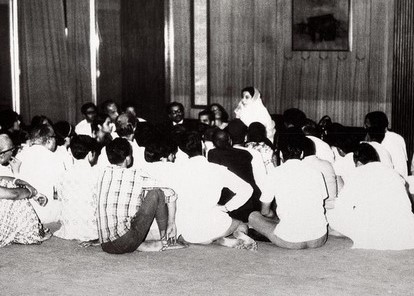
Shri Mataji Nirmala Devi (1923-2011) was Christian by birth, Hindu by marriage, and Paraclete by duty.
“The Paraclete will come (15:26; 16:7, 8, 13) as Jesus has come into the world (5:43; 16:28; 18:37)... The Paraclete will take the things of Christ (the things that are mine, ek tou emou) and declare them (16:14-15). Bishop Fison describes the humility of the Spirit, 'The true Holy Spirit of God does not advertise Herself: She effaces Herself and advertises Jesus.' ...
It is by the outgoing activity of the Spirit that the divine life communicates itself in and to the creation. The Spirit is God-in-relations. The Paraclete is the divine self-expression which will be and abide with you, and be in you (14:16-17). The Spirit's work is described in terms of utterance: teach you, didasko (14:26), remind you, hypomimnesko (14:26), testify, martyro (15:26), prove wrong, elencho (16:8), guide into truth, hodego (16:13), speak, laleo (16:13, twice), declare, anangello (16:13, 14, 15). The johannine terms describe verbal actions which intend a response in others who will receive (lambano), see (theoreo), or know (ginosko) the Spirit. Such speech-terms link the Spirit with the divine Word. The Spirit's initiatives imply God's personal engagement with humanity. The Spirit comes to be with others; the teaching Spirit implies a community of learners; forgetful persons need a prompter to remind them; one testifies expecting heed to be paid; one speaks and declares in order to be heard. The articulate Spirit is the correlative of the listening, Spirit-informed community.
The final Paraclete passage closes with a threefold repetition of the verb she will declare (anangello), 16:13-15. The Spirit will declare the things that are to come (v.13), and she will declare what is Christ's (vv. 14, 15). The things of Christ are a message that must be heralded...
The intention of the Spirit of truth is the restoration of an alienated, deceived humanity... The teaching role of the Paraclete tends to be remembered as a major emphasis of the Farewell Discourses, yet only 14:26 says She will teach you all things. (Teaching is, however, implied when 16:13-15 says that the Spirit will guide you into all truth, and will speak and declare.) Franz Mussner remarks that the word used in 14:26, didaskein, "means literally 'teach, instruct,' but in John it nearly always means to reveal.” (Stevick 2011, 292-7)
“The Paraclete will come (15:26; 16:7, 8, 13) as Jesus has come into the world (5:43; 16:28; 18:37)... The Paraclete will take the things of Christ (the things that are mine, ek tou emou) and declare them (16:14-15). Bishop Fison describes the humility of the Spirit, 'The true Holy Spirit of God does not advertise Herself: She effaces Herself and advertises Jesus.' ...
It is by the outgoing activity of the Spirit that the divine life communicates itself in and to the creation. The Spirit is God-in-relations. The Paraclete is the divine self-expression which will be and abide with you, and be in you (14:16-17). The Spirit's work is described in terms of utterance: teach you, didasko (14:26), remind you, hypomimnesko (14:26), testify, martyro (15:26), prove wrong, elencho (16:8), guide into truth, hodego (16:13), speak, laleo (16:13, twice), declare, anangello (16:13, 14, 15). The johannine terms describe verbal actions which intend a response in others who will receive (lambano), see (theoreo), or know (ginosko) the Spirit. Such speech-terms link the Spirit with the divine Word. The Spirit's initiatives imply God's personal engagement with humanity. The Spirit comes to be with others; the teaching Spirit implies a community of learners; forgetful persons need a prompter to remind them; one testifies expecting heed to be paid; one speaks and declares in order to be heard. The articulate Spirit is the correlative of the listening, Spirit-informed community.
The final Paraclete passage closes with a threefold repetition of the verb she will declare (anangello), 16:13-15. The Spirit will declare the things that are to come (v.13), and she will declare what is Christ's (vv. 14, 15). The things of Christ are a message that must be heralded...
The intention of the Spirit of truth is the restoration of an alienated, deceived humanity... The teaching role of the Paraclete tends to be remembered as a major emphasis of the Farewell Discourses, yet only 14:26 says She will teach you all things. (Teaching is, however, implied when 16:13-15 says that the Spirit will guide you into all truth, and will speak and declare.) Franz Mussner remarks that the word used in 14:26, didaskein, "means literally 'teach, instruct,' but in John it nearly always means to reveal.” (Stevick 2011, 292-7)



“The teaching of the Paraclete, as the continuation of Jesus' teaching, must also be understood as the fulfillment of the promise of eschatological divine instruction.”
Stephen E. Witmer, Divine instruction in Early Christianity
“Jesus therefore predicts that God will later send a human being to Earth to take up the role defined by John .i.e. to be a prophet who hears God's words and repeats his message to man.”
M. Bucaille, The Bible, the Qur'n, and Science
“And when Jesus foreannounced another Comforter, He must have intended a Person as distinct and helpful as He had been.”
F. B. Meyer, Love to the Utmost
“The Paraclete has a twofold function: to communicate Christ to believers and, to put the world on trial.”
Robert Kysar, John The Meverick Gospel
“But She—the Spirit, the Paraclete...—will teach you everything.”
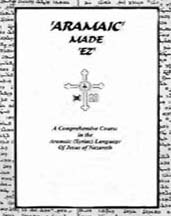
Danny Mahar, Aramaic Made EZ)
“Grammatical nonsense but evidence of the theological desire to defeminize the Divine.”
Lucy Reid, She Changes Everything
“The functions of the Paraclete spelled out in verses 13-15... are all acts of open and bold speaking in the highest degree.”
David Fleer, Preaching John's Gospel
“The reaction of the world to the Paraclete will be much the same as the world's reaction was to Jesus.”
Berard L. Marthaler, The Creed: The Apostolic Faith in Contemporary Theology
Bultmann calls the “coming of the Redeemer an 'eschatological event,' 'the turning-point of the ages.”
G. Ladd, A Theology of the New Testament
“The Paraclete equated with the Holy Spirit, is the only mediator of the word of the exalted Christ.”
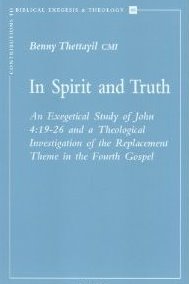
Benny Thettayil, In Spirit and Truth
“The divine Paraclete, and no lessor agency, must show the world how wrong it was about him who was in the right.”
Daniel B. Stevick , Jesus and His Own: A Commentary on John 13-17
Stephen Smalley asserts that “The Spirit-Paraclete ... in John's Gospel is understood as personal, indeed, as a person.”
Marianne Thompson, The God of the Gospel of John
“The Messiah will come and the great age of salvation will dawn (for the pious).”
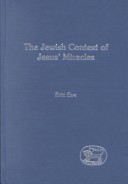
Eric Eve, The Jewish context of Jesus' Miracles
“The remembrance is to relive and re-enact the Christ event, to bring about new eschatological decision in time and space.”
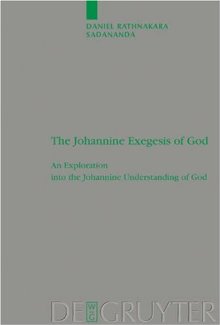
Daniel Rathnakara Sadananda, The Johannine Exegesis of God
“The Spirit acts in such an international situation as the revealer of 'judgment' on the powers that rule the world.”
Michael Welker, God the Spirit
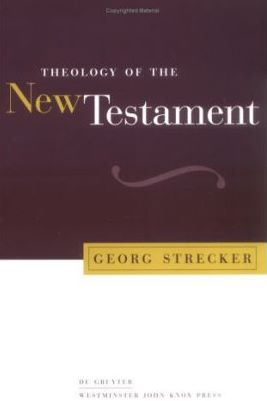
The Paraclete's “Appearance means that sin, righteousness, and judgment will be revealed.”
Georg Strecker, Theology of the New Testament
“While the Spirit-Paraclete is the true broker, the brokers they rely on are impostors.”
T. G. Brown, Spirit in the writings of John
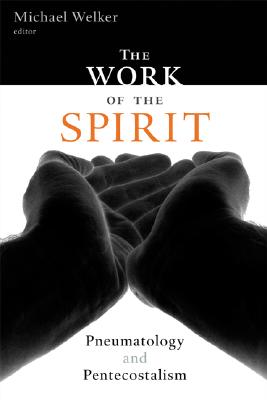
“The pneumatological activity ... of the Paraclete ... may most helpfully be considered in terms of the salvific working of the hidden Spirit.”
Michael Welker, The work of the Spirit
“The pneuma is the peculiar power by which the word becomes the words of eternal life.”
Robert Kysar, Voyages with John
“The gift of peace, therefore, is intimately associated with the gift of the Spirit-Paraclete.”
Francis J. Moloney, The Gospel of John
“This utopian hope, even when modestly expressed, links Jesus and the prophets to a much wider history of human longing.”
Harvey Cox, The Future of Faith
“Because of the presence of the Paraclete in the life of the believer, the blessings of the end-times—the eschaton—are already present.”
Robert Kysar, John
“They are going, by the Holy Spirit's power, to be part of the greatest miracle of all, bringing men to salvation.”
R. Picirilli, The Randall House Bible Commentary
“The Kingdom of God stands as a comprehensive term for all that the messianic salvation included... is something to be sought here and now (Mt. 6:33) and to be received as children receive a gift (Mk. 10:15 = Lk. 18:16-17).”
G. Ladd, A Theology of the New Testament
Stephen E. Witmer, Divine instruction in Early Christianity
“Jesus therefore predicts that God will later send a human being to Earth to take up the role defined by John .i.e. to be a prophet who hears God's words and repeats his message to man.”
M. Bucaille, The Bible, the Qur'n, and Science
“And when Jesus foreannounced another Comforter, He must have intended a Person as distinct and helpful as He had been.”
F. B. Meyer, Love to the Utmost
“The Paraclete has a twofold function: to communicate Christ to believers and, to put the world on trial.”
Robert Kysar, John The Meverick Gospel
“But She—the Spirit, the Paraclete...—will teach you everything.”
Danny Mahar, Aramaic Made EZ)
“Grammatical nonsense but evidence of the theological desire to defeminize the Divine.”
Lucy Reid, She Changes Everything
“The functions of the Paraclete spelled out in verses 13-15... are all acts of open and bold speaking in the highest degree.”
David Fleer, Preaching John's Gospel
“The reaction of the world to the Paraclete will be much the same as the world's reaction was to Jesus.”
Berard L. Marthaler, The Creed: The Apostolic Faith in Contemporary Theology
Bultmann calls the “coming of the Redeemer an 'eschatological event,' 'the turning-point of the ages.”
G. Ladd, A Theology of the New Testament
“The Paraclete equated with the Holy Spirit, is the only mediator of the word of the exalted Christ.”
Benny Thettayil, In Spirit and Truth
“The divine Paraclete, and no lessor agency, must show the world how wrong it was about him who was in the right.”
Daniel B. Stevick , Jesus and His Own: A Commentary on John 13-17
Stephen Smalley asserts that “The Spirit-Paraclete ... in John's Gospel is understood as personal, indeed, as a person.”
Marianne Thompson, The God of the Gospel of John
“The Messiah will come and the great age of salvation will dawn (for the pious).”
Eric Eve, The Jewish context of Jesus' Miracles
“The remembrance is to relive and re-enact the Christ event, to bring about new eschatological decision in time and space.”
Daniel Rathnakara Sadananda, The Johannine Exegesis of God
“The Spirit acts in such an international situation as the revealer of 'judgment' on the powers that rule the world.”
Michael Welker, God the Spirit
The Paraclete's “Appearance means that sin, righteousness, and judgment will be revealed.”
Georg Strecker, Theology of the New Testament
“While the Spirit-Paraclete is the true broker, the brokers they rely on are impostors.”
T. G. Brown, Spirit in the writings of John
“The pneumatological activity ... of the Paraclete ... may most helpfully be considered in terms of the salvific working of the hidden Spirit.”
Michael Welker, The work of the Spirit
“The pneuma is the peculiar power by which the word becomes the words of eternal life.”
Robert Kysar, Voyages with John
“The gift of peace, therefore, is intimately associated with the gift of the Spirit-Paraclete.”
Francis J. Moloney, The Gospel of John
“This utopian hope, even when modestly expressed, links Jesus and the prophets to a much wider history of human longing.”
Harvey Cox, The Future of Faith
“Because of the presence of the Paraclete in the life of the believer, the blessings of the end-times—the eschaton—are already present.”
Robert Kysar, John
“They are going, by the Holy Spirit's power, to be part of the greatest miracle of all, bringing men to salvation.”
R. Picirilli, The Randall House Bible Commentary
“The Kingdom of God stands as a comprehensive term for all that the messianic salvation included... is something to be sought here and now (Mt. 6:33) and to be received as children receive a gift (Mk. 10:15 = Lk. 18:16-17).”
G. Ladd, A Theology of the New Testament
“But today is the day I declare that I am the one who has to save the humanity. I declare I am the one who is Adishakti, who is the Mother of all the Mothers, who is the Primordial Mother, the Shakti, the desire of God, who has incarnated on this Earth to give its meaning to itself; to this creation, to human beings and I am sure through My Love and patience and My powers I am going to achieve it.
I was the one who was born again and again. But now in my complete form and complete powers I have come on this Earth not only for salvation of human beings, not only for their emancipation, but for granting them the Kingdom of Heaven, the joy, the bliss that your Father wants to bestow upon you.”
THE MOTHER: Messiah-Paraclete-Ruh
London, UK—December 2, 1979
“I am the one about which Christ has talked... I am the Holy Spirit who has incarnated on this Earth for your realization.”
THE MOTHER: Messiah-Paraclete-Ruh
New York, USA—September 30, 1981
“Tell all the nations and tell all the people all over the Great Message that the Time of Resurrection is here. Now, at this time, and that you are capable of doing it.”
THE MOTHER: Messiah-Paraclete-Ruh
Cowley Manor Seminar, UK—July 31, 1982
Guest: “Hello Mother.”
Shri Mataji: “Yes.”
Guest: “I wanted to know, is the Cool Breeze (Pneuma) that you have spoken about, you feel on the hands the Cool Wind of the Holy Spirit, as spoken about in the Bible?”
Shri Mataji: “Yes. Yes, yes, same thing, same thing. You have done the good job now, I must say.”
Interviewer: “Is it the Holy Spirit?”
Shri Mataji: “Yes, of course, is the Holy Spirit.”
Guest: “Aha... I am feeling it now on my hand through the [not clear]”
Shri Mataji: “It’s good.”
Interviewer: “Did you want to say anything more than that?”
Guest: “No, I just... That’s all I wanted to know because I...”
Shri Mataji: “Because you are thoughtless now. Enjoy yourself.”
Guest: “Thank you.”
THE MOTHER: Messiah-Paraclete-Ruh-Devi
Talkback Radio 2UE, Sydney, Australia—March 31, 1981
(The guest experienced the Cool Breeze [Pneuma/Prana/Chi] of the Spirit through the baptism [second birth by Spirit/Kundalini awakening]” given by the Comforter Shri Mataji over the radio. )
Second Guest: “I just want to ask Mother about a quotation from the Bible.”
Interviewer: “Yes, what’s that?”
Guest: “It says, ‘But the comfort of the Holy Spirit that the Father will send in My name would teach you all things.’ I would like to ask Her about that.”
Interviewer: “Could you just repeat the quotation again?”
Guest: “But the Comforter, the Holy Spirit, whom the Father will send in My name, will teach you all things.”
Interviewer: “And that’s from where?”
Guest: “John chapter 14, verse 26.”
Shri Mataji: “I think you should take your realization and then you will know the answer to it. Because, logically if it points out to one person, then you have to reach the conclusion, isn’t it? That’s a logical way of looking at things. But I am not going to say anything or claim anything. It is better you people find out yourself.”
Interviewer: “Does that answer your question?”
Guest: “Is the, is the Comforter on the Earth at the present time? Has the Comforter incarnated? Mataji should be able to tell us this because She said that through these vibrations on Her hands, She ...”
Shri Mataji: “Yes, She is very much here and She’s talking to you now. Can you believe that?”
Guest: “Well, I feel something cool [Pneuma/Prana/Chi] on my hand. Is that some indication of the ...?”
Shri Mataji: “Yes, very much so. So that’s the proof of the thing. You’ve already started feeling it in your hands.”
Guest: “Can I?”
Shri Mataji: “Ask the question, ‘Mother, are you the Comforter?’”
Guest: “Mother, are you the Comforter?”
Shri Mataji: “Ask it thrice.”
Guest: “Mother, are you the Comforter?”
Shri Mataji: “Again.”
Guest: “Mother, are you the Comforter?”
Shri Mataji: “Now, what do you get?”
Guest: “Oh, I feel this kind of cool tingling [Pneuma/Prana/Chi] passing all through my body.”
Shri Mataji: “That’s the answer now.”
THE MOTHER: Messiah-Paraclete-Ruh-Devi
Talkback Radio 2UE, Sydney, Australia—March 31, 1981
(Another guest also experienced the Cool Breeze [Pneuma/Prana/Chi] of the Spirit through the baptism [second birth by Spirit/Kundalini awakening]” given by the Comforter Shri Mataji over the radio. )

Shri Mataji Nirmala Devi (1923-2011): Christian by birth, Hindu by marriage and Paraclete by duty.
“The Paraclete and the disciples (vv. 25-26): The theme of departure (cf. vv. 1-6; vv. 18-24) returns. There are two "times" in the experience of the disciples: the now as Jesus speaks to them (v. 25) and the future time when the Paraclete, the Holy Spirit, sent by the Father in the name of Jesus, will be with them (v. 26). The Paraclete will replace Jesus' physical presence, teaching them all things and recalling for them everything he has said (v. 26). As Jesus is the Sent One of the Father (cf. 4:34; 5:23; 24, 30, 37; 6:38-40; 7:16; 8:16, 18, 26; 12:44-49), so is the Paraclete sent by the Father. The mission and purpose of the former Paraclete, Jesus (cf. 14:13-14), who speaks and teaches "his own" will continue into the mission and purpose of the "other Paraclete" (cf. v. 16) who teaches and brings back the memory of all that Jesus has said. The time of Jesus is intimately linked with the time after Jesus, and the accepted meaning of a departure has been undermined. The inability of the disciples to understand the words and deeds of Jesus will be overcome as they "remember" what he had said (cf. 2:22) and what had been written of him and done to him (cf. 12:16). The "remembering" will be the fruit of the presence of the Paraclete with the disciples in the in-between-time. In v. 16 Jesus focused on the inability of the world to know the Paraclete, but in v. 26 the gift of the Paraclete to "his own" is developed. As Jesus was with the disciples (v. 25), so will the Paraclete be with the disciples in the midst of hostility and rejection (v. 16). As the story has insisted that Jesus' teaching has revealed God to his disciples, so will the Paraclete recall and continue Jesus' revelation of God to the disciples (v. 26).” (Harrington 1998, 412)
“The Paraclete and the disciples (vv. 25-26): The theme of departure (cf. vv. 1-6; vv. 18-24) returns. There are two "times" in the experience of the disciples: the now as Jesus speaks to them (v. 25) and the future time when the Paraclete, the Holy Spirit, sent by the Father in the name of Jesus, will be with them (v. 26). The Paraclete will replace Jesus' physical presence, teaching them all things and recalling for them everything he has said (v. 26). As Jesus is the Sent One of the Father (cf. 4:34; 5:23; 24, 30, 37; 6:38-40; 7:16; 8:16, 18, 26; 12:44-49), so is the Paraclete sent by the Father. The mission and purpose of the former Paraclete, Jesus (cf. 14:13-14), who speaks and teaches "his own" will continue into the mission and purpose of the "other Paraclete" (cf. v. 16) who teaches and brings back the memory of all that Jesus has said. The time of Jesus is intimately linked with the time after Jesus, and the accepted meaning of a departure has been undermined. The inability of the disciples to understand the words and deeds of Jesus will be overcome as they "remember" what he had said (cf. 2:22) and what had been written of him and done to him (cf. 12:16). The "remembering" will be the fruit of the presence of the Paraclete with the disciples in the in-between-time. In v. 16 Jesus focused on the inability of the world to know the Paraclete, but in v. 26 the gift of the Paraclete to "his own" is developed. As Jesus was with the disciples (v. 25), so will the Paraclete be with the disciples in the midst of hostility and rejection (v. 16). As the story has insisted that Jesus' teaching has revealed God to his disciples, so will the Paraclete recall and continue Jesus' revelation of God to the disciples (v. 26).” (Harrington 1998, 412)
“This is the transformation that has worked, of which Christ has talked, Mohammed Sahib has talked, everybody has talked about this particular time when people will get transformed.”
THE MOTHER: Messiah-Paraclete-Ruh
Chistmas Puja, Ganapatipule, India—25 December 1997
“The Resurrection of Christ has to now be collective Resurrection. This is what is Mahayoga. Has to be the collective Resurrection.”
THE MOTHER: Messiah-Paraclete-Ruh
Easter Puja, London, UK—11 April 1982
“Today, Sahaja Yaga has reached the state of Mahayoga, which is en-masse evolution manifested through it. It is this day’s Yuga Dharma. It is the way the Last Judgment is taking place. Announce it to all the seekers of truth, to all the nations of the world, so that nobody misses the blessings of the divine to achieve their meaning, their absolute, their Spirit.”
THE MOTHER: Messiah-Paraclete-Ruh
MAHA AVATAR, ISSUE 1, JUL-SEP 1980
“The main thing that one has to understand is that the time has come for you to get all that is promised in the scriptures, not only in the Bible but all all the scriptures of the world. The time has come today that you have to become a Christian, a Brahmin, a Pir, through your Kundalini awakening only. There is no other way. And that your Last Judgment is also now.”
THE MOTHER: Messiah-Paraclete-Ruh
“You see, the Holy Ghost is the Mother. When they say about the Holy Ghost, She is the Mother... Now, the principle of Mother is in every, every scripture — has to be there. Now, the Mother's character is that She is the one who is the Womb, She is the one who is the Mother Earth, and She is the one who nourishes you. She nourishes us. You know that. And this Feminine thing in every human being resides as this Kundalini.”
THE MOTHER: Messiah-Paraclete-Ruh-Devi
Radio Interview, Santa Cruz, USA—1 October 1983
“But there is a Primordial Mother which was accepted by all the religions; even the Jews had it... In India, this is called as Adi Shakti. In every religion they had this Mother who was the Primordial Mother.”
THE MOTHER: Messiah-Paraclete-Ruh-Devi
TV Interview, Los Angeles, USA—11 October 1993

The Paraclete Shri Mataji (1923-2011)
Total number of Recorded Talks 3058, Public Programs 1178, Pujas 651 and Other (private conversations) 1249
“What are they awaiting but for the Hour to come upon them suddenly? Its Signs have already come. What good will their Reminder be to them when it does arrive?” (Qur'n, 47:18) “As the above verse indicates, God has revealed some of Doomsday's signs in the Qur'n. In Surat az-Zukhruf 43:61, God informs us that 'He [Jesus] is a Sign of the Hour. Have no doubt about it...' Thus we can say, based particularly on Islamic sources but also on the Old Testament and the New Testament, that we are living in the End Times.” Harun Yahya
Good News (An Naba) of Resurrection (Al-Qiyamah): Videos 3474, Audios 1945, Transcripts 3262 and Events 2413
“Concerning what are they disputing?
Concerning the Great News. [5889]
About which they cannot agree.
Verily, they shall soon (come to) know!
Verily, verily they shall soon (come to) know!”
surah 78:1-5 An Naba (The Great News)
5889. Great News: usually understood to mean the News or Message of the Resurrection.
Total number of Recorded Talks 3058, Public Programs 1178, Pujas 651 and Other (private conversations) 1249
“What are they awaiting but for the Hour to come upon them suddenly? Its Signs have already come. What good will their Reminder be to them when it does arrive?” (Qur'n, 47:18) “As the above verse indicates, God has revealed some of Doomsday's signs in the Qur'n. In Surat az-Zukhruf 43:61, God informs us that 'He [Jesus] is a Sign of the Hour. Have no doubt about it...' Thus we can say, based particularly on Islamic sources but also on the Old Testament and the New Testament, that we are living in the End Times.” Harun Yahya
Good News (An Naba) of Resurrection (Al-Qiyamah): Videos 3474, Audios 1945, Transcripts 3262 and Events 2413
“Concerning what are they disputing?
Concerning the Great News. [5889]
About which they cannot agree.
Verily, they shall soon (come to) know!
Verily, verily they shall soon (come to) know!”
surah 78:1-5 An Naba (The Great News)
5889. Great News: usually understood to mean the News or Message of the Resurrection.
Abdullah Yusuf Ali, The Holy Qur'n
Amana Corporation, 1989
[Moderator]: “Any other questions?”
[Audience]: “Pardon me for asking this question, but, earlier you talked about the Resurrection and you mentioned about the scriptures, where like in the Hindus scriptures they talk about the Kalki Avatar who will come for the Resurrection, and for the Christians, I know they talk about the return of Christ and all the religions talk about this Resurrection and the belief in the coming of the Messiah. So I just want to know since you say you are going to give the resurrection to us, what is your station?”
Shri Mataji: “In Russia?”
[Audience]: “And are you the promised Messiah? Shri Mataji, are you?”
Shri Mataji: “I see now I am not going to tell you anything about myself, to be very frank. Because see Christ said He was the Son of God, and they crucified Him. I don't want to get crucified. You have to find out. When you become the Spirit you will know what I am. I don't want to say anything about myself.”
THE MOTHER: Messiah-Paraclete-Ruh
Toronto, Canada—October 5, 1993
“Jesus then goes on the offensive against the scribes and Pharisees, pronouncing seven woes against them (Matt. 23:1-36). The final woe identifiers them with all those in Israel's history who have murdered and opposed the prophets. From Abel to Zechariah, all the blood of the righteous will come on them as they typologically fulfill this pattern in the murder of Jesus (23:29-36). They are the wicked tenants who think to kill the son and take his inheritance (21:38). They are seed of the serpent, a brood of vipers (23:33). Their house (the temple?) is desolate, and they will not see Jesus again until they bless him as he comes in the name of the Lord (23:37-39). Somehow, through the judgments Jesus announces against them, salvation will apparently come even for the people of Israel. As Olmstead puts it, Matthew "dares to hope for the day when many of Israel's sons and daughters will embrace Israel's Messiah (23:39), and in that hope engages in a continued mission in her.”” Hamilton 2010, 377
“It is the Mother who can awaken the Kundalini, and that the Kundalini is your own Mother. She is the Holy Ghost within you, the Adi Shakti, and She Herself achieves your transformation. By any talk, by any rationality, by anything, it cannot be done.”
THE MOTHER: Messiah-Paraclete-Ruh-Devi
“She is your pure Mother. She is the Mother who is individually with you. Forget your concepts, and forget your identifications. Please try to understand She is your Mother, waiting for ages to give you your real birth. She is the Holy Ghost within you. She has to give you your realization, and She's just waiting and waiting to do it.”
THE MOTHER: Messiah-Paraclete-Ruh
Sydney, Australia—Mar 22 1981
“The Kundalini is your own mother; your individual mother. And She has tape-recorded all your past and your aspirations. Everything! And She rises because She wants to give you your second birth. But She is your individual mother. You don't share Her with anybody else. Yours is a different, somebody else's is different because the tape-recording is different. We say She is the reflection of the Adi Shakti who is called as Holy Ghost in the Bible.”
THE MOTHER: Messiah-Paraclete-Ruh-Devi
Press Conference July 08 1999—London, UK
“The Great Goddess is both wholly transcendent and fully immanent: beyond space and time, she is yet embodied within all existent beings; without form as pure, infinite consciousness (cit) ... She is the universal, cosmic energy known as Sakti, and the psychophysical, guiding force designated as the Kundalini (Serpent Power) resident within each individual. She is eternal, without origin or birth, yet she is born in this world in age after age, to support those who seek her assistance. Precisely to provide comfort and guidance to her devotees, she presents herself in the Devi Gita to reveal the truths leading both to worldly happiness and to the supreme spiritual goals: dwelling in her Jeweled Island and mergence into her own perfect being.” (Brown, 1998, 2)
Disclaimer: Our material may be copied, printed and distributed by referring to this site. This site also contains copyrighted material the use of which has not always been specifically authorized by the copyright owner. We are making such material available to our readers under the education and research provisions of "fair use" in an effort to advance freedom of inquiry for a better understanding of religious, spiritual and inter-faith issues. The material on this site is distributed without profit. If you wish to use copyrighted material for purposes other than “fair use” you must request permission from the copyright owner.

 LOGION 8