

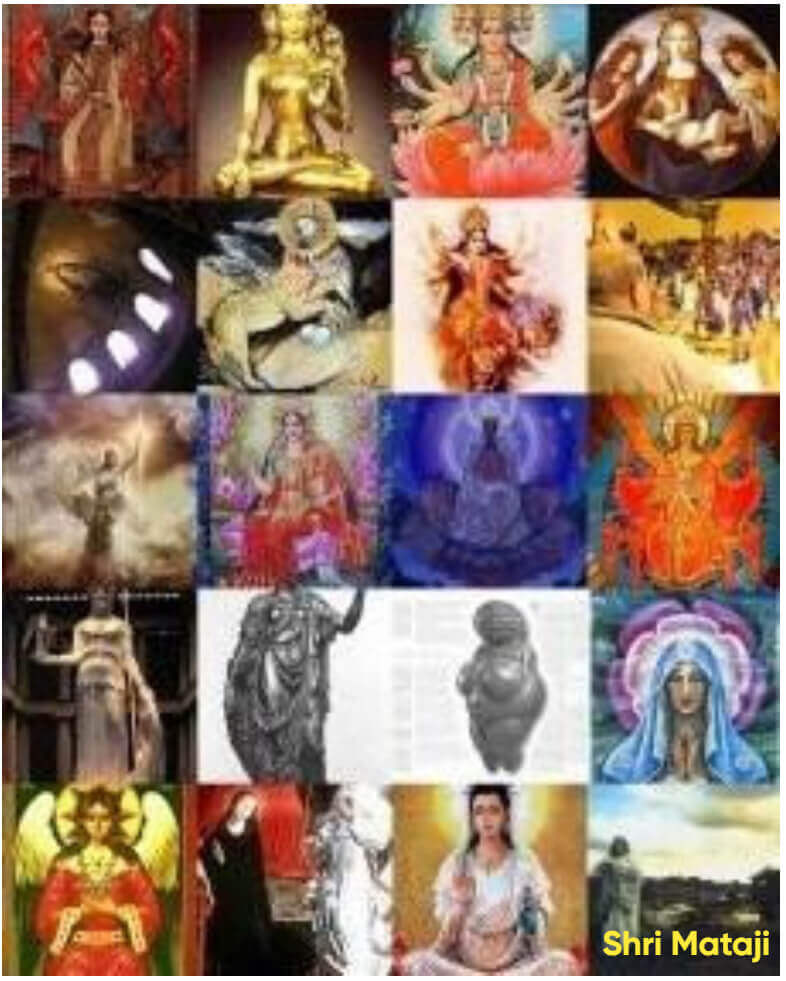
Aurobindo: If there is to be a future, it will wear the crown of feminine design.
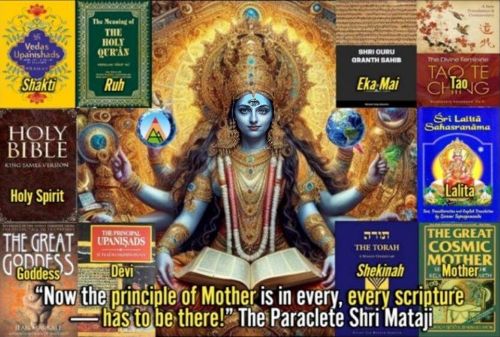
In a world poised between collapse and transformation, Sri Aurobindo’s words ring like prophecy: “If there is to be a future, it will wear the crown of feminine design.” That crown is not metaphor—it is the Adi Shakti Herself. Shri Mataji has come to fulfill this vision, awakening the Kundalini and ushering in a new age of collective consciousness. The feminine is no longer hidden—it is enthroned. And the future, if it is to be divine, must rise from Her design. Sri Aurobindo foresaw the future crowned by the Divine Feminine—Shri Mataji fulfills this prophecy through collective Self-realization and spiritual transformation.

“At the end of his life, the great Indian mystic Aurobindo is said to have said, "If there is to be a future , it will wear the crown of feminine design.” Unless we awaken to the mystery of the sacred feminine, of the feminine as sacred, and allow it to glow into, irradiate, illumine, and penetrate every area of our activity and to create in them all harmony, justice, peace , love, ecstasy, and balance, we will die out and take nature, or a large part of it, with us. Unless we come to know what the sacred feminine really is- its subtlety and flexibility, but also its extraordinarily ruthless, radical power of dissolving all structures and dogmas, all prisons in which we have sought so passionately to imprison ourselves- we will be taken in by patriarchal projections of it. The Divine Mother, the fullness of the revolution that she is preparing, will be lost to us. We must understand that comprehending the sacred feminine is a crucial part of surviving the next terrible stage of humanity.
What I am going to try to do in this book is to convey the atmosphere of the sacred feminine, with the sober, tender joy of the sacred feminine, and with the sense of awe, holiness, and the unity of all beings that are appropriate to the sacred feminine. I ask the reader that you approach this text as if entering a temple to the Divine Mother. Listen and participate in the deepest sense with the wisdom said or implied here and we will together find a path through this darkness.
The first quotation I want to offer you is from Juliana of Norwich's Revelations of Divine Love, and it represents the Christian tradition:
To the property of motherhood belong nature, love, wisdom and knowledge and this is God ... God speaking to Julian: I it am. The greatness and goodness of the Father, I it am: The wisdom and kindness of The Mother, I it am: The light and grace that is all blessed love, I it am.
For another esoteric aspect of the knowledge of the sacred feminine that infuses Christian mysticism, I would like to share with you Logion 22 from the Gospel of Thomas . In this logion the mystical secret of the birth of the divine child in the soul is stated with unprecedented clarity:
When you make the two, one, and when you make the inner as the outer , and the above as the below, and when you make the male and female into a single one, so that the male will not be male, and the female not be female, then you shall enter the Kingdom.
And although the sacred feminine plays such a strange role in the official language of Islam, rich visions of a "feminine" sacred love saturate Sufi mysticism, as illuminated in this excerpt from a poem by the great thirteenth -century Sufi mystic, Jalal-ud-Din Rumi:
The whole world could be choked with thorns:
A lover's heart will stay a rose garden.
The wheel of heaven could wind to a halt:
The world of lovers will go on turning.
Even if every being grew sad, a lover's soul
Will stay fresh, vibrant, light.
Are all the candles out? Hand them to a lover-
A lover shoots out a hundred thousand fires.
A lover may be solitary, but he or she is never alone:
For companion he always has the hidden Beloved.
The drunkenness of lovers comes from the soul
And Love's companion stays hidden in secret.
A great vision of the Divine Mother has appeared in the mythology of all the greatest tribal cultures. The aborigines, who live in closer communion with The Mother than any other people, have preserved the full range of that extraordinary relationship which we once knew. It is revealed in the following myth, quoted in Robert Lawlor's Voices of the First Day: Awakening in the Aboriginal Dreamtime. Reading this book was one of the most crucial experiences in my life , because it really approaches a complete understanding of how The Mother is lived when you live only with The Mother and nothing else, as the aborigines have chosen to do. They could have written, but they chose to pass on information in oral transmission. They could have developed architecture, but they chose to live nakedly on the breast of The Mother.”
Harvey, Andrew (2013-08-20). The Return of The Mother (Kindle Locations 116-152). North Atlantic Books. Kindle Edition.
Supermind
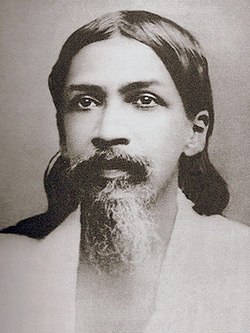
“At the centre of Sri Aurobindo's metaphysical system is the supermind, an intermediary power between the unmanifested Brahman and the manifested world.69 Sri Aurobindo claims that the supermind is not completely alien to us and can be realised within ourselves as it is always present within mind since the latter is in reality identical with the former and contains it as a potentiality within itself.70
Sri Aurobindo does not portray supermind as an original invention of his own but believes it can be found in the Vedas and that the Vedic Gods represent powers of the supermind.71 In The Integral Yoga he declares that "By the supermind is meant the full Truth-Consciousness of the Divine Nature in which there can be no place for the principle of division and ignorance; it is always a full light and knowledge superior to all mental substance or mental movement."72
Supermind is a bridge between Sachchidananda and the lower manifestation and it is only through the supramental that mind, life and body can be spiritually transformed as opposed to through Sachchidananda.73 The descent of supermind will mean the creation of a supramental race.74”
“If There Is To Be A Future, It Will Wear The Crown of Feminine Design”
Table of Contents
Introduction
The great Indian mystic and philosopher Sri Aurobindo is attributed with the profound statement: "If there is to be a future, it will wear the crown of feminine design."[1] This assertion, made at the end of his life, serves as a powerful and prescient call for a fundamental shift in human consciousness and societal structures. This paper will argue that Aurobindo's quote is not merely a poetic flourish but a deep philosophical insight into the necessary conditions for the survival and evolution of humanity. It posits that a future guided by the principles of the divine feminine—a future of harmony, justice, peace, love, and balance—is not only desirable but essential. This paper will explore the multifaceted dimensions of this "feminine design," drawing upon Sri Aurobindo's own philosophy, the broader context of the sacred feminine in world religions, the contemporary resurgence of feminine spirituality, and the critical connection between the divine feminine and the ecological crisis.
Sri Aurobindo's Vision of the Divine Feminine
At the core of Sri Aurobindo's philosophy is the concept of the Divine Mother, or Shakti, the creative and dynamic force of the Divine. In his integral yoga, the Divine Mother is not a subordinate principle but the very consciousness and force of the Supreme Being.[2] She is the one who manifests the worlds and guides their evolution. Aurobindo describes her in three primary aspects: transcendent, universal, and individual. As the transcendent Shakti, she is the original and supreme power, linking creation to the unmanifest Divine. As the universal Mahashakti, she creates, contains, and governs all beings and processes. And as the individual Mother, she embodies the power of the other two aspects, making them accessible to the individual seeker.
Sri Aurobindo further elaborates on the Divine Mother's powers and personalities through four primary aspects, each representing a crucial element of a complete and integrated consciousness:
- Maheshwari: The embodiment of knowledge, wisdom, and vastness. She represents the calm, tranquil, and all-knowing aspect of the Divine Mother.
- Mahakali: The expression of force, will, and divine action. She is the warrior of the worlds, who shatters all obstacles and limitations.
- Mahalakshmi: The soul of beauty, harmony, and love. She brings sweetness, grace, and the intoxicating bliss of the Divine.
- Mahasaraswati: The power of perfection, order, and detailed execution. She is the meticulous craftswoman who ensures that every detail is perfect.
For Aurobindo, the integration of these four aspects is essential for the complete transformation of human nature. A future that wears the "crown of feminine design" is one in which these qualities are no longer fragmented but are integrated into a harmonious and powerful whole, guiding both individual and collective life.
The Sacred Feminine in World Religions and Spirituality
The concept of the sacred feminine is not unique to Sri Aurobindo or Hinduism. It is a universal archetype that has been present in various forms throughout human history and across different cultures and religions.[3] From the ancient goddesses of Mesopotamia and Egypt to the worship of the Virgin Mary in Catholicism and the concept of Sophia (wisdom) in Gnostic Christianity, the feminine aspect of the Divine has been a source of reverence and inspiration. However, with the rise of patriarchal societies and religions, the sacred feminine was often suppressed, marginalized, or distorted.
"When you make the two, one, and when you make the inner as the outer, and the above as the below, and when you make the male and female into a single one, so that the male will not be male, and the female not be female, then you shall enter the Kingdom."
— The Gospel of Thomas, Logion 22
This Gnostic text points to the necessity of integrating the masculine and feminine principles for spiritual realization. The suppression of the feminine has led to an imbalance in human consciousness, with an overemphasis on qualities traditionally associated with the masculine, such as aggression, competition, and rationalism, at the expense of qualities associated with the feminine, such as intuition, compassion, and interconnectedness.
The Contemporary Resurgence of the Divine Feminine
In recent decades, there has been a significant resurgence of interest in the divine feminine. This revival is evident in various movements, including feminist theology, the Goddess movement, and the broader New Age spirituality.[4] This resurgence can be seen as a response to the perceived limitations and imbalances of patriarchal religions and a desire for a more holistic and inclusive spirituality. The divine feminine is seen as a source of empowerment for women and a means of healing the wounds of a patriarchal culture.
The contemporary understanding of the divine feminine is not simply about replacing a male God with a female one. It is about recognizing the feminine as a complementary and essential aspect of the Divine, and integrating its qualities into all aspects of life. It is a call for a more balanced and harmonious relationship between the masculine and feminine energies within each individual and within society as a whole.
Ecofeminism and the Feminine Design of the Future
The connection between the suppression of the feminine and the exploitation of nature is a central theme in ecofeminism. Ecofeminists argue that the same patriarchal mindset that has led to the domination of women has also led to the domination and degradation of the natural world.[5] The Earth, often referred to as "Mother Earth," is seen as a living, feminine entity that has been violated and exploited by a patriarchal culture of consumption and greed.
The Chipko movement in India, where women hugged trees to prevent them from being cut down, is a powerful example of the connection between women and environmental protection. This movement, and others like it, highlight the intuitive understanding that women often have of the interconnectedness of all life and the need to protect the Earth for future generations.
A future that wears the "crown of feminine design" is, therefore, an ecological future. It is a future in which humanity recognizes its deep connection to the natural world and lives in harmony with it. It is a future guided by the principles of care, compassion, and reverence for all life—principles that are at the heart of the divine feminine.
Conclusion
Sri Aurobindo's prophetic statement that "If there is to be a future, it will wear the crown of feminine design" is a powerful and timely message for humanity. It is a call for a radical transformation of consciousness and society, a shift from a patriarchal paradigm of domination and control to a more balanced and integrated paradigm guided by the principles of the divine feminine. This transformation is not about the dominance of women over men, but about the integration of the masculine and feminine energies within each individual and within society as a whole. It is about creating a future that is not only sustainable but also just, compassionate, and full of beauty and grace. The challenges facing humanity today—from the ecological crisis to social and political instability—are a direct result of the imbalance and fragmentation of our current way of life. The path to a viable and vibrant future lies in heeding Aurobindo's call and embracing the wisdom and power of the divine feminine.
References
[1] Harvey, Andrew. "Aurobindo: 'If there is to be a future, it will wear the crown of feminine design.'" adishakti.org. Accessed 30 Sept. 2025.[2] Price, Joan. "The Divine Mother in Sri Aurobindo's Yoga." Quest Magazine, Theosophical Society in America, Nov.-Dec. 2006.
[3] McGowan, Emily. "What Is The Divine Feminine?" The Good Trade, 2 Sept. 2025.
[4] McGowan, Emily. "What Is The Divine Feminine?" The Good Trade, 2 Sept. 2025.
[5] Thapa, Smritee. "The Divine Feminine in Hindu Ecology." UVA Religion Lab, University of Virginia.
Related Articles:
NATURE OF THE DIVINE MOTHER OR HOLY SPIRITThe Goddess is Supreme Feminine Guru
Worshiping Devi is Direct Worship of Brahman
MahaDevi Research Paper (PDF)
The Divine Feminine in China
The Indian Religion of Goddess Shakti
The Divine Feminine in Biblical Wisdom Literature
The Feminine Spirit: Recapturing the Heart of Scripture
Islam and the Divine Feminine
Tao: The Divine Feminine and the Universal Mother
The Tao as the Divine Mother: Embracing All Things
The Tao of Laozi and the Revelation of the Divine Feminine
Doorway of Mysterious Female ... Within Us All the While
The Eternal Tao and the Doorway of the Mysterious Female
Divine Feminine Remains the Esoteric Heartbeat of Islam
Holy Spirit of Christ Is a Feminine Spirit
Divine Feminine and Spirit: A Profound Analysis of Ruha
The Divine Feminine in Sufism
The Primordial Mother of Humanity: Tao Is Brahman
The Divine Feminine in Sahaja Yoga
Shekinah: She Who Dwells Within
Shekinah Theology and Christian Eschatology
Ricky Hoty, The Divine Mother
Centrality of the Divine Feminine in Sufism
A God Who Needed no Temple
Silence on (your) Self
The Literal Breath of Mother Earth
Prophecy of the 13 Grandmothers
Aurobindo: "If there is to be a future"
The Tao Te Ching and Lalita Sahasranama stand alone
New Millennium Religion Ushered by Divine Feminine
He is devoted utterly to the God who is the SelfZimmer
A Comprehensive Comparison of Religions and Gurus