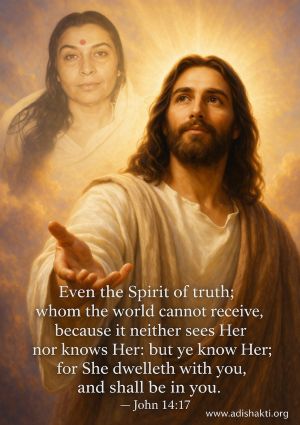
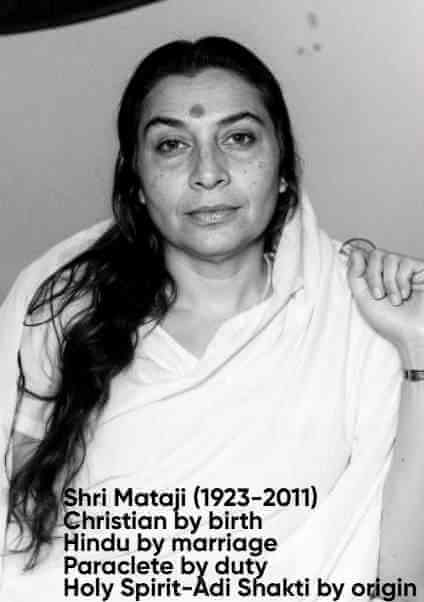
NATURE OF THE DIVINE MOTHER OR HOLY SPIRIT
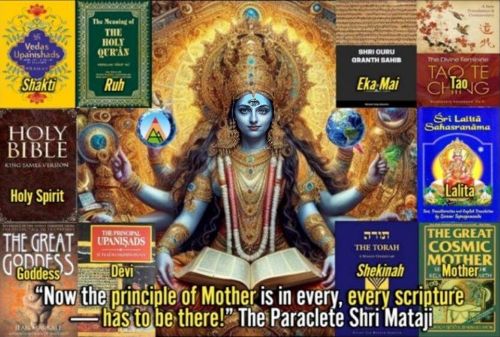
Her existence precedes the formation of language, implying that Her operations are not contingent on words. It is a widely held belief among mystics that no degree of intellectual comprehension can serve as a substitute for a direct, personal experience of Her. The subject of the Mother's identity is profoundly complex, and the generalities presented herein are the result of piecing together a vast and intricate spiritual puzzle. Ultimately, these conclusions remain interpretive conjectures.
Table of Contents
- 1. Introduction
- 2. The Mother is Neither a Female nor a Person
- 3. The "Mother" and "Father" as Metaphors for the Relative and Absolute Planes
- 4. The Mother as the Operator of the Cosmos
- 5. The Mother as the Creator of the Body
- 6. The Divine Trinity: Father, Mother, and Child
- 7. The Cosmic Dance: The Mother Arises from and Merges with the Father
- 8. The Mother as Energy, Movement, and Vibration
- 9. The Mother as the Universal Creative Vibration: Aum
- 10. The Ultimate Unity of the Mother and the Father
- 11. The Mother's Central Role in Enlightenment
- 12. A Lexicon of the Divine Mother
- 13. Conclusion: The Incomprehensible and Immeasurable Mother
- 14. References
- 15. Bibliography
1. Introduction
The spiritual phenomenon known as the Divine Mother has perpetually captivated the hearts and minds of seekers across traditions. This divine entity, whom sages and saints throughout history have known, is addressed in the West as the Holy Spirit and Mother Nature. In the rich spiritual landscape of India, Hindus revere Her as Shakti, Maya, Kali, and Durga. She is also identified with profound concepts such as Wisdom, the sacred syllable Aum, Amen, and the Word of God. Regardless of the name used, She is an existent, perceptible reality that can be directly and intimately experienced. This paper endeavors to present a series of conjectures regarding Her identity, drawing upon the recorded experiences of enlightened masters. The nature of the Mother remains one of life's most unfathomable mysteries; thus, any attempt to describe Her directly or positively falls short. Our understanding must be constructed through metaphor—She is likened to waves, clouds, light, fire, voices, and music, though She is none of these. This metaphorical approach is the only viable path to discussing Her essence.
Her existence precedes the formation of language, implying that Her operations are not contingent on words. It is a widely held belief among mystics that no degree of intellectual comprehension can serve as a substitute for a direct, personal experience of Her. The subject of the Mother's identity is profoundly complex, and the generalities presented herein are the result of piecing together a vast and intricate spiritual puzzle. Ultimately, these conclusions remain interpretive conjectures.
To fully appreciate the framework presented, the reader is invited to suspend disbelief until the complete argument has been articulated. Every name for the Mother used in this essay, unless specified otherwise, is a designation given by an enlightened master. A comprehensive list of these names is provided toward the end of this document. As all these names refer to the same ultimate reality, any one of them could have been chosen as the definitive term. However, in alignment with the practice of Sri Ramakrishna, this divine power will be referred to as the "Divine Mother." For those who wish to delve deeper into this subject, the Gospel of Sri Ramakrishna—the recorded conversations of Her most devoted sage—is the most authoritative source. While many sages apprehended a single facet of the Mother, the Avatar of Dakshineswar ascended to the zenith of enlightenment through multiple spiritual paths, revealing a sublime, multifaceted understanding of the Mother that provides a standard against which other accounts may be measured.
2. The Mother is Neither a Female nor a Person
To approach a coherent understanding of the Divine Mother, it is essential to first transcend our anthropocentric tendencies. She is not a person, nor is She female; rather, She is a universal agency, a divine power that can only be comprehended as She is. Avatars and enlightened sages, when speaking of the Holy Father and Divine Mother, face the challenge of articulating a reality where these two entities are one at the absolute level of existence, yet appear distinct at the relative level. To differentiate them, they employ the metaphor of gender, as illustrated by the words of Kabir and Lao Tzu:
Kabir: The formless Absolute is my Father, and God with form is my Mother.
[1]
Lao Tzu: Nameless indeed is the source of creation [i.e., the Father], but things have a mother and she has a name.
[2]
Both Kabir and Lao Tzu distinguish between an absolute realm, devoid of name and form, and a relative plane, where name and form exist. The former is designated as the Father, while the latter is referred to as the Mother. However, over the centuries, this gender metaphor has led to a significant misunderstanding. Lacking the illumined knowledge of the sages, we tend to project human stereotypes, conclusions, and preferences onto these sublime, genderless powers. The Divine Mother becomes anthropomorphized into a woman, a distortion that obscures Her true nature and entangles us in a web of limiting conceptions.
Though not female, the Mother is the necessary cause of gender; though not male, the Father is its sufficient cause. Though not a person Herself, the Mother is the source of personhood; though not a person Himself, the Father is the source of existence itself. To genuinely approach an understanding of Her nature that facilitates spiritual realization, we must remain vigilant against extending the gender metaphor beyond its limited utility.
3. The "Mother" and "Father" as Metaphors for the Relative and Absolute Planes
To grasp the fundamental distinctions concerning the Divine Mother, we must adopt a vast and cosmic perspective. Sri Ramakrishna alluded to this immensity when he told his devotees: The macrocosm and microcosm rest in The Mother's womb. Now do you see how vast She is?
[3] Swami Nikhilananda, one of Sri Ramakrishna's distinguished translators and biographers, clarifies that reality comprises two distinct levels: the absolute, acosmic, or transcendental, and the relative, cosmic, or phenomenal.[4] It was to articulate these two dimensions of reality that the saints and sages employed the metaphor of a cosmic male and female.
According to Swami Nikhilananda, at the phenomenal level, one perceives a universe of diversity and is conscious of one's individual personality or ego. In contrast, at the transcendental level, all differences merge into an inexplicable, non-dual consciousness. Both levels of experience are real from their respective standpoints, although what is perceived at one level may be negated at the other.[5]
Thus, the Mother, who is coterminous with the relative plane of existence, encompasses all things, all creation, all manifestation, and all matter. The Father, the ultimate source of creation, remains eternally as no-thing—uncreated, unmanifest, and immaterial. Within the relative plane, the Divine Mother creates all that exists, preserves it for a designated period, and ultimately dissolves it back into the formless Father.
4. The Mother as the Operator of the Cosmos
According to the sages, it is the Divine Mother who operates the world—She who creates, preserves, and destroys all that exists. Swami Nikhilananda observes that She is the Procreatrix [cf. Prakriti], Nature, the Destroyer, the Creator.
[6] This statement echoes the wisdom of ancient texts, such as the Upanishads, which declare of Her: Thou art the creator; thou art the destroyer by thy prowess; and thou art the protector.
[7]
In the Bhagavad-Gita, Sri Krishna refers to Her as Maya:
Maya makes all things: what moves, what is unmoving.
O son of Kunti, that is why the world spins,
Turning its wheel through birth and through destruction.[8]
This understanding is not exclusive to Hindu thought. The avatar Zarathustra taught that the Mother was solely responsible for the management of the bodily and spiritual worlds.
[9] Similarly, King Solomon affirmed that Wisdom operates everything.
[10] Swami Nikhilananda employs a variety of metaphors to illustrate Her cosmic function:
She projects the world and again withdraws it. She spins it as the spider spins its web. She is The Mother of the Universe, identical with the Brahman of Vedanta, and with the Atman of Yoga. As eternal Lawgiver, She makes and unmakes laws; it is by Her imperious will that karma yields its fruit. She ensnares men with illusion and again releases them from bondage with a look of Her benign eyes. She is the Supreme Mistress of the cosmic play, and all objects, animate and inanimate, dance by Her will. Even those who realize the Absolute in nirvikalpa samadhi are under Her jurisdiction as long as they live on the relative plane.[11]
In the Bible, She is metaphorically called the Voice in the Wilderness.
This is because no law, principle of organization, or structure can be applied to the formless God. Only the Mother possesses form; as such, She gives voice to God, crying out in the conceptual Wilderness
that the Father is.
5. The Mother as the Creator of the Body
Having created the universe, the Divine Mother also dwells within it. King Solomon, an enlightened devotee of the Mother, suggests that Wisdom—his name for Her—penetrates and permeates everything that is, every material thing.
[12] Sri Ramakrishna corroborates this, stating, After the creation the Primal Power [the Mother] dwells in the universe itself. She brings forth this phenomenal world and then pervades it.
[13] The Avatar of Dakshineswar further confided to his devotees, The Divine Mother revealed to me that it is She Herself who has become man.
[14]
She is the architect of the five material bodies (the pancha kosas) through which we act and acquire knowledge. Solomon cryptically remarks, Wisdom hath builded her house, she hath hewn her seven pillars.
[15] It is my interpretation that these seven pillars
refer to the seven chakras. St. Paul also alluded to Her role as the body's creator and indweller when he asked, Know ye not that ye are the temple of God, and that the Spirit of God [the Mother] dwelleth in you?
[16] In the words of Sri Krishna, Every human being is essentially a soul [the Child of God or Atman, one with the Father], covered with a veil of maya [the Mother].
[17]
6. The Divine Trinity: Father, Mother, and Child
This mention of the immortal soul introduces the three eternal actors in our divine drama: the formless Father, the Mother with form, and the immortal soul, their offspring, which the prophet Amos described as a firebrand plucked out of the burning.
[19] What is the nature of the divine play in which these three are engaged?
From the perspective of the immortal soul, the purpose of life is enlightenment.[18] The soul journeys forth from God into the world, and after eons of spiritual evolution, it awakens to the ultimate realization that it and God are one. From the Creator's standpoint, the purpose of life is for God to meet God and, in that union, to experience His own bliss.[20] The Father created the Mother, who in turn brought forth countless forms—embodied souls, the prodigal children—that journeyed into the realm of matter (mater, Mother) until each one awakens to its own divine identity.
These three actors can be understood as the Transcendental (the Holy Father), the Phenomenal (the Divine Mother), and the Transcendental within the Phenomenal (the immortal soul or Child of God). When reordered, this triad forms the Christian Trinity: the Father, the Son, and the Holy Ghost. The immortal soul is the unrealized Son of God,
[21] the treasure buried in the field, the Pearl of Great Price, and the mustard seed that grows into a great tree upon realization.[22] This is the precise point of intersection between Christianity and Hinduism, where the Trinity is known as Brahman (the Father), Atman (the Son/Soul), and Shakti (the Mother/Holy Spirit). The Divine Mother fashions the body, and the Holy Father conceals a fragment of Himself within its heart—the Child of God—which the Mother then nurtures and educates until the divine spark awakens to its true identity.
7. The Cosmic Dance: The Mother Arises from and Merges with the Father
The Divine Mother arises from the Father and, in the cosmic rhythm, merges back into Him. She is like the clouds that form in the sky, and the Father is the sky itself—the source from which the clouds emerge and into which they dissolve. Sri Ramakrishna eloquently conveyed this relationship through the metaphor of impermanent waves forming on the ocean of Satchidananda (Being-Consciousness-Bliss):
These waves [arise] from the Great Ocean and merge again into the Great Ocean. From the Absolute to the Relative, and from the Relative to the Absolute.[23]
It has been revealed to me that there exists an Ocean of Consciousness without limit [i.e., the Father]. From it come all things of the relative plane [i.e., the Mother], and in it they merge again.[24]
Paramahansa Yogananda employed a similar wave metaphor to describe the Mother: The storm-roar [the Mother] of the sea [the Father] creates the waves [materiality]—preserves them for some time as larger or smaller waves—and then dissolves them.
[25] While the great ocean of consciousness is formless, the waves, which are an integral part of it, possess form. Nevertheless, the waves and the ocean are one. That which has form,
Sri Ramakrishna asserted, again, is without form. That which has attributes, again, has no attributes.
[26] He further clarified, Water is water whether it is calm or full of waves. The Absolute alone is the Primordial Energy, which creates, preserves, and destroys.
[27]
Sri Ramakrishna also described the emergence of the relative plane from the absolute and its eventual return:
Brahman [the Father] may be compared to an infinite ocean, without beginning or end. Just as, through intense cold, some portions of the ocean freeze into ice and formless water appears to have form, so through the intense love of the devotee, Brahman appears to take on form and personality. But the form melts away again as the Sun of Knowledge rises. Then the universe [the Mother] also disappears, and there is seen to be nothing but Brahman.[28]
8. The Mother as Energy, Movement, and Vibration
According to Swami Nikhilananda, the essence of the Divine Mother is shakti, or energy—specifically, adyashakti, the primordial energy. Maya, the mighty weaver of [the mysterious garb of name and form],
he states, is none other than Kali, the Divine Mother, She is the primordial Divine Energy, Sakti.
[29]
What, then, is the distinction between Shakti and Brahman, the Mother and the Father? Sri Ramakrishna explains that it is the distinction between the dynamic and the static:
When inactive He is called Brahman, the Purusha [i.e., the Supreme Person]. He is called Sakti, or Prakriti [the Primordial Energy], when engaged in creation, preservation, and destruction. These are the two aspects of Reality: Purusha and Prakriti. He who is the Purusha is also the Prakriti.[30]
Sri Ramakrishna equates the static Father with the impersonal God, Nirguna Brahman (the Absolute without attributes), and the dynamic Mother with the personal God, Saguna Brahman (the Absolute with attributes):
When the Godhead [the Father] is thought of as creating, preserving, and destroying, It is known as the Personal God, Saguna Brahman, or the Primal Energy, Adyasakti [the Mother]. Again, when It is thought of as beyond the three gunas [the qualities of the phenomenal world: sattva, rajas, and tamas], then It is called the Attributeless Reality, Nirguna Brahman, beyond speech and thought; this is the Supreme Brahman, Parabrahman.[31]
This dynamic is symbolically represented in the iconography of Shakti and Shiva, where Shiva lies recumbent while Shakti dances upon His body. Sri Ramakrishna reveals the esoteric meaning:
Kali stands on the bosom of Siva; Siva lies under Her feet like a corpse; Kali looks at Siva. All this denotes the union of Purusha and Prakriti. Purusha is inactive; therefore Siva lies on the ground like a corpse. Prakriti performs all Her activities in conjunction with Purusha. Thus She creates, preserves, and destroys.[32]
Thus, the Father is immoveable and actionless,
[33] a profound stillness wherein one discovers Sat-Chit-Ananda (Being-Awareness-Bliss Absolute). The Mother is the movement within this stillness, the voice in the silence, the primordial, active energy within the eternal tranquility of the Father. It is this interplay between the dynamic and the static that Jesus alluded to when he described the totality of God as a movement and a rest.
[34] Bernadette Roberts emphasized the Father's stillness by calling him the 'still-point' at the center of being,
[35] while Lao Tzu highlighted it by asserting, The Way [the Tao or the Father] is a Void.
[36]
Empty of name and form, qualities and attributes, and quintessentially tranquil and still, the Father is ultimately inconceivable. What Brahman is cannot be described,
declared the Godman of Dakshineswar.[37] Because the ego is subdued upon attaining the Father, leaving no observer to observe, no one has ever been able to say what Brahman is.
[38]
9. The Mother as the Universal Creative Vibration: Aum
Hindus symbolize the primal power of the Mother—as vibration or energy—through the sacred syllable, or rather vibration, Aum. Sri Ramakrishna makes this connection explicit when he equates Aum with the Divine Mother, exclaiming, O Mother! O Embodiment of 'Om'!
[39]
Paramahansa Yogananda identifies Aum, or Amen, with the Holy Spirit. Christians are familiar with the term Amen from the Book of Revelation: These things saith the Amen [the Mother], the faithful and true witness, the beginning of the creation of God.
[40] Yogananda explains:
The ancients, not versed in the polished language of modern times, used Holy Ghost
and Word
for Intelligent Cosmic Vibration, which is the first materialization of God the Father in matter [i.e., the Mother]. The Hindus speak of this Holy Ghost as the Aum.
[41] Holy Ghost, Aum of the Hindus, the Mohammedan Amin, the Christian Amen, Voice of Many Waters, Word, are the same thing.[42]
Yogananda further links Aum and the Holy Ghost to the primordial energy:
The Bible refers to Aum as the Holy Ghost or invisible life force that divinely upholds creation. 'What? Know ye not that your body is the temple of the Holy Ghost which is in you, which we have of God, and ye are not your own?' (I Corinthians 6:19).
[43]
Thus, the Mother, Shakti, the Holy Ghost, is known as Aum. This sacred vibration creates, preserves, and destroys:
The cosmic sound of Aum creates all things as Nebulae, preserves them in the forms of the present cosmos and worlds, and ultimately will dissolve all things in the bosom-sea of God.[44]
Nature is an objectification of Aum, the Primal Sound or Vibratory Word.[45]
Sage Vasistha articulates a similar concept in the Yoga Vasistha, where, like Sri Ramakrishna, he describes vibrations arising from the Ocean of Satchidananda:
When the infinite vibrates, the worlds appear to emerge. When it does not vibrate, the worlds appear to submerge, even as when a firebrand is whirled fast a circle appears. And when it is held steady, the circle vanishes. Vibrating or not vibrating, it is the same everywhere at all times.[46]
Theosophist Annie Besant also propagated this view:
The source from which a universe proceeds is a manifested Divine Being, to whom in the modern form of the Ancient Wisdom the name of Logos, or Word, has been given. The name is drawn from Greek philosophy, but perfectly expresses the ancient idea, the Word which emerges from the Silence, the Voice, the sound, by which the worlds come into being.[47]
A contemporary vision from Maura O'Connor, a student of Kabbalah, offers a powerful representation of the Mother's birth. In her vision, she is instructed by the rabbi Moses de Leon:
Emptiness, what the kabbalists call ayin, exists far beyond concepts or language. It is like a pure ether that can never be grasped by the mind. ... Emptiness is the ultimate mystery, the secret of the Cause of Causes, and it brought everything into being. ...
I must tell you of the great rabbi, Isaac Luria... He recognized that in order for the latent divinity of ayin to manifest its glorious potential for life, a cataclysmic contraction had to take place. ... Luria understood that the absolute nature of this emptiness meant that it was so pervasive, nothing else but it could exist. In order for life to become manifest, a seismic contraction of emptiness in on itself had to occur, creating a space in which divine emanation was possible. ...
Following this immense contraction, God's first cosmic act was the emission of a single perfect ray of light. This beam pierced through the void and then expanded in all directions. Think of it as God's first breath ["spirit"="breath"] exhaling into the abyss after eons of slumber and filling it with His divinity. This is how the universe was born.[48]
This first perfect ray of Light is the Holy Spirit or Divine Mother. Its expansion in all directions signifies the birth of the universe—a vision that resonates with the modern scientific concept of the "Big Bang."
10. The Ultimate Unity of the Mother and the Father
This Light, this vibration known as Aum—the Divine Mother—is ultimately one with the vibrationless Father. Patanjali states, The Word which expresses [God] is 'Om'.
[49] Shankara affirms this unity, declaring, Oh, Lord, dweller within, 'Om' is your very self.
[50] The Upanishads further elucidate, Om is Brahman, both the conditioned [Mother] and the unconditioned [Father], the personal [Mother] and the impersonal [Father].
[51] Speaking as the divine, Krishna proclaims in the Bhagavad-Gita:
I am ...
Om in all the Vedas,
The word that is God.[52]
Three great Hindu masters—Swami Yukteswar Giri, Swami Sivananda, and Sri Ramakrishna—have explained the relationship between Brahman and Shakti (Father and Mother) using the metaphor of fire and its power to burn.
Swami Yukteswar Giri, the guru of Paramahansa Yogananda, explains:
[The] manifestation of the Word (becoming flesh, the external material) created this visible world. So the Word, Amen, Aum [the Mother], being the manifestation of the Eternal Nature of the Almighty Father or His own Self, is inseparable from and nothing but God Himself; as the burning power is inseparable from and nothing but the fire itself.[53]
Swami Sivananda elaborates on this inseparability:
Just as one cannot separate heat from fire, so also one cannot separate Sakti [Mother] from Sakta [Father]. Sakti and Sakta are one. They are inseparable.[54]
Sri Ramakrishna provides a similar analogy:
Brahman and Sakti are identical. If you accept the one, you must accept the other. It is like fire and its power to burn. If you see the fire, you must recognize its power to burn also. ... One cannot think of the Absolute without the Relative, or the Relative without the Absolute.[55]
Sakti is Brahman itself,
concludes Swami Sivananda.[56] Sri Ramakrishna concurs, stating, Brahman is Sakti; Sakti is Brahman. They are not two.
[57] They are only two aspects, male and female, of the same Reality, Existence-Knowledge-Bliss-Absolute.
[58] Therefore, when we address the Divine Mother, we are simultaneously addressing the Holy Father. As Sri Ramakrishna teaches, It is Brahman whom I address as Sakti or Kali.
[59]
11. The Mother's Central Role in Enlightenment
The Divine Mother plays a central and indispensable role in the process of enlightenment. She is consistently portrayed as the guide who leads the Sons and Daughters of God to their final, culminating union with the Father. Like Jesus, we have all come from the Father into the world, and we are all prodigal children wandering in the domain of matter (mater, Mother) until we awaken to our true nature. This awakening is described through various metaphors: the Mother withdraws Her veil of phenomenal reality to reveal the Father, or She leads the Child of God directly to Him.
Hindu sages, such as Swami Sivananda, advise aspirants to first seek the Mother's grace in their quest for the Father:
It behooves ... the aspirant [to] approach The Mother first, so that She may introduce Her spiritual child to the Father for its illumination or Self-realization.[60]
The realization of God as the Child, the Mother, and the Father represents three distinct stages of enlightenment. A full experiential knowledge of this divine Trinity marks the completion of the soul's human journey back to God. Let us now examine the Mother as both the bestower of enlightenment and the object of enlightenment.
In the Book of Proverbs, the Mother, personified as Wisdom, speaks directly, and Her words align with the understanding we have developed so far:
Doth not wisdom cry...
The Lord possessed me in the beginning of his way, before his works of old.
I was set up from everlasting [that is, before time], from the beginning, or ever the earth was.
When there were no depths, I was brought forth; when there were no fountains abounding with water.
Now therefore hearken unto me, O ye children: for blessed are they that keep my ways.[61]
Those who keep Her ways are blessed because the Mother enlightens them. Evidence of this is found throughout the Bible, where Hebrew kings and prophets were baptized with the Holy Spirit. A prominent example is the enlightenment of Jesus's disciples on the Day of Pentecost:
And when the day of Pentecost was fully come, they were all of one accord in one place.
And suddenly there came a sound from heaven as of a rushing mighty wind, and it filled all the house where they were sitting.
And there appeared unto them cloven tongues like as of fire, and it sat upon each of them.
And they were filled with the Holy Ghost, and began to speak with other tongues, as the Spirit gave them utterance.[62]
Sri Yukteswar explains the significance of this event, stating that by being baptized in the sacred stream of Pranava (the Holy Aum vibration),
the spiritual aspirant comprehends the 'Kingdom of God'.
[63]
While Islam is often perceived as recognizing only Allah, the Father, a passage in the Koran acknowledges the role of the Holy Spirit in preparing the soul for its meeting with God:
Exalted and throned on high, [Allah] lets the Spirit descend at His behest on those of His servants whom He chooses, that He may warn them of the day when they shall meet Him.[64]
The 12th-century German saint Hildegard of Bingen was also enlightened by the Divine Mother, testifying:
When I was forty-two years and seven months old, a burning light of tremendous brightness coming from heaven poured into my entire mind. Like a flame that does not burn but enkindles, it inflamed my entire heart and my entire breast, just like the sun that warms an object with its rays.[65]
Following this experience, Hildegard sang the praises of the Holy Spirit:
Who is the Holy Spirit? The Holy Spirit is a Burning Spirit. It kindles the hearts of humankind. Like tympanum and lyre it plays them, gathering volumes in the temple of the soul. The Holy Spirit resurrects and awakens everything that is.[66]
The Mother manifested to Sri Ramakrishna as clouds of consciousness and bliss:
Suddenly I had the wonderful vision of The Mother and fell down unconscious.[67] ... It was as if houses, doors, temples, and everything else vanished from my sight, leaving no trace whatsoever. However far and in whatever direction I looked I saw a continuous succession of effulgent waves madly rushing at me from all sides, with great speed. I was caught in the rush, and panting for breath I collapsed, unconscious.[68] ... I did not know what happened then in the external world—how that day and the next slipped away. But in my heart of hearts there was flowing a current of intense bliss, never experienced before, and I had the immediate knowledge of the light that was Mother.[69]
She also revealed Herself to Ramakrishna's non-dualistic guru, Totapuri, who had previously refused to accept Her reality:
Suddenly, in one dazzling moment, [Totapuri, saw] on all sides the presence of the Divine Mother. She is in everything; She is everything. She is in the water; She is on land. She is the body. She is the mind. She is pain; She is comfort. She is life; She is death. She is everything that one sees, hears, or imagines. ... Without Her grace no embodied being can go beyond Her realm. ... She is the Brahman that Totapuri had been worshipping all his life.[70]
The Mother is also the kundalini energy within the body. When this energy ascends from the muladhara chakra to the sahasrara, Shakti is said to merge with Shiva. This is another powerful way the Mother leads the aspirant to the Father. Swami Sivananda explains that Shakti leads the individual from Cakra to Cakra, from plane to plane and unifies him with Lord Siva in the Sahasrara.
[71] Sri Ramakrishna and his disciples would sing a hymn to invoke the rising of the kundalini:
Awake, Mother! Awake! How long Thou hast been asleep
In the lotus of the Muladhara!
Fulfil Thy secret function, Mother:
Rise to the thousand-petalled lotus within the head,
Where mighty Siva has His dwelling;
Swiftly pierce the six lotuses
And take away my grief, O Essence of Consciousness![72]
As each chakra awakens, the Mother is heard to knock at the door,
in the words of Paramahansa Yogananda, who interprets the passage from Revelation (3:20): Behold, I stand at the door, and knock (sound through Om vibration): If any man hear my voice (listen to Om), and open the door, I will come in to him.
[73]
Many aspirants, including Franklin Merrell-Wolff and Da Free John, were led to Brahmajnana (God-realization) through the awakening of the kundalini. Dr. Wolff described his experience of this energy:
The Current is clearly a subtle, fluid-like substance which brings the sense of well-being already described. Along with It, a more than earthly Joy suffuses the whole nature. To myself, I called It a Nectar. Now, I recognize It under several names. It is ... the 'Soma,' the 'Ambrosia of the Gods,' the 'Elixir of Life,' the 'Water of Life' of Jesus, and the 'Baptism of the Spirit' of St. Paul. It is more than related to Immortality; in fact it is Identical with Immortality.[74]
Da Free John referred to it as this current of immortal joy.
[75] His process of God-realization began when he felt little clicking pulses in the base of my head and neck, indicating the characteristic Presence of The Mother Shakti.
[76] Withdrawing Her veils, guiding us with Her evolutionary coaxings, teaching us in Her school of matter, and liberating us through the rising of the kundalini—these are but a few of the many ways the Mother leads the prodigal child back to the Father.
12. A Lexicon of the Divine Mother
The Divine Mother has been recognized by sages across centuries and cultures, from Advaita Vedanta to Zoroastrianism. However, the multitude of names She has been given, combined with a lack of integrated scholarship, has often led to confusion. The following list summarizes the various names and epithets linked to the Divine Mother, derived by starting with unequivocal terms like "Holy Spirit," "Divine Mother," and "Shakti," and then cross-referencing synonymous terms used by the same enlightened sources.
- Adyasakti (Ancient Power)
- Sri Ramakrishna in GSR, 218 and 460.
- Ahunavairya
- Zarathustra in GZ, 8-9.
- Amen
- Revelation 3:14; Shankara, CJD, I; Sri Yukteswar Giri, HS, 23 and 24; Paramahansa Yogananda in AY, 237n and 363n and SCC, 1, 17 and SCC, 2, 22.
- Amin
- Paramahansa Yogananda in, 237n.
- Aum or Om
- UPAN 50 and 53; Sri Ramakrishna in GSR, 299; Sri Yukteswar Giri, HS, 24; Paramahansa Yogananda, AY, 143-4, 237n, 363n, 484, and 487n and SCC, 1, 15-6 and 19 and SCC, 2, 22.
- Breath of God
- Job 33:4; Solomon in APO, 191.
- Comforter or Comforter Spirit
- Zarathustra in GZ, 217; Jesus in John 14:16 and 14:26 and 15:26; Hildegard of Bingen in IHB, 9; Paramahansa Yogananda, AY, 144n and 363n and SCC, 1, 19.
- Cosmic Power or Energy
- Sri Ramakrishna in GSR, 116; Paramahansa Yogananda, SCC, 2, 22; Swami Sivananda in KYW, 25.
- Cosmic Sound
- Paramahansa Yogananda, AY, 237, SCC, 1, 15 and 17 and SCC, 2, 22.
- Cosmic Vibration
- Paramahansa Yogananda, SCC, 1, 15-6, 17, and 56 and SCC, 2, 22.
- Creator, Preserver, and Destroyer
- UPAN, 37; Zarathustra, GZ, 187, 227 and 240; Sri Ramakrishna in GSR, 32, 107, 135, and 653; Paramahansa Yogananda, SCC, 1, 15-6.
- Divine Mother
- Lao Tzu in WOL, 53, 72, and 105; Paramahansa Ramakrishna in GSR, 32, 107, 136, 200, and 299; Swami Sivananda Sarasvati in KYW, 25; Nikhilananda in VIV, 24; Omraam Mikhael Aivanhov, LAS, 1, 15, 21, 22, and 28; Da Free John in KOL, 132; etc.
- Divine Power
- Sister Vandana, NJ, 190-1.
- Durga
- Paramahansa Ramakrishna in GSR, 216.
- Embodiment of Om
- Sri Ramakrishna in GSR, 299.
- The Fashioner of all things
- Solomon in APO, 191.
- Holy Ghost
- Jesus in Matthew 12: 31-2; John 14:26 and 20:21-2; Paramhansa Yogananda, AY, 143-4, 363n, and 487n and SCC, 1, 15-6 and 19 and SCC, 2, 22.
- Holy Spirit
- Solomon in APO, 195; Zarathustra, 217 and 227; Luke 11:13.
- Holy Vibration
- Paramahansa Yogananda in SCC, 1, 56.
- Hum
- Paramahansa Yogananda, AY, 237n.
- Kali
- Sri Ramakrishna in GSR, 107 and 634; Nikhilananda," Introduction," to GSR, 9-10; Nikhilananda," Vivekananda"In VIV, 24; Paramahansa Yogananda, AY, 10, 40n, and 41.
- Kundalini
- Swami Sivananda in KYW, 25 and 30; GSR, 182.
- Logos
- Annie Besant, AW, 44; Vivekananda in Nikhilananda, VIV, 422.
- Matrix
- Lao Tzu in WOL, 105; Sri Aurobindo, SOY, 3.
- Maya
- Sri Krishna in BG, 80; Shankara in CJD, 49; Sri Aurobindo, UP, 27; Nikhilananda, HIN, 42-3 and 45; Swami Sivananda in KYW, 26.
- Mother
- See Divine Mother.
- Mother Nature, Mother of nature
- Swami Sivananda in KYW, 26; Paramahansa Yogananda, AY, 10 and 41; Omraam Mikhael Aivanhov, CML, 19; Nikhilananda in GSR, 9-10.
- Mother of the universe
- Nikhilananda," Vivekananda"In VIV, 24.
- Natural Law
- Solomon in Proverbs 1:8-9, 3:1, and 6:20; Jesus in Matthew 12:31-2; St. Paul in Romans 8:2; Omraam Mikhael Aivanhov, CML, 18-9; Krishnamurti, AFM, 25.
- Nature
- Paramahansa Yogananda, AY,40n and 41 and SCC, 1, 33; John Redtail Freesoul, BI, 11-2.
- Noise of many waters
- David in Psalm 93:3-4; Ezekiel 43:1-2.
- Personal God or Saguna Brahman
- Paramahansa Ramakrishna in GSR, 32, 149, 218 and 277.
- Power of God, Power of the Lord
- Solomon in APO, 191; Swami Sivananda in KYW, 25.
- Prakriti/Procreatrix
- Sri Krishna in BG, 103, 104, and 106; Sri Aurobindo, UP, 27; Ramakrishnananda, GDI, 1 and 8: Swami Sivananda in KYW, 26; Paramahansa Ramakrishna in GSR, 32 and123; Nikhilananda," Introduction"to GSR, 9-10; Paramahansa Yogananda, SCC, 1, 33.
- Prana
- UPAN , 35-8; Paramahansa Yogananda, AY, 484; Swami Sivananda in KYW, 26.
- Primal Energy, Primal Power
- Sri Ramakrishna in GSR, 116 and 135; Swami Sivananda in KYW, 25.
- Primordial/Primal Energy
- Sri Ramakrishna in GSR, 107 and 242.
- Relative Plane
- Sri Ramakrishna, GSR, 653.
- Saguna Brahman
- See Personal God or Saguna Brahman.
- Shakti
- Sri Ramakrishna in GSR, 116; Swami Sivananda in KYW, 25-6.
- Sound-Brahman, Shabda Brahman, or Pranava
- PR in GSR, 263; Swami Vivekananda in Nikhilananda, VIV, 422; Sister Vandana, NJ, 190-1.
- Sound of many waters
- Paramahansa Yogananda, AY, 267-8.
- Sphota
- Swami Vivekananda in Nikhilananda, VIV, 422; Usha, RVW, 74.
- Spirit of the Bridegroom
- St. John of the Cross, CWSJC, 580.
- Spirit of God, Spirit of the Lord
- Genesis 1:2; Exodus 35:31; Isaiah 11:2; Ibn Arabi, KK, 15-6; Paramahansa Yogananda in AY, 142 and 143.
- Spirit of Truth
- Jesus in John 14:17.
- Spirit of Wisdom
- Zarathushtra, GZ, 13 and 187; Exodus 28:3 and 35:31; Deuteronomy 34:9; Isaiah 11:2; St. Paul in Ephesians 1:15-7.
- Spouse
- St. John of the Cross in CWSJC, 75.
- Syama
- Sri Ramakrishna in GSR, 271.
- Voice in the Silence
- Annie Besant, AW, 44; Mabel Collins, LOP, 22.
- Voice of many waters
- St. John in Revelation 14:2; Paramahansa Yogananda in AY, 17n and SCC, 1, 19.
- Voice of one that crieth in the wilderness
- Isaiah 40:3.
- Wisdom or Sophia
- Zarathustra, GZ, 187 and 227; Solomon in Proverbs 3:19 and 9:1 and APO, 191 and 195; Isaiah 11:2; .Jesus in Matthew 11:19; John of the Cross in CWSJC, 75.
- Witness
- St. John in Revelation 3:14 and Paramahansa Yogananda in AY, 143-4 and 237 and SCC, 2, 22.
- Womb of God, Womb of Brahman, womb of wombs; Brahmayoni
- Sri Krishna in BG, 106; Sri Ramakrishna, GSR, 870; Yogeshananda in VSR, 41; Sri Aurobindo, SOY, 3.
- Word
- Hermes, DPH, 8 and 17; Zarathustra in GZ, 8-9; John 1:1 and 1:3; Annie Besant, AW, 44; Sri Yukteswar Giri, HS, 23 and 24; Paramahansa Yogananda, AY, 143-4, 237n, and 363n, SCC, 1, 19 and SCC, 2, 22.
13. Conclusion: The Incomprehensible and Immeasurable Mother
One day, we may be able to say with Solomon, Happy is the man that findeth wisdom... She is more precious than rubies; and all things thou canst desire are not to be compared with her.
[79] Yet, even if we merge with Her and reap the profound rewards of that union, we can never fully know Her as long as we remain in the human state. Only those who have attained what Jesus called everlasting life
—the immortality conferred by the experience of vijnana,[80] or stable and permanent realization—reach a vantage point high enough to even begin to inquire into Her mystery. And even then, they can only marvel and say, with Shankara:
[The Mother] is neither being nor non-being, nor a mixture of both. She is neither divided nor undivided, nor a mixture of both. She is neither an indivisible whole, nor composed of parts, nor a mixture of both. She is most strange. Her nature is inexplicable.[81]
14. References
[1] GSR, 150.[2] WOL, 53.
[3] GSR, 106.
[4] HIN, 29; VIV, 24.
[5] HIN, 29.
[6] GSR, 9-10.
[7] UPAN, 37.
[8] BG, 80.
[9] GZ, 187.
[10] APO, 192.
[11] GSR, 30.
[12] APO, 191.
[13] GSR, 135.
[14] Ibid., 231.
[15] Proverbs 9:1.
[16] Corinthians 3:16.
[17] BG, 103.
[18] See "The Purpose of Life is Enlightenment".
[19] Amos 4:1.
[20] See "The Divine Plan" and "Is There a Plan to Life?".
[21]
If you will know yourselves, then you will ... know that you are the sons of the Living Father.(Jesus in GATT, 3.)
[22] See "Christianity and Hinduism are One".
[23] GSR, 353.
[24] Ibid., 359.
[25] SCC, 1, 16.
[26] GSR, 271.
[27] Loc. Cit.
[28] Sri Ramakrishna cited in Nikhilananda,
Shankara's Philosophy of Non-Dualism,CJD, 18-9; cf. GSR, 191.
[29] GSR, 30.
[30] Ibid., 321.
[31] Ibid., 218.
[32] Ibid., 271.
[33] Ibid., 104.
[34] GATT, 29.
[35] ENS, I0.
[36] WOL, 56.
[37] GSR, 102.
[38] Loc. Cit.
[39] GSR, 299.
[40] Rev. 3:14.
[41] SCC, 1, 16.
[42] Ibid., 19; HS, 24.
[43] AY, 363.
[44] SCC, 1, 16.
[45] AY, 155-6.
[46] CYV, 45.
[47] AW, 44.
[48] Maura O'Connor,
A People's Revolution of Enlightenment: Kabbalah,WIE, Issue 27, Nov.-Feb. 2004, 86-7.
[49] HTKG, 39.
[50] CJD, i.
[51] UPAN, 40.
[52] BG, 71.
[53] HS, 24.
[54] KYW, 25.
[55] GSR, 134.
[56] KYW, 26.
[57] GSR, 271.
[58] Loc. cit.
[59] Ibid., 734.
[60] KYW, 25.
[61] Proverbs 8:1, 22-4, and 32.
[62] Acts 2:1-4.
[63] HS, 15.
[64] KOR, 160.
[65] IHB, 9.
[66] Loc. cit.
[67] VSR, 13.
[68] Loc. cit.
[69] Loc. cit.
[70] GSR, 31.
[71] KYW, 26.
[72] GSR, 242.
[73] Self-Realization Fellowship Lessons, Number 29, 3.
[74] PTS, 31.
[75] KOL, 157.
[76] Ibid., 132.
[77] Ibid., 134.
[78] Ibid., 134-5.
[79] Proverbs 3:13 and 15.
[80] Sri Ramakrishna:
There is a stage beyond even Brahmajnana, After jnana comes vijnana.(GSR, 288.) Ramana Maharshi calls it turiyatita and sahaja [permanent] nirvikalpa samadhi:
Sahaja [samadhi] is also Nirvikalpa. You are probably meaning [Kevalya] Nirvikalpa, which is temporary, while the Samadhi lasts. The Sahaja Nirvikalpa is permanent and in it lies liberation from rebirths.(GR, 88.)
[The] Heart is the seat of Jnanam as well as of the granthi (knot of ignorance). It is represented in the physical body by a hole smaller than the smallest pin-point, which is always shut. When the mind drops down in Kevalya nirvikalpa [samadhi], it opens but shuts again after it. When sahaja nirvikalpa samadhi is attained it opens for good.(GR, 96.)
This is the final goal.(SE, answer to question 40.) This is the "final goal" in the sense that it frees an individual from the need to reincarnate in physical matter again, but it is not the final goal in terms of subsequent enlightenments.
[81] CJD, 49.
15. Bibliography
ABB: Khan, Hazrat Inayat, The Art of Being and Becoming. New Lebanon: Omega.
ABD: Sri Ramana Maharshi, Advaita Bodhika Deepika, downloaded from https://www.sriramanamaharshi.org/Allpub.html, 2 Oct. 2007.
ABPM: Anandamayi Ma: The Bliss-Permeated Mother, https://www.cosmicharmony.com/Anandamayi Ma: The Bliss Permeated Mother.htm.
AC: Amritanandamayi, Mata, Awaken, Children! Vallicakavu, India: Mata Amritanandamayi Mission Trust. [A new volume is published each year.]
AE: Nisdargadatta Majaraj, Awaken to the Eternal. Nisargadatta Maharaj: A Journey of Self-Discovery. Inner Directions video. N.d.
AFM: Krishnamurti, J. At the Feet of the Master. Adyar: Theosophical Publishing House, 1974; c1910.
AG: Chetanananda, Swami, Avadhuta Gita. The Song of the Ever-Free. Calcutta: Advaita Ashram, 1988.
AGJC: Levi, Aquarian Gospel of Jesus the Christ. Marina Del Rey: DeVorss, 1972; c1935.
AH: Al-Ghazzali, The Alchemy of Happiness. trans. Claud Field. Lahore: ASHRAF, 1971; c1964.
AHLW: Lannoy, Richard. Anandamayi: Her Life and Wisdom. Shaftesbury, etc.: Element, 1996.
AI: Blake, William. Auguries of Innocence, downloaded from https://www.theotherpages.org/poems/blake01.html, 27 October 2006.
AP: Leadbeater, C.W. The Astral Plane. Adyar: Theiosophical Publishing House, 1933; c1895.
APO: Goodspeed, Edgar J. trans., The Apocrypha. An American Translation. New York: Random House, 1959; c1938.
ASR: Gambhirananda, Swami, ed., The Apostles of Sri Ramakrishna. Calcutta: Advaita Ashrama, 1989.
AW: Besant, Annie, The Ancient Wisdom. Adyar: Theosophical Publishing House, 1972; c1897.
AWM: Adyashanti, Awake in the Modern World. Los Gatos: Open Gate Publishing, 2004. Video.
AY: Yogananda, Paramanhansa. Autobiography of a Yogi. Bombay: Jaico, 1975.
BA: Burnham, Sophy. A Book of Angels. Reflections on Angels Past and Present and True Stories of How They Tough Our Lives. (New York: Ballantine Books, 1990.
BB: Goddard, Dwight, A Buddhist Bible. Boston: Beacon Press, 1966; c1938.
BE: Anon., A Bridge to Eternity. Sri Ramakrishna and His Monastic Order. Calcutta: Advaita Ashrama, 1986
BG: Prabhavananda, Swami and Christopher Isherwood, trans., Bhagavad- Gita. The Song of God. New York and Scarborough: New American Library, 1972; c1944.
BHAK: Trapp, Jacob, ed., Bhakti, Shanti: Love, Peace, A Book of Meditations. Boston, 1971.
BI: Freesoul John Redtail, Breath of the Invisible. Wheaton, IL: Theosophical Publishing House, 1986.
BL: Saint-Pierre, Michel de, Bernadette and Lourdes. trans. Edward Fitzgerald. Garden City: Doubleday, 1960.
BMT: Cowell, E.B. et al, trans., Buddhist Mahayana Texts. New York: Dover, 1949; c1894.
BPM: Ling, Trevor. The Buddha's Philosophy of Man. Early Indian Buddhist Dialogues. London, etc.: Dent, 1981.
BR: Robinson, Richard and Willard L. Johnson, eds. The Buddhist Religion. A Historical Introduction. Belmont, CA: Wadsworth, 1982.
BRAM: Natarajan, A.R. Bhagavan Ramana and Mother. Bangalore: Ramana Maharshi Centre for Leanring, 1982.
BRM: Natarajan, A.R. Bhagavan Ramana & Mother. Bangalore: Ramana Maharshi Centre for Learning, 1982.
BT: Narada, Mahathera, The Buddha and His Teachings. Kandy: Buddhist Publication Society, 1973; c1964.
BTE: Anon., A Bridge to Eternity. Sri Ramakrishna and His Monastic Order. Calcutta: Advaita Ashrama, 1986
CC: Bucke, Maurice, Cosmic Consciousness. A Study in the Evolution of the Human Mind. New York: Dutton, 1969; c1901.
CFHT: Swarnagiri, Ramanananda. Crumbs from His Table. https://www.ramana-maharshi.org. Downloaded 10 September 2005.
CHT: Krishnamurti Foundation Trust, Krishnamurti: The Core of His Teachings,
1980, downloaded from https://www.katinkahesselink.net/kr/core.htm, 4 Nov. 2007.
CI: Brunton, Paul, and Munagala Venkataramaiah. Conscious Immortality. Conversations with Sri Ramana Maharshi. Rev. ed. 1996.
CIM: Anon., A Course in Miracles. A Text. Framingdale, NY: Foundation for Inner Peace, 1975.
CIT: Sumedho, Ajan. Cittaviveka. Teachings from the Silent Mind. Great Gaddesden: Amaravati Publications, c1984; 1992,
CJD: Prabhavananda, Swami and Christopher lsherwood, Shankara's Crest- Jewel of Discrimination. Hollywood: Vedanta Press, 1975; c1947.
CML: Aivanhov, Omraam Michael. Cosmic Moral Laws.
COA: Timothy Jones, Celebration of Angels. Nashville, etc.: Thomas Nelson Publishers, 1994.
COL, 1: Krishnamurti, J. Commentaries on Living. First Series. Bombay, etc.: B.I.
COL, 2: Krishnamurti, J. Commentaries on Living. Second Series. Wheaton, IL: Theosophical Publishing House, 1967; c1958.
COL, 3: Krishnamurti, J. Commentaries on Livinq. Third Series. Wheaton, IL: Theosophical Publishing House, 1970; c1960.
CON: Eliot, Alexander, The Connoisseur's Connoisseur,
Newsweek, November 5, 1979, 107.
CS: Suzanne Noffke, O.P., Catherine of Sienna. The Dialogue. New York and Mahwah: Paulist Press, 1980.
CSA: Pusey, E.B., trans., The Confessions of St. Augustine. London: Dent, 1934; c1909
CSG: Isabel Cooper-Oakley, The Comte of St. Germain. The Secret of Kings. A Monograph. Milan: G. Sulli-Rao, 1912.
CT: Rajneesh, Bhagwan, A Cup of Tea. Rajneeshpuram, OR: Rajneesh Foundation International, 1983.
CU: Anon., The Cloud of Unknowing trans. Clifton Wolters. Harmondsworth: Penguin Books, 1978; c1961.
CUE: Rama, Swami and Swami Ajaya, Creative Use of Emotion. Honesdale, PN: Himalayan International Institute of Yoga Science and Philosophy of the U.S.A., 1976
CWCT: Watson, Burton, trans. The Complete Works of Chuang Tzu. New York and London: Columbia University Press, 1968.
CWPD: Luibheid, Cohn, trans., Pseudo-Dionysus, His Complete Works. New York and Mahwah: Paulist Press, 1989.
CWRM: Osborne, Arthur, ed., The Collected Works of Ramana Maharshi. Tiruvannamali, 1979.
CWSJC: Kavanaugh, Kieran and Otilio Rodriguez, trans. Complete Works of St. John of the Cross. Washington: Institute of Carmelite Studies, 1973.
CYV: Venkatesananda, Swami, ed., The Concise Yoga Vasistha. Albany: State University of New York, 1984.
DBDWB: Devarajamudalliar, A. Day by Day with Bhagavan. Tiruvannamalai: Sri Ramanasraman, n.d. https://www.ramana-maharshi.org. Downloaded 10 Sept. 2005.
DLSE: Durckheim, Karlfried, Graf von, Daily Life as Spiritual Exercise; The Way of Transformation. Trans. Ruth Lwinnek. NY, etc.: Harper & Row, 1971.
DCP: Leadbeater, C.W. The Devachanic Plane or the Heaven World. Its Characteristics and Inhabitants. Adyar: Theosophical Publishing House, 1963; c1896.
DP: Mascaro, Juan, trans. The Dhammapada. Harmondsworth, Penguin Books.
DPH: Hargrave Jennings, ed., The Divine Pymander of Hermes Mercurius Trismegistus. Trans. Dr. Everard. San Diego: Wizards Bookshelf, 1985.
DR: Arberry, A.J., trans., Discourses of Rumi. New York; Samuel Weiser, 1977; c1961.
DS: Goenka, S.N. The Discourse Summaries. Pondicherry: Vipashyana Vishodan Vinyas, 1987.
EB: Shearer, Alistair, trans. Effortless Being. The Yoga Sutras of Patanjali. London, etc.: Unwin, 1982.
EC: Prabhavananda, Swami. The Eternal Companion. Brahmananda. Hollywood: Vedanta Press, 1970; c1944
ECST: Laski, Marghanita. Ecstacy in Secular and Religious Experiences. Los Angeles: Tarcher, 1961.
ED: Adyashanti, Emptiness Dancing.Selected Dharma Talks of Adyashanti. Los Gatos: Open Gate Publishing, 2004.
EE: Courtois, Flora, An Experience of Enlightenment. Wheaton, IL: Theosophical Publishing House, 1986.
EG: Aurobindo, Sri, Essays on the Gita. Pondicherry: Sri Aurobindo Ashram, 1972.
ENG: Enright, John. Enlightening Gestalt: Waking up from the nightmare. Mill Valley, CA: Pro Telos, 1980.
ENS: Roberts, Bernadette. The Experience of No-Self. A Contemplative Journey. Boston and London: Shamballa, 1985.
EP: O'Brien, Elmer, ed., The Essential Plotinus. Representative Treatises from the Enneads. Toronto: New American Library, 1964.
ESO: Besant, Annie. Esoteric Christianity. Wheaton, IL: Theosophical Publishing House, 1953; c1901.
ESS: Emerson, Ralph Waldo, Essays. First Series. London: Routledge and Sons, 1898; c1841.
FHGB: Bartholomew, Brother. From the Heart of a Gentle Brother. Taos, NM: High Mesa Press, 1987.
FHSA: Anon., Introduction
to Ramana Maharshi, Five Hymns to Sri Arunachala. Sixth edition.
FMSR: Prabhavananda, Swami. First Meetings with Sri Ramakrishna. Madras: Sri Ramakrishna Math, 1987
FOL: Rolle, Richard. The Fire of Love. Trans. Clifton Wolters. Harmondsworth: Penguin, 1981; c1972.
FVR: Ramana, Sri, Maharshi. Forty Verses on Reality. Trans. Arthur Osborne. Mountain Path, October 1964. Donwloaded from https://www.realization.org/page/namedoc0/40_verses/40_verses_0.htm, 25 August 2005.
GATT: Guillaumont, A. et al. The Gospel According to Thomas. New York and Evanston: Harper and Row, 1959.
GENT: White Eagle, The Gentle Brother. Liss, UK: White Eagle Publishing Trust, 1974, 1968.
GB: Carus, Paul. The Gospel of Buddha According to Old Records. Tucson: Omen Press, 1972.
GDI: Ramakrishnananda, Swami, God and Divine Incarnations. Madras: Sri Ramakrishna Math, 1986.
GFB: Ramana, Sri, Maharshi, Gems from Bhagavan. Comp. A. Devaraja Mudaliar. Tiruvannamalai: Sri Ramanasramam, 1985.
GLWT: Chetanananda, Swami. God Lived with Them. St. Louis: Vedanta Society of St. Louis, 1997.
GOCA: Gleanings from Orthodox Christian Authors and the Holy Fathers, downloaded from https://www.orthodox.net/gleanings/angels.html, 26 August 2006.
GR: Cohen, S.S., Guru Ramana. Memories and Notes. 6th edition. Tiruvannamalai: Sri Ramanasramam, 1993.
GSB: Dooley, Anne, ed., Guidance from Silver Birch. London: Spiritualist Press, 1975; c1966.
GSR: Nikhilananda, Swami, trans., The Gospel of Sri Ramakrishna. New York: Ramakrishna-Vivekananda Center, 1978; c1942.
GSRA: Nikhilananda, Swami, trans., The Gospel of Sri Ramakrishna. (Abridged) New York: Ramakrishna-Vivekananda Center, 1980; c1942.
GVP: Redfield, L.N., trans. Golden Verses of Pythagoras. Wellingborough: 1986.
GZ: Greenlees, Duncan, trans. The Gospel of Zarathushtra. Adyar: Theosophical Publishing House, 1978.
HA: Thomas Byrom, trans. Heart of Awareness. A Translation of the Ashtavakra Gita. Boston and Shaftesbury: Shambala, 1990.
HF: Gregory of Tours, The History of the Franks. Harmondsworth: Penguin, 1974.
HHC: Tzu, Lao. Hua Hu Ching. The Unknown Teachings of Lao Tzu. trans. Brian Walker. San Francisco: Harper, 1992.
HIN: Nikhilananda, Swami, Hinduism. lts Meaning for the Liberation of the Spirit. Madras: Sri Ramakrishna Math, 1968.
HOA: Byrom, Thomas, trans., The Heart of Awareness. A Translation of the Ashtavakra Gita. Boston and Shaftesbury: Shambhala, 1990.
HRG: Da Free John, ed. The Heart of the Ribhu Gita. Los Angeles: Dawn Horse Press, 1973.
HS: Yukteswar Giri, Swami Sri, The Holy Science. Los Angeles: Self- Realization Fellowship, 1984.
HSC: White, John, ed., The Highest State of Consciousness. Garden City: Doubleday, 1972.
HSU: Tobin, Frank, trans. Henry Suso. The Exemplar, with Two German Sermons. New York and Mahwah: Paulist Press, 1989.
HTKG: Prabhavananda, Swami and Christopher Isherwood, trans., How to Know God. The Yoga Aphorisms of Patanjali. New York, etc.: New American Library, 1969; c1953
IA: Adyashanti, The Impact of Awkenening. Los Gatos: Open Gate Publishing, 2000.
IAT: Frydman, Maurice, trans., I am That. Talks with Sri Nisargadatta Maharaj. ed. S.S. Dikshit. Durham, NC: Acorn Press, 1973.
IATG: Rajneesh, Bhagwan Shree. I am the Gate. The Meaning of Initiation and Discipleship. New York, etc.: Harper Colophon, 1977; c1975.
IC: Teresa, St., of Avila. Interior Castle. trans. E. Allison Peers. Garden City: Image Books, 1961.
IHB: Fox, Matthew, Illuminations of Hildegard of Bingen. Santa Fe: Bear, 1985.
ILWL: Fremantle, Anne and Christopher. In Love with Love. 100 of the Greatest Mystical Poems. New York, etc.: Paulist Press, 1978.
IWL: Collins, Mabel, The Idyll of the White Lotus. Wheaton, IL: Re Quest, 1974; c1952.
JI: Castaneda, Carlos, Journey to Ixtlan. The Lessons of Don Juan. New York: Pocket Books, 1972.
JGE: Ramana, Sri, Maharshi, Jewel Garland of Enquiry (Vichara Mani Malai). Tiruvannamalai: Sri Ramanasramam, 1996; c1977.
JR: Wiseman, James A., John Ruusbroec. The Spiritual Espousals and Other Works. New York, etc.: Paulist Press, 1985.
KK: Ibn Arabi, Muhyidden, Kernel of the Kernel. trans. Ismail Hakki Bursevi. Sherborne: Beshara, n.d..
KOL: Free John, Da, The Knee of Listening. Original Edition. Clearlake, CA; Dawn Horse Press, 1984; c1973.
KUN: Mookerjee, Ajit. Kundalini. The Arousal of the Inner Energy. Rochester, VT: Destiny Books, 1989.
KYA: Lutyens, Mary. Krishnamurti: The Years of Awakening. New York: Avon, 1975.
KYF: Lutyens, Mary, Krishnamurti: The Years of Fulfillment. New York: Avon, 1983.
KYW: Radha, Swami Sivananda. Kundalini Yoga for the West. Spokane: Timeless Books, 1978.
LA: Philostratus, Life of Apollonius. Harmondsworth: Penguin Books, 1970.
LAD: Leadbeater, C.W. The Life After Death and How Theosophy Unveils It. Adyar: Theosophical Publishing House, 1973; c1912.
LAS: Aivanhov, Omraam Mikhael, Love and Sexuality, Part 1. Frejus Cedex: Editions Prosveta, 1987.
LBN: ...The Living Book of Nature. Frejus: Editions Prosveta, 1984.
LCL: Watson, Burton, trans., The Zen Teachings of Master Lin-Chi [Rinzai]. A Translation of the Lin-Chi Lu. Boston and London: Shambala, 1993.
LDJB: Hartman, Franz, The Life and Doctrines of Jacob Boehme. London: Kegan, Paul, Trench, Trubner, 1891.