The Goddess as the Supreme Feminine Guru Who Teaches All Humankind
Summary
Across civilizations, epochs, and the full spectrum of humanity’s spiritual inheritance, the Divine Feminine emerges again and again as the primordial teacher — the first knower, the first revealer, and the eternal Jagadguru whose wisdom permeates all paths of inner ascent. Whether recognized explicitly as a Goddess or veiled beneath symbolic language, She appears as the inexhaustible source of knowledge, the fountain of life-energy, the awakener of consciousness, and the universal guide who accompanies seekers from ignorance to realization. Far from being confined to any single culture or theology, the Supreme Feminine Guru manifests across continents and centuries, illuminating every authentic tradition with Her subtle power, insight, and transformative presence.
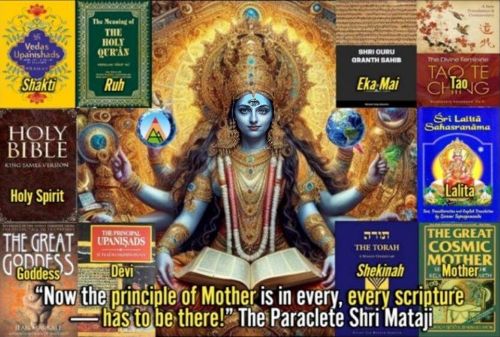
This article offers a rigorously researched, cross-cultural exploration of the Goddess as humanity’s ultimate spiritual preceptor. Drawing from Shakta metaphysics, Taoist cosmology, Jewish and Christian mystical literature, early Gnostic writings, Buddhist philosophical frameworks, and the revelations of the modern age, it demonstrates that the Divine Feminine has always stood at the center of humanity’s spiritual awakening. In the Vedic world, She is the Shakti who empowers creation, knowledge, and liberation. In Taoist thought, She is the Great Mother of the Tao, the womb of formless intelligence from which all balance and natural order flow. In Jewish mysticism, She appears as the Shekhinah — the indwelling Presence who teaches, heals, and guides. In Christian esotericism and Gnostic texts, She is the hidden Sophia, the divine Wisdom without whom no soul can attain the fullness of truth. In Buddhism, Her presence is reflected through Prajñāpāramitā, the Mother of all Buddhas from whom awakened insight arises.
Taken together, these traditions reveal a unified and unmistakable pattern: humanity’s greatest teacher has always been the Divine Feminine in Her many sacred forms. She is the silent intelligence behind meditation, the breath within the breath, the guiding Light in the Sahasrara, and the compassionate force that awakens the deepest dimension of the Self. Through this interdisciplinary study, we examine how diverse civilizations independently recognized Her as the Supreme Guru, how each tradition articulated Her role in humanity’s spiritual evolution, and how the contemporary awakening of consciousness sheds new light on Her universal mission. By tracing Her presence across the world's spiritual lineages, we uncover a coherent, transcultural vision of the Goddess as the eternal source of revelation and the guiding teacher of all humankind.
Table of Contents
- 1. The Primordial Guru: Shakti as the Source of Reality
- 2. Life-Energy and Revelation: Kundalini as the Feminine Teacher
- 3. The Divine Feminine in Judaic and Christian Traditions: Shekinah, Sophia, and the Holy Spirit
- 4. Wisdom as Feminine Across Traditions
- 5. The Taoist Feminine: The Mother of the Tao
- 6. Why the Supreme Teacher Is Feminine
- 7. Modern Fulfillment: Shri Mataji Nirmala Devi as the Living Adi Shakti
- 8. Theological and Scholarly Implications
- Conclusion
- References

“In the medieval period, there is an ultimate feminine guru represented in a classical text: the Goddess. It is she, not a wife or a saint, who assumes the public role of teacher and is capable of teaching all of humankind, which is the perspective advanced in the Devi Gita... the culmination of earlier stories of the Goddess found in the puranic mythological stories and in early tantric texts, precisely because the Devi Gita raises the Goddess to the level of Supreme Ruler. In the Devi Gita, supreme cosmic power is unambiguously female: she is a beautiful goddess, her power is the feminine shakti, and she is not linked to a male god, being most frequently referred as Mother. In the text, she first appears as a blazing light, symbolizing brahman, then transforms into a womanly figure, who is the Supreme Ruler Bhuvaneshvari)...
What is unambiguous in the text is that all of humankind is essentially female. The Devi Gita asserts this axiom in two ways. On one level, the Goddess is brahman; thus, humankind's true inner essence, the divine self, is the Goddess. On another level, the Devi Gita explicitly connects the Goddess to the concept of kundalini from yoga theory. The theory of kundalini yoga is known from other texts, on which the Devi Gita draws in presenting the Goddess's teaching on the subject. Basic concepts in this theory of yoga include the understanding that humankind possesses a "subtle body" alongside the material body. This subtle body is homologized to cosmic entities and their corresponding cosmic energies. The power center is the kundalini, imagined to be coiled like a serpent at the base of the spine. Uncoiling this shakti energy through disciplined activities, including controlled breathing, correct posture, and meditation, is the goal, for it is only through the release of the kundalini that humankind can reach its full potential in sharing the fundamental essence of the universe. With its emphasis on the Goddess as the Supreme Ruler, the Devi Gita can make a further connection not possible in other texts: The kundalini is the essence of the Goddess. The Goddess is the source, and the force, of life; everyone has the feminine within, and must embrace it, then release it, in order to achieve liberation.”
1. The Primordial Guru: Shakti as the Source of Reality
Across civilizations and spiritual traditions, the Divine Feminine has consistently appeared as the primordial teacher, the eternal Jagadguru who guides humanity through wisdom, life-energy, revelation, and inner awakening. This article presents a scholarly, cross-traditional examination of the Goddess as the Supreme Feminine Guru — drawing from Shakta theology, Taoist cosmology, Jewish mysticism, Christian-Gnostic texts, Buddhist philosophy, and modern revelation.
In classical Shakta theology, the Goddess (Shakti) is not merely the energy of Brahman — She is Brahman. Arthur Avalon (John Woodroffe), in Shakti and Shakta, identifies Her as the “ground of being” and the ultimate metaphysical reality[1].
The Bahvricha Upanishad, one of the principal Shakta Upanishads, opens with the radical declaration that before creation, only the Goddess existed, who is consciousness itself[2]. She manifests the universe not as an act of separation but as an expression of Her own nature.
The Devi Gita reinforces this: the Goddess proclaims Herself the Supreme Guru, teaching seekers directly without dependence upon any male deity or intermediary[3].
2. Life-Energy and Revelation: Kundalini as the Feminine Teacher
A distinctive feature of the Divine Feminine’s guidance is Her pedagogical method through inner life-energy. In yoga philosophy, Shakti becomes discernible as the kundalini — the coiled energy at the base of the spine. When awakened, this energy purifies the chakras and opens the Sahasrara, resulting in direct knowledge of the Self[4].
In Sahaja Yoga and Adishakti teachings, kundalini is explicitly identified as “the essence of the Goddess”[5]. Her awakening is not symbolic but experiential — an ontological intervention of the Divine Feminine within the seeker.
3. The Divine Feminine in Judaic and Christian Traditions: Shekinah, Sophia, and the Holy Spirit
Jewish mysticism venerates the Shekinah as the indwelling Divine Presence, frequently described in feminine terms. She consoles, guides, and dwells among the people, functioning as the experiential dimension of God.
In Gnostic Christianity, Sophia (Wisdom) holds a central place as the mediator of divine knowledge. Numerous Gnostic texts portray her as a feminine Aeon who reveals the hidden structure of the divine realm and the path of spiritual ascent[6].
Some early Christian sects — Syriac Christians in particular — regarded the Holy Spirit as feminine. Later mystics equated the Spirit with Sophia, reinforcing the feminine principle as the active divine teacher[7].
4. Wisdom as Feminine Across Traditions
Many global traditions personify wisdom as feminine:
- Vedic tradition: Vac and Saraswati represent the feminine voice of divine knowledge[8].
- Buddhism: Prajñāpāramitā is the “Mother of all Buddhas,” embodying transcendent wisdom.
- Modern comparative theology: Scholars such as Teri Degler draw explicit parallels between Shakti and Sophia as twin archetypes of feminine divine wisdom[9].
The universality of the feminine-wisdom archetype indicates that the Goddess as Teacher is not a cultural anomaly but a cross-civilizational insight.
5. The Taoist Feminine: The Mother of the Tao
Taoism venerates the Mystic Female as the Mother of the Tao — the subtle, receptive, inexhaustible womb of all existence. Some Taoist traditions (such as those concerning the “Holy Mother the Original Lord”) describe a supreme feminine figure who teaches immortals and reveals the secrets of the Tao[10].
Here too, the feminine principle is not passive but the teacher of cosmic harmony.
6. Why the Supreme Teacher Is Feminine
Across these traditions, the Divine Feminine is uniquely capable of functioning as the universal guru because:
- She teaches through compassion rather than command.
- She awakens through energy rather than doctrine.
- She unites wisdom and power without hierarchy.
- She grants universal access beyond ritual, caste, or priesthood.
The feminine principle integrates transcendence and immanence, authority and nurturing, knowledge and experience. This explains why the earliest human cultures recognized the Goddess as teacher long before patriarchal systems obscured Her.
7. Modern Fulfillment: Shri Mataji Nirmala Devi as the Living Adi Shakti
In the Sahaja Yoga and Adishakti framework, Shri Mataji Nirmala Devi is recognized as the modern incarnation of the Adi Shakti, fulfilling ancient prophecies of a global awakening. She opened the Sahasrara on May 5, 1970, enabling mass kundalini awakening for the first time in history.
Her teaching method is entirely consistent with the ancient understanding of the Divine Feminine:
- She awakens the kundalini directly.
- She unites the truths of all religions experientially.
- She restores the feminine dimension erased by institutional religion.
- She acts not as preacher but as inner guru, guiding seekers through divine vibration and silence.
For many practitioners and scholars, Her work represents the culmination of the Divine Feminine’s pedagogical evolution.
8. Theological and Scholarly Implications
Recognizing the Goddess as the supreme guru offers several implications for comparative theology:
- Cross-scriptural coherence: Feminine revelation appears in Hinduism, Judaism, Gnosticism, Buddhism, and Christian mysticism.
- Restoration of balance: She corrects centuries of theological imbalance created by patriarchal domination.
- Experiential spirituality: Divine knowledge becomes accessible internally, not through authority structures.
- Eschatological significance: Modern manifestations of the Divine Feminine may represent the prophesied transition into a new spiritual epoch.
Conclusion
From the Shakta Upanishads to Taoist cosmology, from Gnostic Sophia to the Shekinah, from kundalini awakening to modern revelation, the Divine Feminine emerges consistently as the Supreme Guru — the primordial teacher whose wisdom, energy, and compassion guide all humankind.
Her teaching is not confined to scripture but written into the structure of human consciousness itself. She teaches through silence, energy, intuition, and direct realization. To know Her is to know the Self. To follow Her is to enter the age of the Spirit.
The Divine Feminine as Supreme Guru: The Goddess's Pedagogical Authority in the Devi Gita

This paper examines the Devi Gita, a medieval Hindu text that presents the Goddess as the ultimate feminine guru. It emphasizes the central thesis that it is she, the Goddess, not a wife or a saint, who assumes the public role of teacher and is capable of teaching all of humankind. The paper highlights the connection between the Goddess, kundalini, brahman, and the essentially feminine nature of humanity, drawing on the foundational scholarship of Karen Pechilis. The Devi Gita elevates the Goddess to the level of Supreme Ruler, Bhuvaneshvari, who is unambiguously female and not linked to a male god. This paper argues that the Devi Gita offers a unique and powerful vision of the Divine Feminine as the supreme pedagogical authority, a vision with profound implications for understanding spiritual authority, gender, and the nature of reality itself.
I. Introduction
In the rich and diverse tradition of Hindu philosophy, the role of the spiritual teacher, or guru, is paramount. The guru is the guide who illuminates the path to spiritual realization, a figure of immense authority and reverence. While this role has historically been dominated by male figures, the medieval period witnessed the emergence of a powerful and transformative new paradigm: the Goddess as the supreme teacher. This is the perspective advanced in the Devi Gita, the "Song of the Goddess," a text that represents the culmination of earlier Goddess traditions found in Puranic mythology and early Tantric texts. The Devi Gita presents an unambiguous vision of the Goddess as the supreme feminine guru who teaches all humankind, establishing her as Brahman itself and revealing the essentially feminine nature of all existence. This paper will explore the theological and philosophical dimensions of the Goddess's pedagogical authority in the Devi Gita, drawing on the scholarship of Karen Pechilis and other key sources to illuminate the profound significance of this unique text.
II. The Goddess as Supreme Ruler and Teacher
The Devi Gita elevates the Goddess to an unprecedented level of authority, presenting her not merely as a consort to a male deity but as the Supreme Ruler of the cosmos. This is a radical departure from many other Hindu texts and establishes the foundation for her role as the ultimate teacher.
A. Bhuvaneshvari: The Supreme Ruler
In the Devi Gita, the Goddess first appears to the gods as a "blazing light, symbolizing brahman," the ultimate, formless reality. She then transforms into a "womanly figure, who is the Supreme Ruler Bhuvaneshvari" [11]. The name Bhuvaneshvari itself means "Ruler of the World," and her manifestation in this form underscores her supreme authority. The text emphasizes that "supreme cosmic power is unambiguously female: she is a beautiful goddess, her power is the feminine shakti, and she is not linked to a male god, being most frequently referred as Mother" [11]. This vision of the divine is profoundly and unapologetically feminine, a key element in the Devi Gita's unique theological contribution.
B. The Public Role of Teacher
As Karen Pechilis argues in The Graceful Guru:
This is a crucial distinction. While other female figures in Hindu traditions may teach in private or limited contexts, the Goddess in the Devi Gita assumes a universal pedagogical role. Her dialogue with the mountain king Himalaya serves as a model for this universal teaching, as she reveals the deepest secrets of the cosmos and the path to liberation not just to a select few, but to all who seek her wisdom.
III. All Humankind as Essentially Feminine
The Devi Gita makes the radical assertion that "all of humankind is essentially female" [11]. This is not a statement about biological sex but a profound metaphysical claim about the nature of the self and its relationship to the divine. The text establishes this axiom in two interconnected ways.
A. The Goddess as Brahman
The Devi Gita unequivocally identifies the Goddess with Brahman, the ultimate reality. As the text states, "She alone is Atman. Other than Her is untruth, non-self. She is Brahman-Consciousness" [12]. If the Goddess is Brahman, and Brahman is the true inner essence of all beings, then it follows that the divine self within each individual is the Goddess. This means that all beings, regardless of their outer form, share in the divine feminine essence of the Goddess.
B. The Kundalini Connection

The Devi Gita also explicitly connects the Goddess to the concept of kundalini from yoga theory. The text draws on the understanding of the "subtle body" with its energy centers (chakras) and channels (nadis). The kundalini is imagined as a coiled serpent at the base of the spine, a powerful shakti energy that, when awakened, leads to spiritual liberation. As Pechilis explains, the theory of kundalini yoga includes the understanding that "humankind possesses a 'subtle body' alongside the material body" and that "the power center is the kundalini, imagined to be coiled like a serpent at the base of the spine" [11]. The Devi Gita makes a unique and powerful connection: "The kundalini is the essence of the Goddess" [11]. This means that the divine feminine power is not an external force but an immanent reality within each individual, waiting to be awakened. As Pechilis concludes, "The Goddess is the source, and the force, of life; everyone has the feminine within, and must embrace it, then release it, in order to achieve liberation" [11].
IV. The Goddess's Teachings: Knowledge and Liberation
The Goddess's teachings in the Devi Gita provide a clear and direct path to liberation, emphasizing the role of knowledge (jnana) in realizing one's true nature as the Goddess.
A. Brahman-Consciousness
The Goddess reveals that she is "Brahman-Consciousness, free from a tinge of being and non-being" [12]. This non-dual consciousness is the ultimate reality, and the goal of spiritual practice is to realize one's identity with it. The Goddess's teachings are not about worshipping an external deity but about recognizing the divine within.
B. The Path to Liberation
The Devi Gita proclaims, "Being Brahman, the person who knows Brahman attains Brahman" [13]. This is the essence of the path to liberation. The text also references the great saying "You are That" (Tat Tvam Asi), stating, "The great saying, 'You are That,' indicates the oneness of the soul and Brahman. When the identity is realized, one goes beyond fear and assumes my essential nature" [14]. Liberation is thus the realization of one's inherent oneness with the Goddess.
V. The Pedagogical Significance of the Devi Gita
The Devi Gita is not just a philosophical treatise but a pedagogical masterpiece. Its clarity, accessibility, and profound vision of the Divine Feminine make it a uniquely powerful text for spiritual seekers.
A. Philosophical Clarity
The Devi Gita is characterized by its direct and unambiguous teachings. Unlike other texts that can be open to multiple interpretations, the Devi Gita presents its truths with remarkable clarity. It offers a clear and accessible path to spiritual realization, integrating the non-dualism of Advaita Vedanta with the devotional practices of Shaktism.
B. Universal Accessibility
The Goddess's teachings are directed to all of humankind, not just a select group of initiates. Her public role as teacher makes her wisdom accessible to everyone, regardless of their background or social status. This universalism is a key aspect of the Devi Gita's enduring appeal.
VI. Scholarly Perspectives: Karen Pechilis and Beyond
Karen Pechilis's work on the Devi Gita has been instrumental in bringing this important text to the attention of a wider audience. Her analysis of the Goddess as the "ultimate feminine guru" has highlighted the unique and radical nature of the Devi Gita's vision.
A. Pechilis on the Graceful Guru
Pechilis emphasizes that the Goddess in the Devi Gita is not just another deity but a "graceful guru" who assumes the public role of teacher. This is a significant departure from traditional gender roles in Hindu society and establishes the Goddess as a powerful model of feminine spiritual authority.
B. The Essentially Feminine Nature of Humanity
Pechilis's analysis of the Devi Gita's assertion that "all of humankind is essentially female" has been particularly influential. She shows how the text establishes this claim through the identification of the Goddess with Brahman and the kundalini. This insight has profound implications for understanding the nature of the self and the role of the feminine in spiritual life.
VII. Implications and Conclusions
The Devi Gita's vision of the Goddess as the supreme teacher has profound implications for theology, spiritual practice, and our understanding of gender and authority. The text presents a powerful and compelling vision of the Divine Feminine as the ultimate reality, the source of all creation, and the very essence of our own being. It challenges patriarchal spiritual hierarchies and offers a path to liberation that is both intellectually rigorous and emotionally satisfying.
In conclusion, the Devi Gita stands as a testament to the power and wisdom of the Divine Feminine. It presents a vision of the Goddess that is both majestic and intimate, transcendent and immanent. It is a call to recognize the Goddess within, to awaken the kundalini, and to realize our own divine nature. As the Devi Gita so powerfully reminds us, it is she, the Goddess, not a wife or a saint, who is the supreme teacher, capable of teaching all of humankind and leading us to the ultimate goal of liberation.
References
- [1] Arthur Avalon (John Woodroffe). Shakti and Shakta. Source: lakshminarayanlenasia.com.
- [2] Bahvricha Upanishad summary, Wikipedia.
- [3] Devi Gita analysis via Adishakti.org.
- [4] World Peace Yoga School, “Definitive Guide to Chakras & Kundalini.”
- [5] Adishakti.org: “Kundalini is the Essence of the Goddess.”
- [6] Adishakti.org comparative analysis: Sufism & Feminine Divine.
- [7] Adishakti.org: “Holy Spirit, the Feminine Aspect of the Godhead.”
- [8] Vedanta Video: Saraswati teachings.
- [9] Teri Degler, “Shakti and Sophia: Sisters of Wisdom.”
- [10] Wikipedia: “Holy Mother the Original Lord.”
- [11] Pechilis, Karen. The Graceful Guru: Hindu Female Gurus in India and the United States. Oxford University Press, 2004, pp. 23-25.
- [12] Bahvricha Upanishad 1.5.
- [13] Devi Gita 7.32.
- [14] Devi Gita 4.19.
💬 Interactive Chat
Access an intelligent analysis environment where you can explore texts, ask questions, and discover connections between ideas.
Open chat →