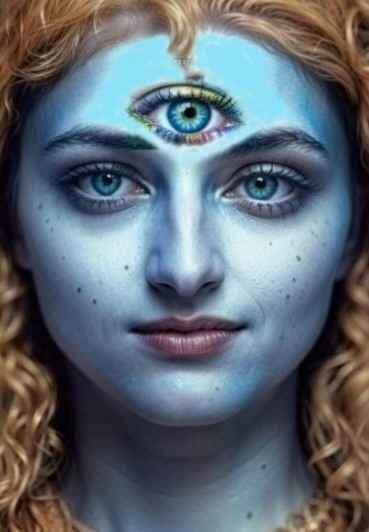
Nature of the Divine Mother or Holy Spirit
The spiritual phenomenon known as the Divine Mother has captivated seekers of truth across ages and cultures. Revered by sages and saints throughout history, She is addressed in the West as the Holy Spirit and Mother Nature. In Hinduism, She is worshipped as Shakti, Maya, Kali, and Durga. She is also recognized as Wisdom, Aum, Amen, and the Word of God. Regardless of the name used, the Divine Mother is a tangible Entity whose presence can be directly experienced. This paper explores Her nature through the recorded experiences of enlightened beings, though Her essence remains one of life’s profound mysteries. Descriptions of Her are often metaphorical, invoking images of waves, clouds, light, fire, voices, and music—yet She transcends all these forms. Metaphor, therefore, becomes the only means to discuss Her.
The Divine Mother’s existence predates language, implying that Her operations are beyond the confines of words. Intellectual understanding alone cannot replace the necessity of a direct, personal encounter with Her. Delving into Her identity is a complex endeavor, requiring the piecing together of a vast spiritual puzzle. Even so, any conclusions drawn must remain speculative.
To engage with the ideas presented here, readers are encouraged to suspend disbelief until the full argument is laid out. Every name used in this essay, unless otherwise noted, refers to the Divine Mother as recognized by enlightened masters. A list of these names is provided at the end. Following Sri Ramakrishna’s example, I refer to this supreme power as the “Divine Mother.” For those seeking further exploration, the Gospel of Sri Ramakrishna is an invaluable resource, offering insights from one of Her greatest devotees. While most sages understood a single facet of the Divine Mother, Sri Ramakrishna attained enlightenment through multiple paths, providing a comprehensive understanding that serves as a benchmark for other accounts.
The Divine Mother is Neither Female Nor a Person
To grasp the concept of the Divine Mother, we must move beyond anthropocentric thinking. She is not a person, nor is She female. Rather, She is an agency, a universal power that can only be understood on its own terms. Avatars and enlightened beings often refer to the Holy Father and Divine Mother as two aspects of the same reality. To differentiate between them, they employ the metaphor of gender, as illustrated by Kabir and Lao Tzu:
- Kabir: “The formless Absolute is my Father, and God with form is my Mother.” (1)
- Lao Tzu: “Nameless indeed is the source of creation [the Father], but things have a mother and she has a name.” (2)
These teachings distinguish between the absolute realm (the Father), where name and form do not exist, and the relative plane (the Mother), where they do. However, the use of gender metaphors has led to misunderstandings over the centuries. Those without enlightenment often project human stereotypes onto these divine entities, distorting their true nature. The Divine Mother is not a woman, though She is the necessary cause of gender. Similarly, the Father is not a man, though He is the sufficient cause of existence. The Mother is the source of personhood, while the Father is the source of existence itself. To truly understand Her, we must avoid overextending the gender metaphor.
The Mother Represents the Relative Plane; the Father, the Absolute
Sri Ramakrishna emphasized the vastness of the Divine Mother: “The macrocosm and microcosm rest in the Mother’s womb. Now do you see how vast She is?” (3) Swami Nikhilananda, one of his translators, explains that reality operates on two levels: the absolute (transcendental) and the relative (phenomenal). (4) At the phenomenal level, diversity and individuality prevail, while the transcendental level is characterized by non-dual consciousness. Both levels are real from their respective standpoints, though what is true at one level may be negated at the other. (5)
The Divine Mother, associated with the relative plane, encompasses all creation, manifestation, and matter. The Father, the source of creation, remains unmanifest and formless. On the relative plane, the Mother creates, preserves, and dissolves all that exists. As Swami Nikhilananda notes, She is “Procreatrix, Nature, the Destroyer, the Creator.” (6) This understanding is echoed in ancient texts like the Upanishads, which declare: “Thou art the creator; thou art the destroyer by thy prowess; and thou art the protector.” (7)
In the Bhagavad Gita, Sri Krishna refers to Her as Maya: “Maya makes all things: what moves, what is unmoving. O son of Kunti, that is why the world spins, turning its wheel through birth and through destruction.” (8)
This knowledge is not exclusive to Hinduism. Zarathustra taught that the Mother governs “the management of the bodily and spiritual worlds.” (9) Solomon also recognized that Wisdom “operates everything.” (10) Swami Nikhilananda further elaborates on Her role using vivid metaphors: “She projects the world and again withdraws it. She spins it as the spider spins its web. She is the Mother of the Universe, identical with the Brahman of Vedanta and the Atman of Yoga. As eternal Lawgiver, She makes and unmakes laws; it is by Her imperious will that karma yields its fruit. She ensnares men with illusion and again releases them from bondage with a look of Her benign eyes. She is the Supreme Mistress of the cosmic play, and all objects, animate and inanimate, dance by Her will.” (11)
The Mother is also metaphorically called the “Voice in the Wilderness” in the Bible, as no law or structure applies to the formless Father. Only the Mother, who has form, gives voice to God.
The Mother Created the Body
After creating the universe, the Divine Mother permeates it. Solomon, an enlightened devotee, writes: “Wisdom penetrates and permeates everything that is, every material thing.” (12) Sri Ramakrishna echoes this: “After creation, the Primal Power dwells in the universe itself. She brings forth this phenomenal world and then pervades it.” (13) He also revealed that “the Divine Mother Herself has become man.” (14)
She fashioned the five material bodies (pancha kosas) through which we act and know. Solomon cryptically states: “Wisdom hath builded her house, she hath hewn her seven pillars.” (15) These “seven pillars” may refer to the seven chakras. St. Paul also acknowledged Her role as the body’s creator and indweller: “Know ye not that ye are the temple of God, and that the Spirit of God dwelleth in you?” (16) Sri Krishna explains: “Every human being is essentially a soul [the Child of God or Atman, one with the Father], covered with a veil of maya [the Mother].” (17)
This brings us to the three eternal actors in the divine drama: the formless Father, the form-bearing Mother, and the immortal soul, their offspring. The prophet Amos called the soul “a firebrand plucked out of the burning.” (18) From the soul’s perspective, the purpose of life is enlightenment—a journey of spiritual evolution culminating in the realization of its oneness with God. From the Creator’s perspective, the purpose is for God to meet God and experience His own bliss. (19)
These three actors—the Transcendental (Father), the Phenomenal (Mother), and the Transcendental in the Phenomenal (immortal soul)—mirror the Christian Trinity of Father, Son, and Holy Spirit. In Hinduism, they are known as Brahman, Atman, and Shakti. The Divine Mother created the body, and the Father hid a fragment of Himself within it—the Child of God, whom the Mother nurtures until it realizes its true identity.
The Mother Arises from the Father and Merges in Him Again
The Divine Mother emerges from the Father and dissolves back into Him, much like clouds forming in the sky and merging back into it. Sri Ramakrishna used the metaphor of waves rising from and returning to the ocean of Satchidananda: “These waves arise from the Great Ocean and merge again into the Great Ocean. From the Absolute to the Relative, and from the Relative to the Absolute.” (20)
Paramahansa Yogananda also employed this metaphor: “The storm-roar of the sea creates the waves—preserves them for some time as larger or smaller waves—and then dissolves them.” (21)
Though the ocean is formless, the waves, which are part of it, have form. Yet, waves and ocean are one. Sri Ramakrishna explained: “That which has form is again without form. That which has attributes is again without attributes.” (22)
He further described how the relative plane emerges from the absolute and dissolves back into it: “Brahman may be compared to an infinite ocean. Just as, through intense cold, some portions of the ocean freeze into ice and formless water appears to have form, so through the love of the devotee, Brahman appears to take on form and personality. But the form melts away as the Sun of Knowledge rises. Then the universe also disappears, and there is seen to be nothing but Brahman.” (23)
The Mother is Energy, Movement, Vibration; the Father is Stillness
Swami Nikhilananda describes the Divine Mother as shakti or energy—specifically, adyashakti, the primordial energy. (24) Sri Ramakrishna explains the distinction between the static Father and the dynamic Mother: “When inactive, He is called Brahman, the Purusha. He is called Shakti or Prakriti when engaged in creation, preservation, and destruction. These are the two aspects of Reality: Purusha and Prakriti. He who is the Purusha is also the Prakriti.” (25)
The Father is the impersonal, formless God (Nirguna Brahman), while the Mother is the personal God (Saguna Brahman) who creates, preserves, and destroys. (26) This relationship is symbolized in statues of Shakti dancing on the recumbent Shiva: “Kali stands on the bosom of Shiva; Shiva lies under Her feet like a corpse. All this denotes the union of Purusha and Prakriti. Purusha is inactive; therefore Shiva lies on the ground like a corpse. Prakriti performs all Her activities in conjunction with Purusha.” (27)
The Father is immovable and actionless, a profound stillness embodying Sat-Chit-Ananda (Being, Awareness, and Bliss). The Mother is the movement within this stillness, the voice in the silence, the active energy in the eternal tranquility of the Father. Jesus hinted at this relationship when He called God “a movement and a rest.” (28)
The Mother is Symbolized by the Sacred Syllable ‘Aum’
The primal power of the Divine Mother is symbolized by the sacred syllable ‘Aum.’ Sri Ramakrishna equates Aum with the Divine Mother, exclaiming: “O Mother! O Embodiment of ‘Om.’” (29) Paramahansa Yogananda identifies Aum with the Holy Spirit: “The Bible refers to Aum as the Holy Ghost or invisible life force that divinely upholds creation.” (30)
Aum creates, preserves, and destroys. It is the cosmic sound that calls matter into being, sustains it, and ultimately dissolves it back into the formless Father. (31) Sage Vasistha described this process in the Yoga Vasistha: “When the infinite vibrates, the worlds appear to emerge. When it does not vibrate, the worlds appear to submerge.” (32)
Annie Besant also spoke of the Logos, or Word, as the source of creation: “The Word emerges from the Silence, the Voice, the sound by which the worlds come into being.” (33)
The Mother is Ultimately One with the Father
The Divine Mother, as Aum or the Holy Spirit, is one with the vibrationless Father. Patanjali states: “The Word which expresses God is ‘Om.’” (34) Shankara declares: “Om is your very self.” (35) The Upanishads affirm: “Om is Brahman, both the conditioned [Mother] and the unconditioned [Father].” (36)
Sri Krishna, speaking as God, proclaims: “I am Om in all the Vedas, the word that is God.” (37)
Swami Yukteswar Giri, Swami Sivananda, and Sri Ramakrishna explain the relationship between Brahman and Shakti using the metaphor of fire and its burning power:
- Swami Yukteswar Giri: “The Word, Amen, Aum, being the manifestation of the Eternal Nature of the Almighty Father, is inseparable from and nothing but God Himself; as the burning power is inseparable from and nothing but the fire itself.” (38)
- Swami Sivananda: “Just as one cannot separate heat from fire, so also one cannot separate Shakti from Shiva. Shakti and Shiva are one.” (39)
- Sri Ramakrishna: “Brahman and Shakti are identical. If you accept the one, you must accept the other. It is like fire and its power to burn.” (40)
Thus, the Divine Mother and the Holy Father are two aspects of the same Reality, Existence-Knowledge-Bliss Absolute. (41)
The Mother’s Role in Enlightenment
The Divine Mother plays a central role in leading souls to enlightenment. She withdraws the veil of phenomenal reality, revealing the Father. Swami Sivananda advises aspirants to seek Her help in attaining Self-realization: “It behooves the aspirant to approach the Mother first, so that She may introduce Her spiritual child to the Father for its illumination.” (42)
The Mother is depicted as the bringer of enlightenment in various traditions. In Proverbs, She declares: “Doth not wisdom cry... The Lord possessed me in the beginning of His way, before His works of old. I was set up from everlasting, from the beginning, or ever the earth was.” (43)
The Bible recounts how the Holy Spirit enlightened the disciples on the Day of Pentecost: “Suddenly there came a sound from heaven as of a rushing mighty wind... and they were filled with the Holy Ghost.” (44)
Sri Yukteswar explains that being baptized in the sacred stream of Aum allows the aspirant to comprehend the “Kingdom of God.” (45)
The Koran also acknowledges the Holy Spirit’s role in enlightenment: “Allah lets the Spirit descend at His behest on those of His servants whom He chooses, that He may warn them of the day when they shall meet Him.” (46)
The Divine Mother has manifested to saints like Hildegard of Bingen, Sri Ramakrishna, and Totapuri, leading them to profound realizations. She is also the kundalini energy that rises through the chakras, uniting Shakti with Shiva in the sahasrara. (47)
Synonyms for the Divine Mother
These are full or partial synonyms for the Divine Mother:
- Adyasakti (or Ancient Power) (Sri Ramakrishna in GSR, 218 and 460).
- Ahunavairya (Zarathustra in GZ, 8-9).
- Amen (Revelation 3:14; Shankara, CJD, I; Sri Yukteswar Giri, HS, 23 and 24; Paramahansa Yogananda in AY, 237n and 363n and SCC, 1, 17 and SCC, 2, 22).
- Amin (Paramahansa Yogananda in, 237n).
- Aum or Om (UPAN 50 and 53; Sri Ramakrishna in GSR, 299; Sri Yukteswar Giri, HS, 24; Paramahansa Yogananda, AY, 143-4, 237n, 363n, 484, and 487n and SCC, 1, 15-6 and 19 and SCC, 2, 22).
- Breath of God (Job 33:4; Solomon in APO, 191).
- Comforter or Comforter Spirit (Zarathustra in GZ, 217; Jesus in John 14:16 and 14:26 and 15:26; Hildegard of Bingen in IHB, 9; Paramahansa Yogananda, AY, 144n and 363n and SCC, 1, 19).
- Cosmic Power or Energy (Sri Ramakrishna in GSR, 116; Paramahansa Yogananda, SCC, 2, 22; Swami Sivananda in KYW, 25).
- Cosmic Sound (Paramahansa Yogananda, AY, 237, SCC, 1, 15 and 17 and SCC, 2, 22).
- Cosmic Vibration (Paramahansa Yogananda, SCC, 1, 15-6, 17, and 56 and SCC, 2, 22).
- Creator, Preserver, and Destroyer (UPAN, 37; Zarathustra, GZ, 187, 227 and 240; Sri Ramakrishna in GSR, 32, 107, 135, and 653; Paramahansa Yogananda, SCC, 1, 15-6).
- Divine Mother (Lao Tzu in WOL, 53, 72, and 105; Paramahansa Ramakrishna in GSR, 32, 107, 136, 200, and 299; Swami Sivananda Sarasvati in KYW, 25; Nikhilananda in VIV, 24; Omraam Mikhael Aivanhov, LAS, 1, 15, 21, 22, and 28; Da Free John in KOL, 132; etc.).
- Divine Power (Sister Vandana, NJ, 190-1).
- Durga (Paramahansa Ramakrishna in GSR, 216).
- Embodiment of Om (Sri Ramakrishna in GSR, 299).
- The Fashioner of all things (Solomon in APO, 191).
- Holy Ghost (Jesus in Matthew 12: 31-2; John 14:26 and 20:21-2; Paramhansa Yogananda, AY, 143-4, 363n, and 487n and SCC, 1, 15-6 and 19 and SCC, 2, 22).
- Holy Spirit (Solomon in APO, 195; Zarathustra, 217 and 227; Luke 11:13).
- Holy Vibration (Paramahansa Yogananda in SCC, 1, 56).
- Hum (Paramahansa Yogananda, AY, 237n).
- Kali (Sri Ramakrishna in GSR, 107 and 634; Nikhilananda, "Introduction," to GSR, 9-10; Nikhilananda, "Vivekananda" in VIV, 24; Paramahansa Yogananda, AY, 10, 40n, and 41).
- Kundalini (Swami Sivananda in KYW, 25 and 30; GSR, 182).
- Logos (Annie Besant, AW, 44; Vivekananda in Nikhilananda, VIV, 422).
- Matrix (Lao Tzu in WOL, 105; Sri Aurobindo, SOY, 3).
- Maya (Sri Krishna in BG, 80; Shankara in CJD, 49; Sri Aurobindo, UP, 27; Nikhilananda, HIN, 42-3 and 45; Swami Sivananda in KYW, 26).
- Mother - See Divine Mother.
- Mother Nature, Mother of nature (Swami Sivananda in KYW, 26; Paramahansa Yogananda, AY, 10 and 41; Omraam Mikhael Aivanhov, CML, 19; Nikhilananda in GSR, 9-10).
- Mother of the universe (Nikhilananda, "Vivekananda" in VIV, 24).
- Natural Law (Solomon in Proverbs 1:8-9, 3:1, and 6:20; Jesus in Matthew 12:31-2; St. Paul in Romans 8:2; Omraam Mikhael Aivanhov, CML, 18-9; Krishnamurti, AFM, 25).
- Nature (Paramahansa Yogananda, AY,40n and 41 and SCC, 1, 33; John Redtail Freesoul, BI, 11-2).
- Noise of many waters (David in Psalm 93:3-4; Ezekiel 43:1-2).
- Personal God or Saguna Brahman (Paramahansa Ramakrishna in GSR, 32, 149, 218 and 277).
- Power of God, Power of the Lord (Solomon in APO, 191; Swami Sivananda in KYW, 25).
- Prakriti/Procreatrix (Sri Krishna in BG, 103, 104, and 106; Sri Aurobindo, UP, 27; Ramakrishnananda, GDI, 1 and 8: Swami Sivananda in KYW, 26; Paramahansa Ramakrishna in GSR, 32 and123; Nikhilananda, "Introduction" to GSR, 9-10; Paramahansa Yogananda, SCC, 1, 33).
- Prana (UPAN , 35-8; Paramahansa Yogananda, AY, 484; Swami Sivananda in KYW, 26).
- Primal Energy, Primal Power (Sri Ramakrishna in GSR, 116 and 135; Swami Sivananda in KYW, 25).
- Primordial/Primal Energy (Sri Ramakrishna in GSR, 107 and 242).
- Relative Plane (Sri Ramakrishna, GSR, 653).
- Saguna Brahman - See Personal God or Saguna Brahman.
- Shakti (Sri Ramakrishna in GSR, 116; Swami Sivananda in KYW, 25-6).
- Sound-Brahman, Shabda Brahman, or Pranava (PR in GSR, 263; Swami Vivekananda in Nikhilananda, VIV, 422; Sister Vandana, NJ, 190-1).
- Sound of many waters (Paramahansa Yogananda, AY, 267-8).
- Sphota (Swami Vivekananda in Nikhilananda, VIV, 422; Usha, RVW, 74).
- Spirit of the Bridegroom (St. John of the Cross, CWSJC, 580).
- Spirit of God, Spirit of the Lord (Genesis 1:2; Exodus 35:31; Isaiah 11:2; Ibn Arabi, KK, 15-6; Paramahansa Yogananda in AY, 142 and 143).
- Spirit of Truth (Jesus in John 14:17).
- Spirit of Wisdom (Zarathushtra, GZ, 13 and 187; Exodus 28:3 and 35:31; Deuteronomy 34:9; Isaiah 11:2; St. Paul in Ephesians 1:15-7).
- Spouse (St. John of the Cross in CWSJC, 75).
- Syama (Sri Ramakrishna in GSR, 271).
- Voice in the Silence (Annie Besant, AW, 44; Mabel Collins, LOP, 22).
- Voice of many waters (St. John in Revelation 14:2; Paramahansa Yogananda in AY, 17n and SCC, 1, 19).
- Voice of one that crieth in the wilderness (Isaiah 40:3).
- Wisdom or Sophia (Zarathustra, GZ, 187 and 227; Solomon in Proverbs 3:19 and 9:1 and APO, 191 and 195; Isaiah 11:2; Jesus in Matthew 11:19; John of the Cross in CWSJC, 75).
- Witness (St. John in Revelation 3:14 and Paramahansa Yogananda in AY, 143-4 and 237 and SCC, 2, 22).
- Womb of God, Womb of Brahman, womb of wombs; Brahmayoni (Sri Krishna in BG, 106; Sri Ramakrishna, GSR, 870; Yogeshananda in VSR, 41; Sri Aurobindo, SOY, 3).
- Word (Hermes, DPH, 8 and 17; Zarathustra in GZ, 8-9; John 1:1 and 1:3; Annie Besant, AW, 44; Sri Yukteswar Giri, HS, 23 and 24; Paramahansa Yogananda, AY, 143-4, 237n, and 363n, SCC, 1, 19 and SCC, 2, 22).
Conclusion: The Mother’s Incomprehensible Nature
The Divine Mother has been known by countless names across cultures and religions, yet Her true nature remains elusive. As Solomon proclaimed: “Happy is the man that findeth wisdom... She is more precious than rubies.” (48) However, fully understanding Her is beyond human capacity. Only those who attain everlasting life, as Jesus described, can begin to grasp Her mystery. Even then, they can only marvel, as Shankara did:
BIBLIOGRAPHY
References
Pariah Kutta (https://adishakti.org)
https://chat.deepseek.com/a/chat/s/ad88cbcf-1669-48fc-b61c-c76e24cbaf54
Related Articles:
The Divine Feminine in Biblical Wisdom Literature
The Divine Mother by Ricky Hoyt
The Divine Feminine In China
The Feminine Spirit: Recapturing The Heart Of Scripture
The Divine Feminine: The Great Mother
Islam and the Divine Feminine
Searching for the Divine Feminine
Tao Te Ching: "Doorway of the Mysterious Female is there within us"
The Shekinah: Image of the Divine Feminine
The Shekinah is the Cosmic Womb
Shekinah: The Voice of Wisdom
Nature of the Divine Mother or Holy Spirit
The Holy Spirit: The Feminine Aspect Of the Godhead
She is the holiest and most secret inwardness of Allah
The Indian Religion of the Goddess Shakti
The Divine Feminine is deeply embedded in us
Divine Feminine will sooner or later begin to take its proper place
Yogic Secrets of the Dark Goddess by Shambhavi Chopra
Kali as the Yuga Shakti: The Power to Create a New World Age
Chidagni: The Goddess as the Fire of Consciousness
And they asked him in amazement: "Who is our Mother?”
Feminine Gender of the Holy Spirit
The Great Mother is Sri Veda-Janani — Mother of the Vedas
The spirituality of Tagore, Ramakrishna and Vivekananda
Grace is the benevolent, female aspect of the Transcendent
Feminine images cluster around the Spirit ... ruha, is itself feminine
Khokhmah and Sophia by Max Dashu
The Gifts from the East
The Goddess remains the esoteric heartbeat of Islam
Feminine Spirit of God is working for our providence, redemption ...