
"The most worthwhile life is spent discovering your spiritual core and building your existence on it.”
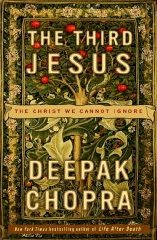
"Jesus wanted his disciples to come into union with God. Any other life was steeped in illusion. Ego keeps that illusion strong because"I, me, and mine"Is so rooted in world affairs. The most worthwhile life is spent discovering your spiritual core and building your existence on it. If you do that, you will be first in the eyes of God even if you are last in the eyes of the world.”— Deepak Chopra
The World as Illusion
"Not all spiritual teachers are opposed to materialism, but Jesus
was. He spoke out against worldliness in all its forms. The priests
were castigated for their hypocrisy and love of public importance.
The rich and powerful were scorned as unworthy of God. These
criticisms were reinforced by praising the lowliest people in
society, the poor and meek. There seems to be no escape clause here.
If we feel uncomfortable being so attached to our money, possessions,
and status, the Jesus we meet in the gospels wants us to be
uncomfortable.
But why? We assume that he had a moral aversion to money and power,
and certainly when he says," Give to Caesar the things that are
Caesar's, and give to God the thing that are God's" (Matthew 22:21),
Jesus is divorcing himself from the world because it has nothing to
do with his spiritual mission. Yet he seems to be contradicting this
stance when he says," For to those who have, more will be given, and
they will have an abundance.” (Matthew 13:12)
To solve such a contradiction, we need to look to Jesus's teachings
that the world itself is an illusion. If material things are a dream,
it makes sense to pay them no heed. When Jesus rails against"The
deceitfulness of riches," the reason is that consciousness itself is
being deceived. The mind is pulled away from spiritual goals by
mistaking money, possessions, and status as real. That's why Jesus
calls possessions a"consolation.”Having missed the real prize, the
Kingdom of God, one must settle for the material world, the
consolation prize.
Separating illusion from reality doesn't happen all at once. What we
experience as reality changes in different stages of consciousness.
For those few who decide to renounce the world completely, it's
possible to leap directly toward the goal. But even then there is no
guarantee that perception has actually shifted. A person may enter a
monastery because the Church deems that a holy life. But if old
perceptions get dragged through the door, the monastery holds the
same traps as the material world: ego.
Jesus wanted his disciples to come into union with God. Any other
life was steeped in illusion. Ego keeps that illusion strong
because"I, me, and mine"Is so rooted in world affairs. The most
worthwhile life is spent discovering your spiritual core and building
your existence on it. If you do that, you will be first in the eyes
of God even if you are last in the eyes of the world.”
Deepak Chopra, The Third Jesus: The Christ We Cannot Ignore,
Harmony Book, 2008, pages 113-114
ISBN:9780307338310
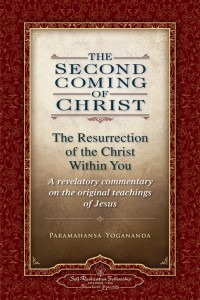
Jesus' journey to India, motherland of religion
"The Gospel account of Jesus' early life ends in his twelfth year with his
discourse with the priests in the temple at Jerusalem. According to the Tibetan
manuscripts, it was not long after this that Jesus left his home in order to
avoid plans for his betrothal as he reached maturity—which for an Israelite boy
at that time was thirteen years of age. Certainly Jesus was above the
commonality of marriage. Of what necessity was human love and family ties for
one who possessed supreme ardor for God and a universal love that embraced all
human beings? The world urges a conformity to its pedestrian course, and
little knows how to reckon with those who hew a higher path in response to God's
will. Jesus knew his divine destiny and set out for India to prepare himself for
its fulfillment.
India is The Mother of religion. Her civilization has been acknowledged as much
older than the legendary civilization of Egypt. If you study these matters, you
will see how the hoary scriptures of India, predating all other revelations,
have influenced the Book of the Dead of Egypt and the Old and New Testaments of
the Bible, as well as other religions. All were in touch with, and drew from,
the religion of India, because India specialized in religion from time
immemorial. [1] So it was that Jesus himself went to India; Notovitch's
manuscript tells us: "Issa secretly absented himself from his father's house;
left Jerusalem, and, in a train of merchants, journeyed toward the Sindh, with
the object of perfecting himself in the knowledge of the Word of God and the
study of the laws of the great Buddhas.”[2]
The ancient manuscripts say Jesus spent six years in various holy cities,
settling for some time in Jagannath, a sacred pilgrimage site in Puri, Orissa.
[3] The famous temple there, which has existed in one form or another since
ancient times, is dedicated to Jagannath," Lord of the Universe"—a title
associated with the universal consciousness of Bhagavan Krishna. The name by
which Jesus is identified in the Tibetan manuscripts is Isa ("Lord"), rendered
by Notovitch as Issa. [4] 'Isa' ('Isha'), or its extension 'Ishvara', defines
God as the Supreme Lord or Creator immanent in as well as transcendent of His
creation. [5] This is the true character of the Christ/Krishna universal
consciousness, 'Kutastha Chaitanya', incarnate in Jesus, Krishna, and other
God-united souls who possess oneness with the Lord's omnipresence. It is my
conviction that the title 'Isa' was given at birth to Jesus by the Wise Men from
India who came to honor his advent on earth. In the New Testament, Jesus'
disciples commonly refer to him as"Lord.”[6]...
Christ has been much misinterpreted by the world. Even the most elementary
principles of his teachings have been desecrated, and their esoteric depths have
been forgotten. They have been crucified at the hands of dogma,
prejudice, and cramped understanding. Genocidal wars have been fought, people
have been burned as witches and heretics, on the presumed authority of man-made
doctrines of Christianity. How to salvage the immortal teachings from the hands
of ignorance? We must know Jesus as an Oriental Christ, a supreme yogi who
manifested full mastery of the universal science of God-union, and thus could
speak and act as a savior with the voice and authority of God. He has been
Westernized too much.”
The Second Coming of Christ (The Resurrection of the Christ within You)
Volume 1, Discourse 3, pg. 82-90
Paramahansa Yogananda
Printed in the United States of America 1434-J881
ISBN-13:978-0-87612-557-1
ISBN-10:0-87612-557-7
[1] See also page xxix n.”On the basis of archaeology, satellite photography, metallurgy, and ancient mathematics, it is now clear that there existed a great civilization—a mainly spiritual civilization perhaps—before the rise of Egypt, Sumeria, and the Indus Valley. The heartland of this ancient world was the region from the Indus to the Ganga—the land of the Vedic Aryans," state N.S. Rajaram and David Frawley, O.M.D., in 'Vedic Aryans and the Origins of Civilization' (New Delhi: Voice of India, 1997).
The scriptures of India"Are the oldest extant [i.e., still standing or existing] philosophy and psychology of our race," says renowned historian Will Durant in 'Our Oriental Heritage (The Story of Civilization', Part I). Robert C. Priddy, professor of the history of philosophy at the University of Oslo, wrote in 'On India's Ancient Past' (1999): "India's past is so ancient and has been so influential in the rise of civilization and religion, at least for almost everyone in the Old World, that most people can claim it actually to be the earliest part of our own odyssey....The Mother of religion, the world's earliest spiritual teachings of the Vedic tradition contains the most sublime and all-embracing of philosophies.”
In his two-volume work 'India and World Civilization' (Michigan State University Press, 1969), historian D.P. Singhal amasses abundant documentation of India's spiritual nurturing of the ancient world. He describes the excavation of a vase near Baghdad that has led researchers to the conclusion that"by the middle of the third millennium B.C., an Indian cult was already being practiced in Mesopotamia....Archaeology thus has shown that two thousand years before the earliest references in cuneiform texts to contact with India, she was sending her manufactures to the land where the roots of Western civilization lie.”
India's spiritual influence extended not only west, but east.”India conquered and dominated China for 20 centuries without ever having to send a single soldier across its border," observed Dr. Hu Shih, former chancellor of Beijing University and Chinese ambassador to the United States. And Professor Lin Yutang, the famous Chinese philologist and author, says in 'The Wisdom of India' (New York: Random House, 1942): "India was China's teacher in religion and imaginative literature, and the world's teacher in philosophy....India is a land overflowing with religion and with the religious spirit. A trickle of Indian religious spirit overflowed to China and inundated the whole of Eastern Asia.”
The high civilizations of the Americas, as well, show definite evidence of India's influence.”In ancient times, no civilization spread abroad more extensively than that of India," Professor Singhal writes.”And thus, occupying a central position in the cultures of the world, India has contributed enormously to human civilization. Indian contacts with the Western world date back to prehistoric times.”He goes on to quote the illustrious scientist and explorer Baron Alexander von Humboldt, founder of the systematic study of ancient American cultures, who was convinced of the Asian origin of the advanced pre-Columbian civilizations in the New World: "If languages supply but feeble evidence of ancient communication between the two worlds, their communication is fully proved by the cosmogonies, the monuments, the hieroglyphical characters, and the institutions of the people of America and Asia.”
"The traces of Hindu-Buddhist influence in Mexico...correspond in kind precisely to those cultural elements which were introduced by Buddhist monks and Hindu priests in Southeast Asia," Dr. Singhal observes, and cites the conclusion of Professor Robert Heine-Geldern in 'The Civilizations of the Americas' as follows: "We have little doubt that a sober but unbiased comparative analysis of the Mexican religions will reveal many traces of the former influences of either Hinduism or Buddhism or of both....to such an extent, both in a general way and in specific details, that the assumption of historic relationship is almost inevitable.” ('Publisher's Note')
[2] Cf. Swami Abhedananda's translation of this verse from the Tibetan: "At this time his great desire was to achieve full realisation of godhead and learn religion at the feet of those who have attained perfection through meditation.” —'Journey into Kashmir and Tibet'
'The Lost Years of Jesus Revealed', by Rev. Dr. Charles Francis Potter (Greenwich, Conn.: Fawcett, 1962), observes: "Many Hindus believe that Jesus' 'Lost Years' were, partly at least, spent in India, getting much of his best teaching from the Vedas. Didn't he say 'Take my yoga upon you and learn of me, for my yoga is easy?' Both 'yoga' and 'yoke' are pronounced as one syllable, with the final vowel silent, and both are the same word, 'zeugos', in Greek.” [And in Sanskrit, for the generic meaning of Sanskrit 'yoga' is 'yoke.”—Publisher.]
Dr. Potter continues: "Fanciful as it may seem to an American, the thought of any connection between Jesus' teaching and India is rendered less fantastic not only by the scrolls from the Qumran caves [the so-called Dead Sea Scrolls], but especially by the new find of many Gnostic Christian books [at Nag Hammadi] in Egypt....The first part (and several other parts) of John's Gospel—'In the beginning was the Word, and the Word was with God, and the Word was God....'—is pure Gnosticism. Gnostic mysticism had come to the Jews from the East, from India and Persia and Babylon; it had appealed to them in their Babylonian captivity, and they had brought much of it back home with them in the Return....
"Lest we should undervaluate Gnosticism because its terms, symbols, and vocabulary differ so from ours, it should be stated that Gnosticism was Egyptian Christianity for the two hundred years that the leaders of the new faith were working out its theology. It was gradually pushed out by orthodox Catholic Christianity and its books were burned. Similarly, Essenism was the early form of Palestinian Christianity....At Qumran and at Chenoboskion [Nag Hammadi], hidden for centuries, were the great libraries of these early forms of Christianity, which now so suddenly and dramatically have been restored to us. And Essenism and Gnosticism were much alike: if you doubt it, read the canonical Gospel of John, especially the first chapter, where you will find both Essenism and Gnosticism, blended with and sublimated into the Christianity more familiar to us.” ('Publisher's Note')
[3] Records of Jesus' years in India were preserved in Puri, according to His Holiness Sri Jagadguru Shankaracharya Bharati Krishna Tirtha, spiritual head of that city's ancient Gowardhan Math and, until his passing in 1962, seniormost of the reigning Shankaracharyas (ecclesiastical heads of orthodox Hinduism; apostolic successors to Swami Shankara, ancient reorganizer of the venerable Swami Order). His Holiness visited America on a speaking tour of major universities in 1958; his historic tour—the first time any Shankaracharya had traveled to the West—was sponsored by Self-Realization Fellowship. Sri Daya Mata, president and spiritual head of Self-Realization Fellowship, wrote: "In my discussions with His Holiness during my visits with him in India, he told me that there is proof positive, to which he had access, that as Paramahansaji has stated, Jesus Christ was in India as a young lad and received training in the monasteries there. The Shankaracharya further told me that, God willing, it was his hope to translate these documents and write a book about this period in the life of Jesus. Unfortunately this could not be accomplished owing to the advanced age and fragile health of this saintly Shankaracharya.” ('Publisher's Note')
[4] Notovitch recorded that the manuscripts he saw at the Himis monastery in Ladakh were a translation into the Tibetan language from the original stored at a monastery near Lhasa, which was written in the Pali language. In Pali (and in Sanskrit), 'Isa' (pronounced 'ee-sha') means"lord, owner, ruler"—as does the related word 'Issara' (Pali version of Sanskrit 'Ishvara'). 'Issa', on the other hand, means"jealousy, anger, ill-will"In Pali—obviously not the meaning intended by the Buddhist scribes who composed the scrolls. ('Publisher's Note')
[5] See also Discourse 21, page 350 n.
[6] Jesus' name is pronounced and spelled in different ways in various languages, but it has the same meaning. In the Koran (written in Arabic), the name used for Jesus is 'Isa' or 'Issa'—the same as in the Tibetan texts discovered by Notovitch. Only through changes by speakers in many lands did his name come to be pronounced 'Jesus'. That English word is relatively modern; prior to the sixteenth century it was not spelled with a"J"but with an"I", as in Latin and Greek ('Iesous'). Even today, in Spanish, though spelled with a "J", 'Jesus' is pronounced"Hay-soos.”
The Biblical account, given in the Gospels of Luke and Matthew (see Discourse 2), is that both Mary and Joseph were instructed by an angel that the divine child was to be named 'Yeshua'," savior" (in Greek, 'Iesous'; in English, 'Jesus'): .”..thou shalt call his name Jesus: for he shall save his people from their sins" (Matthew 1:21). The Hebrew word 'Yeshua' is a contraction of 'Yehoshua'," Yahweh (Jehovah, the Creator) is salvation.”However, the language of daily use for Jesus and his fellow Galileans was not Hebrew, but the related dialect Aramaic, in which his name would have been pronounced"Eshu.” Thus, strangely enough, the name predicted for Jesus by the angel, and given to him by his family, was remarkably akin to the more ancient Sanskrit name bestowed by the Wise Men. Aside from the phonetic similarities, there is an underlying unity of meaning of the words 'Isha' and 'Yeshua'—the two appellations bestowed on the one revered by millions as"Lord and Savior.” ('Publisher's Note')
Related articles:
The Gospel of John in the Light of Indian Mysticism
On admiring the religious other
Jesus never himself speaks of himself as God
Thomas purports that Jesus was an exemplar of God
Public life of Jesus
Thoshi Takeuchi: "The truths espoused in Christianity are ...”
Most worthwhile life is spent discovering your spiritual core
The Resurrection of Christ within You
Pope: "Knowledge of God's Son is obtained through the Holy Spirit.”
Jesus' connection with India through the"Wise men from the east"
The Unknown Years of Jesus' Life—Sojourn in India
Jesus through Sikh eyes
Jesus through Hindu eyes
Christ the Yogi: A Hindu Reflection on The Gospel of John
Great message of Jesus is living and thriving in both East and West
Who is Jesus? He's three people, says Deepak Chopra
The Third Jesus
Who Is Deepak Chopra's"Third Jesus"?
Deepak Chopra: Is Jesus Coming Back?
The Third Jesus - Book review by Frederic and Mary Ann Brussat
Deepak Chopra and The Third Jesus
Carlsbad's Chopra provides different take on Jesus in new book
Book Review: "The Third Jesus"by Deepak Chopra
The Third Jesus: The salvation offered by Jesus
The Third Jesus: The Kingdom of God is within
The Mysteries of the Kingdom
The Primordial Light, the Father in Heaven in the inner world
Deepak Chopra: "Jesus belongs to the world. The promise ...”
The Third Jesus: The Christ We Cannot Ignore
Savior: "Truly, truly, I say to you, before Abraham was born, I am.”
Inner experience of Jesus is available to all
Why does Shri Mataji keep reminding us of Jesus Christ?
Jesus is not God but a teacher who seeks to uncover the divine light
The central role of Jesus and the Comforter in salvation is indisputable
Shri Mataji: "He (Jesus Christ) was the Holiest of the Holy.”
Jesus rebukes those who seek access to God elsewhere
Disclaimer: Our material may be copied, printed and distributed by referring to this site. This site also contains copyrighted material the use of which has not always been specifically authorized by the copyright owner. We are making such material available to our readers under the education and research provisions of "fair use" in an effort to advance freedom of inquiry for a better understanding of religious, spiritual and inter-faith issues. The material on this site is distributed without profit. If you wish to use copyrighted material for purposes other than “fair use” you must request permission from the copyright owner.

