
Jesus himself never speaks of himself as God.
The Cosmic Person in the New Testament - Part 1
"In traditional Christian theology Jesus is commonly conceived as God and
the central Christian doctrine is conceived in terms of God becoming man. But
this is in fact a comparatively late form of theology which was crystallised at
the Council of Nicaea in 325 AD. It is quite different from the manner in which
Jesus is presented in the New Testament. I want to suggest that this theology,
though perfectly correct and legitimate in itself, is a particular kind of
theologicial language which was developed over many centuries in the West and
certainly corresponded with people's needs at the time, but today presents for
most people an insuperable difficulty. Examples of this language are, "God
became man", "He came down from heaven" and "God appeared on earth". These
images, which were quite natural to people in the past, now appear as
essentially mythological and make the Gospel message appear totally unreal and
irrelevant. But this language, as I have said, is not the language of the New
Testament itself. In this chapter it will be shown that the New Testament has a
completely different perspective. It does not start at all from Jesus as God but
from Jesus as man. Jesus himself never speaks of himself as God. His favourite
designation of himself is as Son of man, which in Hebrew and Aramaic is
practically equivalent to Man. After his resurrection his disciples came to ask
themselves who this Man was, and interpreted his life and message in the light
of the Jewish tradition as prophet, priest, king, Messiah, Lord, Son of God, and
finally right at the end of the New Testament period began to use the word
"God", but even then with great caution. In other words, to speak of
Jesus as God is to use a language which was only arrived at after long
reflection and has a very specific meaning. To use it as a general term without
proper qualification can only be profoundly misleading.
It is particularly misleading when it is seen in the context of other religious
traditions. For a Muslim to say that the man Jesus was God is the ultimate
blasphemy. It is to "associate" a creature with the Creator and to deny the
absolute transcendence of the one God. For a Hindu it presents an opposite
difficulty. For a Hindu there is no difficulty in speaking of Jesus as God since
in Hinduism every human being is potentially divine and anyone who has realised
his divinity is entitled to be called God or Bhagavan. Jesus thus appears to him
simply as an 'vatara', one of the many forms in which God has appeared on
earth. For many Catholics also, it must be admitted, to speak of Jesus as God is
to think that he is a divine being appearing on earth. As Karl Rahner has
argued, many Catholics are monophysites without knowing it, believing only in
Christ's divine nature. That is, they think of Jesus as God appearing on earth
and not as he appears in the New Testament, as a man standing in a unique
relation to God.
The language of later theology is a typical example of that abstract, logical,
analytical thought which is characteristic of the Western mind as opposed to the
concrete, symbolic, synthetic thought which is characteristic of the Bible and
of all ancient thought. Thus the word "God" in the New Testament, as Karl Rahner
has shown, is never used as an abstract term but normally signifies God the
Father. (cf. the word 'theos' in the New Testament, in Karl Rahner, 'Theological
Investigations. vol.i.) There are, in fact, only six occasions in the whole of
the New Testament where the name of God appears to be given to Jesus, and all of
these are qualified in some way. The only absolutely unequivocal
occasion is the saying of Thomas in St. John's Gospel, "My Lord and my God".
(John 20:28) This is an expression of devotion rather than of theology, but it
marks the exact point when the new language began to develop. A little later, at
the beginning of the second century, St. Ignatius of Antioch began to use it
quite freely. But in the New Testament as a whole it remains abnormal and is the
result of a gradual development of thought.
If we want to see how Jesus was normally conceived by his first
disciples, we cannot do better than to turn to the Acts of the Apostles on the
occasion of Pentecost when St Peter, addressing the people and proclaiming the
message of the Gospel for the first time, declares, "Jesus of Nazareth, a man
attested to you by God ... you crucified, but God raised him up.” Nothing could
be further from the affirmation of Jesus as God, and Peter then goes on to say,
"God has made him Lord and Christ, this Jesus whom you crucified.” (Acts
2:22,24) This presents the exact terms in which the New Testament speaks of
Jesus. He is a man who was crucified and whom God raised up and it was God who
made him "Lord" and "Christ". "Lord" and "Christ", that is, Messiah, are the
terms which are habitually applied to Jesus in the early Church. The word "Lord"
or 'Kyrios' can have many different meanings. It can be simply a title of
respect like the English "Sir" and it can mean master or owner, but in the Old
Testament, when the name 'donai' in Hebrew was substituted for the name of
Yahweh out of respect for the Holy Name, this was translated 'Kyrios' in Greek
and so the word "Lord" came to be used normally of God. But there are two points
to be noted here. The first is that the title "Lord" normally signifies not God
in himself, but God as Lord of the world. It always had the sense of power and
authority. The second point is that in the mind of the early Church this
Lordship, or power and authority, was given to Jesus by God. Thus Jesus
says at the conclusion of St Matthew's Gospel, "All authority has been given me
in heaven and on earth". (Matthew 28:18)
St Paul habitually uses the same language. He always distinguishes between "God and Father" and "the Lord Jesus Christ". He will speak of the "God and Father of
our Lord Jesus Christ" showing how he raised Christ from the dead and "made him
sit at the right hand in the heavenly places far above all rule and authority
and power.” (Ephesians 1:17,20-21) The metaphor of "sitting at the right hand"
signifies, of course, sharing in the divine power and authority, but again this
is something which is given to Jesus by God. Elsewhere St Paul is always careful
to distinguish between God and Christ. Thus he can say, "God was in Christ
reconciling the world to himself", (2 Corinthians 5:19) which would make no
sense if Christ is simply identified with God. Even more clearly he writes to
the Corinthians, "All things are yours and you are Christ's and Christ is"- not
God but -"of God". (1 Corinthians 3:23) Finally there is the passage where he
describes the final state of the world: "When all things are subjected to him,
then the Son himself will be subjected to him who put all things under him, that
God may be all in all.” (1 Corinthians 15:28) Clearly here the Son is the Son of
Man, the heavenly man, who having accomplished his work in creation returns to
the Father, the source of all.
Even in St John's Gospel, where the word "God" is actually used of Jesus, the
distinction between Jesus and God is clearly affirmed. In the Prologue where it
is said, "In the beginning was the Word and the Word was with God and the Word
was God", a subtle distinction is made between the word "God", with the article
('ho theos') and the word without an article ('theos'). The distinction may seem
fine but it is significant. All through St John's Gospel Jesus constantly
affirms his total dependence on God. Thus he can say," I can do nothing of my
own authority ... I seek not my own will but the will of him who sent me.” (John
5:30) And again he says, "The Son can do nothing of himself but only
what he sees the Father doing.” (John 5:19) It is striking, moreover, that when
the accusation is made against him that, being a man, he makes himself God, he
replies not by affirming that he is God, but by saying, "Is it not written in
your law, 'I said you are gods'? Do you say then of him whom the Father
consecrated and sent into the world," you are blaspheming "because I said, 'I am
the Son of God?'" (John 10:34-36) That Jesus believed that he stood in a unique
relation to God as Son to the Father there is no doubt. He can say, "I am in the
Father and the Father in me" (John 14:10) and even "I and the Father are one",
(John 10:30), but he could not say," I am the Father"- that would be the
equivalent of saying "I am God" and that he could never do. Finally, even at the
very end of St. John's Gospel after the resurrection, Jesus affirms the
distinction between himself and God with the utmost clarity saying, "I ascend to
my Father and your Father, to my God and your God.” (John 20:17) Clearly even in
St John's Gospel there is no question of a simple identification of Jesus with
God.
When we turn to the earlier Gospels and ask how Jesus was first conceived to
have spoken of himself, we should note that when someone addressed him as "good master", he objected saying, "Why do you call me good? There is no one good but
God alone," (Mark 10:17-18) thus clearly differentiating himself from God.
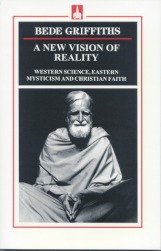
Bede Griffiths, A New Vision of Reality (Western Science, Eastern Mysticism and
Christian Faith)
Templegate Publishers - Springfield, Illinois, pgs. 113-117
“In St John's Gospel this relationship of the Father and the Son is
expressed in the terms, "I am in the Father and the Father in me.” That is a
relationship of total interiority. But Jesus goes on to pray for his disciples,
"that they all may be one; even as thou, Father, art in me, and I in thee, that
they also may be in us...”[27] So here we have this revelation of total
intimacy such that he is 'in' the Father and the Father 'in' him, and that he
wants to share that relationship with his disciples so that they also are in the
Father as he is. This is the centre of the Christian revelation. The God of
Israel, the transcendent holy One manifesting himself in Jesus, reveals this
relationship of Father to Son, of Son to Father, and communicates that
relationship to his disciples in the Spirit. That is the central Christian
revelation and the central Christian experience. It must always be remembered
that what is revelation from one point of view is experience from the other.
There is no revelation coming down from above without any relation to human
experience. It always has to be experienced in order to be revealed. It is only
through our experience that we know God.
Jesus can say then, "I and the Father are one.”[28] He knows himself as one
with the Father, and yet, as we saw, in distinction from the Father. He does not
say, "I am the Father" but "I and the Father are one". This is unity in
distinction. This mutual interpenetration combining unity and distinction
developed, as we shall see in the next chapter, in the whole course of Christian
mysticism, as one of its fundamental elements. This is what distinguishes the
Christian experience of God from that of the Hindu. The Hindu in his deepest
experience of 'dvaita' knows God in an identity of being. "I am Brahman," "Thou art that.” The Christian experiences God in a communion of being, a relationship
of love, in which there is none the less perfect unity of being.”
Bede Griffiths, A New Vision of Reality (Western Science, Eastern Mysticism and
Christian Faith)
Templegate Publishers - Springfield, Illinois, pg. 219
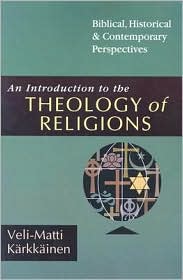
"The main question of the theology of religions culminates simply in two basic affirmations that can be seen as guidelines for any biblical theology of religions. The first is this: God desires all men and women to be saved. "For God so loved the world that he gave his one and only Son" (Jn. 3:16).”This is how God showed his love among us: He sent his one and only Son into the world that we might live through him" (1 Jn 4:9). The most pointed passage is 1 Timothy 2:4, which affirms that God "wants all men to be saved and to come to a knowledge of the truth.” These passages and a host of others make it clear that it is the heartbeat of a loving, caring Father to save all of his creation into an eternal communion. This is rightly called the "optimism of salvation.”
In addition to this first axiom, which consists of the boundless mercy of God that makes possible salvation for all, there is also another equally strong biblical conviction, namely, that only in Jesus Christ can salvation be found. This means that universality (salvation of the world) is reached by way of particularity (salvation through the mediation of Jesus Christ). A host of biblical passages also makes this clear: "Salvation is found in no one else, for there is no other name under heaven given to men by which we must be saved" (Acts 4:12).”I am the way and the truth and the life. No one comes to the Father except through me" (Jn 14:6).”
Veli-Matti Karkkainen, An Introduction to the Theology of Religions, p. 27
Intervarsity Press (September 2006)
Jesus of Nazareth did not openly refer to himself as messiah. Nor, by the way, did Jesus call himself "Son of God,"
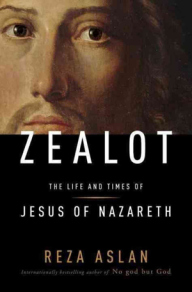
"However Jesus understood his mission and identity-whether he himself believed he was the messiah-what the evidence from the earliest gospel suggests is that, for whatever reason, Jesus of Nazareth did not openly refer to himself as messiah. Nor, by the way, did Jesus call himself "Son of God," another title that others seem to have ascribed to him. (Contrary to Christian conceptions, the title "Son of God" was not a description of Jesus's filial connection to God but rather the traditional designation for Israel's kings. Numerous figures are called "Son of God" in the Bible, none more often than David, the greatest king-2 Samuel 7:14; Psalms 2:7, 89:26; Isaiah 42:1). Rather, when it came to referring to himself, Jesus used an altogether different title, one so enigmatic and unique that for centuries scholars have been desperately trying to figure out what he could have possibly meant by it. Jesus called himself 'the Son of Man.'"
In first-century Palestine, nearly every claimant to the mantle of the messiah neatly fit one of these messianic paradigms. Hezekiah the bandit chief, Judas the Galilean, Simon of Peraea, and Athronges the shepherd all modeled themselves after the Davidic ideal, as did Menahem and Simon son of Giora during the Jewish War. These were king-messiahs whose royal aspirations were clearly defined in their revolutionary actions against Rome and its clients in Jerusalem. Others, such as Theudas the wonder worker, the Egyptian, and the Samaritan cast themselves as liberator-messiahs in the mold of Moses, each would-be messiah promising to free his followers from the yoke of Roman occupation through some miraculous deed. Oracular prophets such as John the Baptist and the holy man Jesus ben Ananias may not have overtly assumed any messianic ambitions, but their prophecies about the End Times and the coming judgment of God clearly conformed to the prophet-messiah archetype one finds both in the Hebrew Scripture and in the rabbinic traditions and commentaries known as the Targum.
The problem for the early church is that Jesus did not fit any of the messianic paradigms offered in the Hebrew Bible, nor did he fulfill a single requirement expected of the messiah. Jesus spoke about the end of days, but it did not come to pass, not even after the Romans destroyed Jerusalem and defiled God's Temple. He promised that God would liberate the Jews from bondage, but God did no such thing. He vowed that the twelve tribes of Israel would be reconstituted and the nation restored; instead, the Romans expropriated the Promised Land, slaughtered its inhabitants, and exiled the survivors. The Kingdom of God that Jesus predicted never arrived; the new world order he described never took shape. According to the standards of the Jewish cult and the Hebrew Scriptures, Jesus was as successful in his messianic aspirations as any of the other would-be messiahs.
The early church obviously recognized this dilemma and, as will become apparent, made a conscious decision to change those messianic standards. They mixed and matched the different depictions of the messiah found in the Hebrew Bible to create a candidate that transcended any particular messianic model or expectation. Jesus may not have been prophet, liberator, or king. But that is because he rose above such simple messianic paradigms. As the transfiguration proved, Jesus was greater than Elijah (the prophet), greater than Moses (the liberator), even greater than David (the king).
That may have been how the early church understood Jesus's identity. But it does not appear to be how Jesus himself understood it. After all, in the entire first gospel there exists not a single definitive messianic statement from Jesus himself, not even at the very end when he stands before the high priest Caiaphas and somewhat passively accepts the title that others keep foisting upon him (Mark 14:62). The same is true for the early Q source material, which also contains not a single messianic statement by Jesus.
Perhaps Jesus was loath to take on the multiple expectations the Jews had of the messiah. Perhaps he rejected the designation outright. Either way, the fact remains that, especially in Mark, every time someone tries to ascribe the title of messiah to him-whether a demon, or a supplicant, or one of the disciples, or even God himself-Jesus brushes it off or, at best, accepts it reluctantly and always with a caveat.
However Jesus understood his mission and identity-whether he himself believed he was the messiah-what the evidence from the earliest gospel suggests is that, for whatever reason, Jesus of Nazareth did not openly refer to himself as messiah. Nor, by the way, did Jesus call himself "Son of God," another title that others seem to have ascribed to him. (Contrary to Christian conceptions, the title "Son of God" was not a description of Jesus's filial connection to God but rather the traditional designation for Israel's kings. Numerous figures are called "Son of God" in the Bible, none more often than David, the greatest king-2 Samuel 7:14; Psalms 2:7, 89:26; Isaiah 42:1). Rather, when it came to referring to himself, Jesus used an altogether different title, one so enigmatic and unique that for centuries scholars have been desperately trying to figure out what he could have possibly meant by it. Jesus called himself "the Son of Man.”
The phrase "the Son of Man" (ho huios tou anthropou in Greek) appears some eighty times in the New Testament, and only once, in a positively operatic passage from the book of Acts, does it occur on the lips of anyone other than Jesus. In that passage from Acts, a follower of Jesus named Stephen is about to be stoned to death for proclaiming Jesus to be the promised messiah. As an angry crowd of Jews encircles him, Stephen has a sudden, rapturous vision in which he looks up to the heavens and sees Jesus wrapped in the glory of God. "Look!" Stephen shouts, his arms thrust into the air. "I can see the heavens opening, and the Son of Man standing at the right hand of God" (7:56). These are the last words he utters before the stones begin to fly.
Stephen's distinctly formulaic use of the title is proof that Christians did in fact refer to Jesus as the Son of Man after his death. But the extreme rarity of the term outside of the gospels, and the fact that it never occurs in the letters of Paul, make it unlikely that the Son of Man was a Christological expression made up by the early church to describe Jesus. On the contrary, this title, which is so ambiguous, and so infrequently found in the Hebrew Scriptures that to this day no one is certain what it actually means, is almost certainly one that Jesus gave himself.
Reza Aslan, Zealot: The Life and Times of Jesus of Nazareth
Random House (July 16, 2013) pp. 134-7
Apokalypsis: The fulfillment of eschatological instruction by the Paraclete in the Age to Come promised by Jesus at the Last Supper
An apocalypse (Greek: apokalypsis meaning “an uncovering”) is in religious contexts knowledge or revelation, a disclosure of something hidden, “a vision of heavenly secrets that can make sense of earthly realities.” (Ehrman 2014, 59)
“An apocalypse (Ancient Greek: apokalypsis ... literally meaning "an uncovering") is a disclosure or revelation of great knowledge. In religious and occult concepts, an apocalypse usually discloses something very important that was hidden or provides what Bart Ehrman has termed, "A vision of heavenly secrets that can make sense of earthly realities". Historically, the term has a heavy religious connotation as commonly seen in the prophetic revelations of eschatology obtained through dreams or spiritual visions.” Wikipedia 2021-01-09
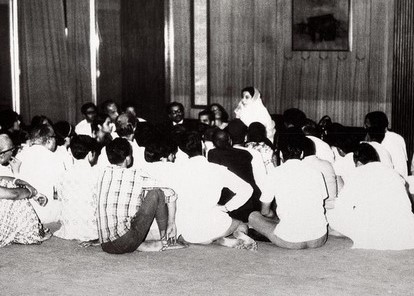
Total number of recorded talks 3058: Public Programs 1178, Pujas 651, and other (private conversations) 1249
“The Paraclete will come (15:26; 16:7, 8, 13) as Jesus has come into the world (5:43; 16:28; 18:37)... The Paraclete will take the things of Christ (the things that are mine, ek tou emou) and declare them (16:14-15). Bishop Fison describes the humility of the Spirit, 'The true Holy Spirit of God does not advertise Herself: She effaces Herself and advertises Jesus.' ...
It is by the outgoing activity of the Spirit that the divine life communicates itself in and to the creation. The Spirit is God-in-relations. The Paraclete is the divine self-expression which will be and abide with you, and be in you (14:16-17). The Spirit's work is described in terms of utterance: teach you, didasko (14:26), remind you, hypomimnesko (14:26), testify, martyro (15:26), prove wrong, elencho (16:8), guide into truth, hodego (16:13), speak, laleo (16:13, twice), declare, anangello (16:13, 14, 15). The johannine terms describe verbal actions which intend a response in others who will receive (lambano), see (theoreo), or know (ginosko) the Spirit. Such speech-terms link the Spirit with the divine Word. The Spirit's initiatives imply God's personal engagement with humanity. The Spirit comes to be with others; the teaching Spirit implies a community of learners; forgetful persons need a prompter to remind them; one testifies expecting heed to be paid; one speaks and declares in order to be heard. The articulate Spirit is the correlative of the listening, Spirit-informed community.
The final Paraclete passage closes with a threefold repetition of the verb she will declare (anangello), 16:13-15. The Spirit will declare the things that are to come (v.13), and she will declare what is Christ's (vv. 14, 15). The things of Christ are a message that must be heralded...
The intention of the Spirit of truth is the restoration of an alienated, deceived humanity... The teaching role of the Paraclete tends to be remembered as a major emphasis of the Farewell Discourses, yet only 14:26 says She will teach you all things. (Teaching is, however, implied when 16:13-15 says that the Spirit will guide you into all truth, and will speak and declare.) Franz Mussner remarks that the word used in 14:26, didaskein, "means literally 'teach, instruct,' but in John it nearly always means to reveal.” (Stevick 2011, 292-7)
The Holy Spirit as feminine: Early Christian testimonies and their interpretation,
Johannes van Oort, Radboud University, Nijmegen, The Netherlands
Department of Church History and Church Polity, Faculty of Theology, University of Pretoria, South Africa








 “The teaching of the Paraclete, as the continuation of Jesus' teaching, must also be understood as the fulfillment of the promise of eschatological divine instruction.”
Stephen E. Witmer, Divine instruction in Early Christianity
“Jesus therefore predicts that God will later send a human being to Earth to take up the role defined by John .i.e. to be a prophet who hears God's words and repeats his message to man.”
M. Bucaille, The Bible, the Qur'n, and Science
“And when Jesus foreannounced another Comforter, He must have intended a Person as distinct and helpful as He had been.”
F. B. Meyer, Love to the Utmost
“The Paraclete has a twofold function: to communicate Christ to believers and, to put the world on trial.”
Robert Kysar, John The Meverick Gospel
“But She—the Spirit, the Paraclete...—will teach you everything.”
Danny Mahar, Aramaic Made EZ)
“Grammatical nonsense but evidence of the theological desire to defeminize the Divine.”
Lucy Reid, She Changes Everything
“The functions of the Paraclete spelled out in verses 13-15... are all acts of open and bold speaking in the highest degree.”
David Fleer, Preaching John's Gospel
“The reaction of the world to the Paraclete will be much the same as the world's reaction was to Jesus.”
Berard L. Marthaler, The Creed: The Apostolic Faith in Contemporary Theology
Bultmann calls the “coming of the Redeemer an 'eschatological event,' 'the turning-point of the ages.”
G. Ladd, A Theology of the New Testament
“The Paraclete equated with the Holy Spirit, is the only mediator of the word of the exalted Christ.”
Benny Thettayil, In Spirit and Truth
“The divine Paraclete, and no lessor agency, must show the world how wrong it was about him who was in the right.”
Daniel B. Stevick , Jesus and His Own: A Commentary on John 13-17
Stephen Smalley asserts that “The Spirit-Paraclete ... in John's Gospel is understood as personal, indeed, as a person.”
Marianne Thompson, The God of the Gospel of John
“The Messiah will come and the great age of salvation will dawn (for the pious).”
Eric Eve, The Jewish context of Jesus' Miracles
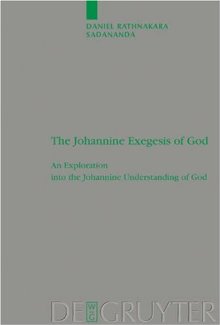
“The remembrance is to relive and re-enact the Christ event, to bring about new eschatological decision in time and space.”
Daniel Rathnakara Sadananda, The Johannine Exegesis of God
“The Spirit acts in such an international situation as the revealer of 'judgment' on the powers that rule the world.”
Michael Welker, God the Spirit
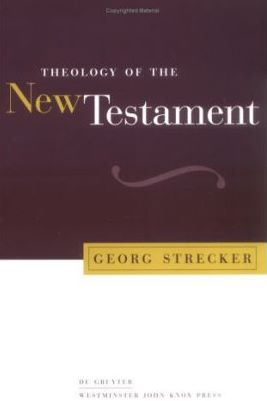
The Paraclete's “Appearance means that sin, righteousness, and judgment will be revealed.”
Georg Strecker, Theology of the New Testament
“While the Spirit-Paraclete is the true broker, the brokers they rely on are impostors.”
T. G. Brown, Spirit in the writings of John
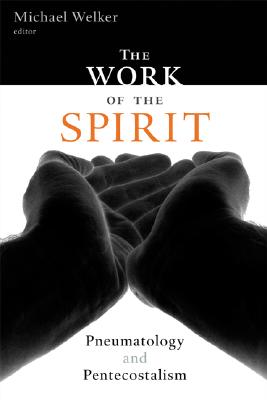
“The pneumatological activity ... of the Paraclete ... may most helpfully be considered in terms of the salvific working of the hidden Spirit.”
Michael Welker, The work of the Spirit
“The pneuma is the peculiar power by which the word becomes the words of eternal life.”
Robert Kysar, Voyages with John
“The gift of peace, therefore, is intimately associated with the gift of the Spirit-Paraclete.”
Francis J. Moloney, The Gospel of John
“This utopian hope, even when modestly expressed, links Jesus and the prophets to a much wider history of human longing.”
Harvey Cox, The Future of Faith
“Because of the presence of the Paraclete in the life of the believer, the blessings of the end-times—the eschaton—are already present.”
Robert Kysar, John
“They are going, by the Holy Spirit's power, to be part of the greatest miracle of all, bringing men to salvation.”
R. Picirilli, The Randall House Bible Commentary
“The Kingdom of God stands as a comprehensive term for all that the messianic salvation included... is something to be sought here and now (Mt. 6:33) and to be received as children receive a gift (Mk. 10:15 = Lk. 18:16-17).”
G. Ladd, A Theology of the New Testament
Disclaimer: Our material may be copied, printed and distributed by referring to this site. This site also contains copyrighted material the use of which has not always been specifically authorized by the copyright owner. We are making such material available to our readers under the education and research provisions of "fair use" in an effort to advance freedom of inquiry for a better understanding of religious, spiritual and inter-faith issues. The material on this site is distributed without profit. If you wish to use copyrighted material for purposes other than “fair use” you must request permission from the copyright owner.

