
The Resurrection of the dead
Chapter Nineteen—And I look for the resurrection of the dead. And the life of the age to come. Amen.
At last we have arrived at the crucial subject of resurrection.
The Goal of Human Life
What is the goal of the human being? Saint Clement of Alexandria and
Origen, his great pupil, divided Christians into two types: the
somatics, the "fleshly", and the pneumatics, the "spiritual.” The
classification still holds today, though it may sound a bit snobbish.
The fleshly say that the goal of the human being is to live forever
in a perfect human body in a happy realm like the Elysian Fields of
the ancient Greeks and Romans (who forced this concept, along with
that of everlasting damnation, into Christianity after
the "conversion" of Constantine). There, they say, Jesus will be seen
seated upon a throne and be praised by "The saved" through endless
ages.
The spiritual, on the other hand, say that our goal is to transcend
the human condition altogether, rise to the Paradise level, evolve
from there to the angelic state, and keep on evolving until we are
united with God, becoming light in God's Light, passing beyond all
name and form and living God's own life—to be god with God. We and
God shall be ONE forever without possibility of separation or falling
away.1
The Great Gulf
There shall always be a great gulf between those for whom God is an
object to be perceived with "spiritualized" senses (but who never do
so perceive) and the mystics who directly and subjectively perceive
God within their spirits as part of their own life.
Christ came to deliver us from the world. He said that He had
overcome the world,2 and thereby was enabling us to reascend to
Paradise where He would Himself receive us.3 This is the true Gospel
of Christ. The goal is spiritual, not material. Indeed it cannot be
otherwise, however much we might desire a material embodiment, for
the Scriptures clearly state: "All the host of heaven shall be
dissolved, and the heavens shall be rolled together as a
scroll.”4 "The heavens will pass away with a great noise, and the
elements will melt with fervent heat, the earth also and the works
that are therein shall be burned up.”5 Saint Peter goes on to exhort
us to shape our lives according to an acute awareness of the divinely-
ordained dissolution of the entire creation.6 Everything will be
melted down into the vast, original cosmic soup. Any other teaching
is simply not Christian.
Saint Gregory Of Nyssa
When the wording of the Creed was finalized, Saint Gregory of Nyssa,
one of the greatest mystics of the Church, almost single-handedly
settled what it would be. The original Nicene Creed said nothing at
all about any kind of "resurrection.” Fortunately, through the
influence of Saint Gregory, the expression "resurrection of the
body," which had been put into earlier professions of faith by the
fleshly-minded, was changed to: "I look for the resurrection of the
dead.”
The Dead
But what exactly does it mean to be "dead"? The Lord Jesus
said: "This is eternal life: to know"—not to go to heaven and play on
harps forever, but to know God. In other words, "life" is knowing, it
is being conscious. To be dead, on the other hand, is to be
unconscious. And the life which Christ came to bestow on us is the
consciousness of God which comes from our perfect union with Him, in
which we are no longer two but one. Until then we are dead, whether
on the earth or in the invisible worlds. And our bodies are tombs in
which our spirits lie asleep, awaiting the glory of spiritual
resurrection.
The "Christianity" of the flesh cannot impart the life of the spirit
and awaken in us the direct consciousness of spirit in union with
Spirit, so it promises us our body, instead. It tells us that the
body is to be resurrected to live forever, mistaking resuscitation
for resurrection.
Resurrection—Anastasis
The Greek term translated "resurrection" is anastasis, which
literally means "standing up" in the sense of rising up. This
particular term was used by the New Testament authors because of the
question in Ecclesiastes 3:21: "Who knoweth the spirit of man that
goeth upward?” That is, when the body dies it falls to earth and
becomes one with the earth, whereas the spirit, if unhampered, rises
upward to subtler worlds, usually to prepare for further earthly
incarnations.
It is stated in the Gospels that the Sadducees did not believe in the
resurrection, but that the Pharisees did. This is not referring to a
future condition of the body but to the question of the immortality
of the spirit. The Sadducees taught that physical death terminated
the existence of the individual person—nothing remained to live on.
The Pharisees, however, taught that when the body "died" the spirit
arose, "stood up," out of the body and went before God for judgment.
And that is all it meant. Only in latter times did the fleshly ones
come up with the idea that we will all rise out of the grave in our
bodies at the end of time and be physical beings for eternity—for
ever and ever throughout the ages.
At the time the wording of the Creed was settled, the fleshly
believed in the resurrection of the body and the spiritual believed
in resurrection from the body. They are not the same!
True Resurrection
The "standing up of the dead," the rising of the dead, is the
breaking of the bonds of time and space, becoming freed from the
prison of ego and alive to our true nature as spirit and to our
eternal relationship to Christ. For Christianity is not a religion
only, it is a state of consciousness. As Saint Paul says: "Awake thou
that sleepest, and arise from the dead, and Christ shall give thee
light.”7
This is Saint Paul's concept of the resurrection. When he talks
elsewhere about the trumpet sounding and the dead rising,8 he is
speaking of mystical experiences. So also are the descriptions in the
book of Revelation of "things which must shortly come to pass.”9 This
very phrase shows that the Evangelist was not speaking of long-range
world prophecies, although many exoterics with their "prophecy
charts" try to prove that virtually none of Revelation has been
fulfilled after nearly two thousand years, but that it is all going
to come about in the future as political predictions—not even dealing
with religion. The totally humanistic, material, and political nature
of their interpretations reflect their fleshly consciousness—a
consciousness at variance with that of Saint John. The Bible must be
read with the eyes of the spirit, not with the eyes of the flesh.
The "End"
We also have descriptions given by the Lord Jesus about the "coming"
of the Son of Man in glory when the Apostles asked: "What shall be
the sign of thy coming, and of the end of the world?”10 The Greek
term translated "World" is actually "Age"—aeon. Aeon has a double
meaning: a great span of time and a level of creation. This is
referred to in the Creed by "The life of the age to come.” Here aeon
means a realm of existence. According to original Christian
cosmology, God has emanated many aeons in which intelligent beings
dwell according to their state of evolution. Referring to this the
Lord said: "In my Father's house are many mansions.” Metaphysicians
speak of the "earth plane," the "Astral plane," etc., which is also
correct.
Therefore the disciples were asking about when their sojourn in this
aeon would come to an end and they would rise (resurrect) to Paradise
from which Adam fell, leaving material bondage behind forever.11 They
wanted to know what the signs were which indicated their attainment
of the great freedom from earthly birth and death. The answer the
Lord gives them is, like that of Revelation, a symbolic description
of the transmutation of the human to the divine. It has absolutely
nothing to do with the history or the future of the world. This is
made clear by His statement: "Verily I say unto you, There be some
standing here, which shall not taste of death, till they see the Son
of man coming in his kingdom.” All those who heard His words have
certainly died, so we can only conclude that Jesus was either wrong
or that He was not making a prediction of an external coming to an
external world. (There is a theory that Saint John the beloved
Apostle never died and is still on the earth somewhere, but he
himself denied this.12)
The only sensible conclusion is that the Lord was speaking
mystically. This is further reinforced by His saying: "Verily I say
unto you, This generation shall not pass, till all these things be
fulfilled.”13 He confirmed that He was not speaking of an
external "coming" when He said: "Then if any man shall say unto you,
Lo, here is Christ, or there; believe it not.”14 Yet such nonsense is
being spoken today, and the fleshly flock to hear it and chew their
nails worrying over "The Antichrist" and "The Beast" instead of
working out their salvation.
The "Coming" Of Christ
"Coming" is a translation of the word parousia, which really
means "presence.” There are two "presences" of Jesus Christ. The
first Presence is external in the form of His physical, incarnate
presence in the world, two thousand years ago, and His second
Presence is His appearing in the depths of the individual spirit when
He becomes one with it. The entire purpose of His first Presence
was/is to accomplish this second Presence within us. And this is what
it is to be "resurrected unto life.” For this reason it is essential
to understand that being alive is the condition of being "god with
God," and to be anything else is to be dead. Thus, St. Paul refers to
those who are striving to attain true resurrection as "All them that
love his appearing.”15 The truly wise seek after union with God with
a loving heart, yearning to live in and unto God alone. That is
salvation, the goal of all conscious beings.
Enlightenment
The resurrection of the dead is the enlightenment of the spirit and
its consequent freedom from the bondage of death and sin—which are
conditions, not acts. The sensory and intellectual experiences which
we consider "life" are actually the barrier, the painted curtain
between us and real life. But we can arise from this like the
Prodigal Son and go back to the Father through the processes which
Christ and the Apostles gave us. This is particularly true of
meditation, for when we silence the senses, mind, and intellect—not
by controlling them, but by transcending them and going beyond them—
we will discover Christ and His Father already present within us.16
When we go beyond the false "knowing" of the mind we can enter into
the real knowing of the spirit. Then we can say: "I found Him Whom my
soul loveth.”17
Deification
Resurrection of the dead is deification (theosis), attaining to
divinity. By this we do not mean that we become the Lord Himself, the
Source of life, but rather that we are reestablished in our original
status as parts or "rays" of His divine life. This is of course a
great mystery—the same as that of the Incarnation. It is totally
inconceivable as to how we can be a part of God Who is a perfectly
unitary Being without parts (through existing in Trinity!). Yet it is
so according to the Scriptures and the witness of two millennia of
saints. That we are meant to be "gods with God," the Lord Jesus made
clear to His adversaries—who objected to His affirmation of His own
deification—when He quoted: "I have said, Ye are gods.”18
The Lord wept at the tomb of Lazarus19 because He was Adam, the
Father of the human race in this creation cycle, who by his
transgression had brought death to Lazarus and us all.20 Therefore He
wept over the entire human race which He had plunged into death.
Beholding the results of His own disobedience, grief overwhelmed Him.
Not for Him was the false comfort of: "Well, it must be the will of
God.” He knew that indeed it was not the will of God but His own
disobedient will that had brought death into the world. It was an
awesome realization, terrible to His spirit.
A Significant Word
It is significant that the Creed does not say: "I believe in the
resurrection of the dead," but: "I look for" it. It is not enough to
believe the propositions of the Creed. We must reach forward to the
practical realization and demonstration of them in our own
lives.21 "I press toward the mark for the prize of the high calling
of God in Christ Jesus," 22 said Saint Paul. To look for the
resurrection of the dead is to desire and strive for our resurrection
in—and into—Christ. Such a resurrection is a restoration back into
Paradise, as He told the Apostles: "I go to prepare a place for you.
And if I go and prepare a place for you, I will come again, and
receive you unto myself; that where I am, there ye may be also.”23
And He promised the thief: "Today shalt thou be with me in
paradise.”24 It is a resurrection unto life, free forever from birth
and death and the bonds of limited physical embodiment, which was but
a stage in the process of our return to God.
How?
This is possible only through Christ, Who assured His disciples: "I
have overcome the world.”25 That is, He had conquered the power of
the world which had bound human beings perpetually to the cycle of
recurrent birth and death. Just as a planet keeps its moons circling
around it through the pull of its gravitation, so the earth kept the
spirits of all beings trapped in its orbit, subject to constant
return through the law of "sowing and reaping," 26 which is called
midah keneged midah ("measure for measure") in Judaism and karma by
the Hindus and Buddhists.
Christ broke the bonds of "death," of continual imprisonment in human
embodiment, and gave us the power to do the same. He did not do it
for us, but instead stated: "Him that overcometh will I make a pillar
in the temple of my God, and he shall go no more out.”27 That is, if
we receive Him into the depths of our being He shall empower us to
break the spiritual gravity of earth and earthly consciousness so
that we shall no longer "go out" from before the face of God through
reincarnation. Even clearer: "To him that overcometh will I grant to
sit with me in my throne, even as I also overcame, and am set down
with my Father in his throne.” We, too, must in our own flesh
conquer "The body of sin"28 which is ignorance and evil. This cannot
be done on our own, of course, but must be done through Christ—
specifically through the inner life imparted and sustained by
meditation. But if we shall so do, then we shall sit with Him in His
throne.
The Throne Of Christ
In oriental countries kings did not sit on gilded chairs as in the
West, but sat cross-legged on thrones that were shallow, topless
boxes of gold or silver with cushions and ornate backs. Usually they
were quite large and could accommodate more than one person. If a
king wished to strongly affirm the succession to the throne he would
have his heir sit with him in the throne as he conducted state
business. This is why the original Greek says: "In My throne.” And
the throne of Christ is His Divinity, His own status and being as the
Only-begotten of the Father.
We shall literally participate in the omnipresence, omniscience, and
omnipotence of Jesus Christ. We, too, shall be Christs, as our
name "Christian" implies. And "Then cometh the end, when he shall
have delivered up the kingdom to God, even the Father;...that God may
be all in all.”29 That is, we shall transcend even the state of
Christhood and pass into the state of Godhood, a state of ineffable
non-duality in which God will be ALL, and "In all" of us, as well.
There shall be perfect union, eternal unity, without annihilation of
our existence. In one sense, there shall be God alone, and in another
sense, "so shall we ever be with the Lord.”30
Certainly this state is not to be confused with the concept
of "unity" set forth in contemporary monistic philosophy wherein the
individual ceases to exist at all, but undergoes a total merging and
cessation of individuality, the individuality having supposedly never
been anything more than an illusion. In Christian mysticism we say
that the experience of separation from God is an illusion,31 but our
existence as individual consciousnesses within the Bosom of the
Father has been from eternity in a way that can only be recognized as
a mystery to our earthbound understandings. But in eternity, back in
our Source, we shall know as we are known,32 with the totality of
knowledge and being.
We can see from all this that the ultimate meaning of "The
resurrection from the dead" is our reascension to Divinity. And it is
possible even in this life. "Behold, now is the accepted time;
behold, now is the day of salvation.”33
The Final Phrase
The final phrase of the Creed is: "And the life of the age to come.”
We have already discussed the correct meaning of aeon, which is
translated "Age," as a realm of existence. And we have already seen
that in the Creed the term "life" means consciousness, the essential
state of being. When we resurrect from the dead, when our
consciousness is awakened by being illumined by Christ, we are
enabled to arise from the earthly aeon into the aeon of Paradise,
whose true life is that of conscious consciousness—that is, full self-
awareness of ourselves as individual, immortal, spiritual entities.
Higher Understanding
But there is a higher level, "The Aeon of aeons," from Which all
aeons have emanated and Which is God Himself. We also call this state
of being "Eternity," which is not time without end, but rather is the
actual Being of God. This is the Aeon Whose Life we must aspire
toward, even after regaining Paradise. In the seventeenth chapter of
Saint John, the Lord Jesus reveals the possibility of this higher,
divine life when He says: "And this is life eternal, that they might
know thee the only true God.”
Eternal life, "The life of the age to come," is not an introverted
consciousness confined to awareness of our individual existence as a
seemingly separate entity from God—which is a delusion—but it is
awareness of God, within Whom we have our being.34 More: it is
intimate knowing of God in the Biblical sense of thorough knowledge
through total union with Him.
We shall not just know ourselves, we shall know God as the Self of
our self through active, conscious participation in the infinite Life
of the Divine. As the wave lives in the ocean and has no existence
apart from the ocean, so shall we be. Now the wave can neither
say: "I am different from the ocean, separate and independent,
another entity altogether," nor can it say: "I am myself the ocean,"
in the sense of the totality. But it can indeed say: "I am a part of
the ocean from which I draw my existence, and with which I am
essentially and irrevocably one.”
A Clarification
The great non-dual philosopher of India, Adi Shankaracharya, wrote in
one of his hymns: "O Lord, though in essence there is no difference
between us, I cannot say that Thou belongest to me. Rather, I belong
to Thee. For the wave cannot say: 'I am the ocean.' But the ocean can
say: 'I am the wave.'" In this way God can say: "There is none else
beside Me," 35 and yet not deny our existence which is encompassed by
His Existence. Such a truth can only be a mystery until we ascend to
that state where we shall know as we are known. In the depths of our
own beings we shall behold God Who beholds us in the depths of His
Being. We shall be at the heart of God, and God shall be at the heart
of us in unending vision. "My beloved is mine, and I am his.”36 Or,
even more correctly: "My beloved is me, and I am Him.”
A Greater Goal
Though the Lord Jesus did indeed open Paradise to us, He has prepared
an even higher place for us—His throne of divinity which we have
already discussed. Our final resting place at the end of our
pilgrimage of traversing all the levels of Being and Consciousness
(aeons) that exist, shall be in the Bosom of the Father—nothing less.
For He told the Apostles: "Where I am, there ye may be also.”37 He
did not say: "Where I shall be," but "Where I am.” And where was
that? In the Bosom of the Father from eternity.38 Having ascended
back to the Divine Origin, making Himself "The firstfruits of them
that slept," 39 the "firstborn from the dead," 40 He returned to awaken
us, to resurrect us into His own Life which was also ours by nature
through divine grace.
The Christian Gnosis looks not to the fleeting, illusory life of this
world, "for the fashion of this world passeth away.”41 Actually, the
word translated "fashion" here is schema, which in this context means
its English derivative "scene"—as in a play. A literal translation of
the verse is: "For the scene of this world is passing by," in the
sense that a scene in a play is at every moment "going on,"
evaporating into the ether, having no abiding substance. For this
reason the Christian watches and waits for the Master's appearing,
keeping his lamp trimmed and burning, possessing his soul in
patience.42
Just as we cannot enter the ocean at whim and walk around on the
ocean floor breathing water, so we cannot enter into "The life of the
age to come" without preparation. While yet in this world we must
accustom ourselves to the ways of Paradise and Eternity. Even in this
life, we must be transmuted through our continuous practice of
meditation. Although we utilize some external means, that transmutation must be a fundamentally interior process, for "The kingdom of God is within.”43 So also, then, must be "The life of the age to come.”
Through meditation, especially, we learn to live both in this world
of time-space and in eternity, which transcends time and space. This
was the purpose of the Incarnation. In Christ Jesus time and eternity
were fused, and we become assumed unto Him and begin to live as He
lived, eventually becoming exactly What He was. Do we remain
ourselves, then? In truth, there is no other way to be ourselves than
this. This is why the Lord Jesus said that only if we would "lose"
our life would we be able to"find"It.44 For outside of God we have
no life.
The Last Word
We always conclude a recitation of the Creed with "Amen," a Hebrew
term meaning both "This is true" and "so be it.” By using this word
in its first meaning we seal the Creed with our declaration that it
is indeed true for us, that our repetition has not been mindless
rote.
But the second meaning opens a new vista for us. Since everything
stated in the Creed is an established fact, rather than a hope or
speculation of the future, why would we say: "so be it," as though it
were something yet to be fulfilled? Here, too, we have a dual
meaning. First, we express our aspiration that one day it may be so
to us, that we shall truly know all the propositions of the Creed as
true through our own direct spiritual experience. The second meaning
is more profound, expressing the hope that the propositions of the
Creed may be realized and manifested within us, the microcosm, as
they are within the universal macrocosm. Let us briefly consider the
Creedal statements in this context.
The Interior Creed
By reciting the Creed with full intent I affirm my aspiration that
one day I shall fully know both who and what this "I" is which has
been called to "Believe.” That is, may I come to full self-knowledge
in the "one God" Whom I shall know as the "maker" of all within me,
both "of heaven and earth, and of all things" which comprise my
being, both the "visible and invisible.”
May this awakening come through my perfect communion with the "one
Lord, Jesus Christ" Who effects my union with "The Only-begotten Son
of God," just as He Himself is one with the Only-begotten, revealing
to me that we were both "Begotten of the Father before all ages," and
are therefore His alone, eternal and immortal. That I myself, as is
He, am "light from Light, true God from true God.” I, too, am part of
the Father's transcendent Being, and therefore "Begotten not made,
being of one substance with the Father.” And, reflecting the power of
the Father, there is no other force but my own will "By whom all
things were made" in my unfolding life.
Since I am now trapped in the illusion of human existence, the
forgotten knowledge of my own self as the Light of the World, the
Christ of God, must be "Born again"45 in me "By the Holy Spirit" to
effect my salvation. Not without struggle, without "crucifixion,"
suffering, and "Burial" can this be done. But, when the process is
completed I shall in truth "rise again and ascend into heaven,"
taking my rightful place on the divine "right hand" from which I
shall indeed, with Christ Jesus, be revealed from the heaven of
illumined consciousness, purifying myself as He is pure through my
empowerment "to judge the living and the dead" within my own being.
Having done so, I shall enter into the "kingdom" which shall have "no
end.”
All this transmutation shall take place through the divine alchemy
of "The Holy Spirit, the Lady and Giver of Life," Who, by me in my
inmost being, "together with the Father and the Son is worshipped and
glorified," so that She "Who spoke by the prophets" may live and
speak in me, as the Lord Jesus promised.46 Through Her I am made a
living stone47 in the "one holy, catholic and apostolic Church," and
enabled to be one, no longer at variance with myself and God, holy in
my thought, will, and life, and catholic (kata holos), containing the
whole of the divine life as my own.
Thereby I am enabled to attain the "one baptism for the remission of
sins" which is an unreserved plunging (baptizo) into the boundless
ocean of God's Light so that, dead forever unto ignorance and its
product, sin,48 I may rise unto "The resurrection of the dead" and be
established forever in God Who is Himself the Spirit of my
spirit "And the life of the age to come.”
"Amen!"
And now our esoteric consideration of the Creed is ended. As the
Apostles have counseled us in their Constitutions: "Meditate on these
things, brethren, and the Lord be with you upon earth and in the
kingdom of His Father, Who both sent Him and hath delivered us by Him
from the bondage of corruption into His glorious liberty, and hath
promised life to those who through Him have believed in the God of
the whole world. Amen.”
The Resurrection of the dead - by Swami Nirmalananda Giri
1)"Whosoever is born of God doth not commit sin; for his seed
remaineth in him: and he cannot sin, because he is born of God.” (I
John 3:9)
2) John 16:33; Revelation 3:21
3) John 14:3
4) Isaiah 34:4
5) II Peter 3:10
6)"Seeing then that all these things shall be dissolved, what manner
of persons ought ye to be in all holy conversation and godliness.”
(II Peter 3:11)
7) Ephesians 5:14
8) I Corinthians 15:52; I Thessalonians 4:16
9) Revelation 1:1
10) Matthew 24:3
11) Robe of Light considers these matters in detail.
12)"Peter seeing him [Saint John] saith to Jesus, Lord, and what
shall this man do? Jesus saith unto him, If I will that he tarry till
I come, what is that to thee? follow thou me. Then went this saying
abroad among the brethren, that that disciple should not die: yet
Jesus said not unto him, He shall not die; but, If I will that he
tarry till I come, what is that to thee?” (John 21:21-23)
13) Matthew 24:34
14) Matthew 24:23
15) II Timothy 4:8
16)"Jesus answered and said unto him, If a man love me, he will keep
my words: and my Father will love him, and we will come unto him, and
make our abode with him.” (John 14:23)
17) Song of Solomon 3:4
18) Psalm 82:6,7
19) John 11:35
20) See Robe of Light.
21) Matthew 11:12; I Timothy 6:12,19
22) Philippians 3:14
23) John 14:2,3
24) Luke 23:43
25) John 16:33
26) Galatians 6:7
27) Revelation 3:12
28) Romans 6:6
29) I Corinthians 15:24,28
30) I Thessalonians 4:17
31)"Whither shall I go from thy spirit? or whither shall I flee from
thy presence? If I ascend up into heaven, thou art there: if I make
my bed in hell, behold, thou art there. If I take the wings of the
morning, and dwell in the uttermost parts of the sea; Even there
shall thy hand lead me, and thy right hand shall hold me. If I say,
Surely the darkness shall cover me; even the night shall be light
about me. Yea, the darkness hideth not from thee; but the night
shineth as the day: the darkness and the light are both alike to
thee.” (Psalm 139:7-12)
32)"For now we see through a glass, darkly; but then face to face:
now I know in part; but then shall I know even as also I am known.”
(I Corinthians 13:12)
33) II Corinthians 6:2
34)"God...giveth to all life, and breath, and all things;...and hath
determined...that they should seek the Lord, if haply they might feel
after him, and find him, though he be not far from every one of us:
For in him we live, and move, and have our being; as certain also of
your own poets have said, For we are also his offspring.” (Acts 17:24-
28)
35) Isaiah 47:8,10
36) Song of Solomon 2:16
37) John 14:3
38)"No man hath seen God at any time; the only begotten Son, which
is in the bosom of the Father, he hath declared him.” (John 1:18)
39) I Corinthians 15:20
40) Colossians 1:18; Revelation 1:5
41) I Corinthians 7:31
42) Luke 21:19
43) Luke 17:21
44) Luke 17:33
45) John 3:3. Another meaning is: "Born from above.”
46)"Even the Spirit of truth; whom the world cannot receive, because
it seeth him not, neither knoweth him: but ye know him; for he
dwelleth with you, and shall be in you.” (John 14:17)
47)"Ye also, as lively stones, are built up a spiritual house, an
holy priesthood, to offer up spiritual sacrifices, acceptable to God
by Jesus Christ.” (I Peter 2:5)
48)"How shall we, that are dead to sin, live any longer therein?”
(Romans 6:2)
Apokalypsis: The fulfillment of eschatological instruction by the Paraclete in the Age to Come promised by Jesus at the Last Supper
An apocalypse (Greek: apokalypsis meaning “an uncovering”) is in religious contexts knowledge or revelation, a disclosure of something hidden, “a vision of heavenly secrets that can make sense of earthly realities.” (Ehrman 2014, 59)
“An apocalypse (Ancient Greek: apokalypsis ... literally meaning "an uncovering") is a disclosure or revelation of great knowledge. In religious and occult concepts, an apocalypse usually discloses something very important that was hidden or provides what Bart Ehrman has termed, "A vision of heavenly secrets that can make sense of earthly realities". Historically, the term has a heavy religious connotation as commonly seen in the prophetic revelations of eschatology obtained through dreams or spiritual visions.” Wikipedia 2021-01-09
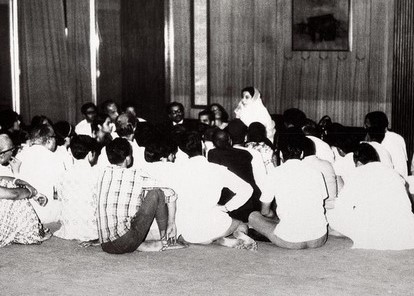
Total number of recorded talks 3058: Public Programs 1178, Pujas 651, and other (private conversations) 1249
“The Paraclete will come (15:26; 16:7, 8, 13) as Jesus has come into the world (5:43; 16:28; 18:37)... The Paraclete will take the things of Christ (the things that are mine, ek tou emou) and declare them (16:14-15). Bishop Fison describes the humility of the Spirit, 'The true Holy Spirit of God does not advertise Herself: She effaces Herself and advertises Jesus.' ...
It is by the outgoing activity of the Spirit that the divine life communicates itself in and to the creation. The Spirit is God-in-relations. The Paraclete is the divine self-expression which will be and abide with you, and be in you (14:16-17). The Spirit's work is described in terms of utterance: teach you, didasko (14:26), remind you, hypomimnesko (14:26), testify, martyro (15:26), prove wrong, elencho (16:8), guide into truth, hodego (16:13), speak, laleo (16:13, twice), declare, anangello (16:13, 14, 15). The johannine terms describe verbal actions which intend a response in others who will receive (lambano), see (theoreo), or know (ginosko) the Spirit. Such speech-terms link the Spirit with the divine Word. The Spirit's initiatives imply God's personal engagement with humanity. The Spirit comes to be with others; the teaching Spirit implies a community of learners; forgetful persons need a prompter to remind them; one testifies expecting heed to be paid; one speaks and declares in order to be heard. The articulate Spirit is the correlative of the listening, Spirit-informed community.
The final Paraclete passage closes with a threefold repetition of the verb she will declare (anangello), 16:13-15. The Spirit will declare the things that are to come (v.13), and she will declare what is Christ's (vv. 14, 15). The things of Christ are a message that must be heralded...
The intention of the Spirit of truth is the restoration of an alienated, deceived humanity... The teaching role of the Paraclete tends to be remembered as a major emphasis of the Farewell Discourses, yet only 14:26 says She will teach you all things. (Teaching is, however, implied when 16:13-15 says that the Spirit will guide you into all truth, and will speak and declare.) Franz Mussner remarks that the word used in 14:26, didaskein, "means literally 'teach, instruct,' but in John it nearly always means to reveal.” (Stevick 2011, 292-7)
The Holy Spirit as feminine: Early Christian testimonies and their interpretation,
Johannes van Oort, Radboud University, Nijmegen, The Netherlands
Department of Church History and Church Polity, Faculty of Theology, University of Pretoria, South Africa



 “The teaching of the Paraclete, as the continuation of Jesus' teaching, must also be understood as the fulfillment of the promise of eschatological divine instruction.”
Stephen E. Witmer, Divine instruction in Early Christianity
“Jesus therefore predicts that God will later send a human being to Earth to take up the role defined by John .i.e. to be a prophet who hears God's words and repeats his message to man.”
M. Bucaille, The Bible, the Qur'n, and Science
“And when Jesus foreannounced another Comforter, He must have intended a Person as distinct and helpful as He had been.”
F. B. Meyer, Love to the Utmost
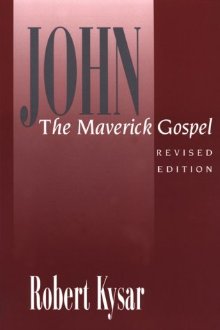
“The Paraclete has a twofold function: to communicate Christ to believers and, to put the world on trial.”
Robert Kysar, John The Meverick Gospel
“But She—the Spirit, the Paraclete...—will teach you everything.”
Danny Mahar, Aramaic Made EZ)
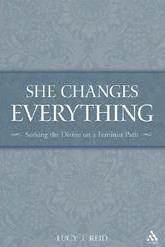
“Grammatical nonsense but evidence of the theological desire to defeminize the Divine.”
Lucy Reid, She Changes Everything
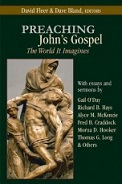
“The functions of the Paraclete spelled out in verses 13-15... are all acts of open and bold speaking in the highest degree.”
David Fleer, Preaching John's Gospel
“The reaction of the world to the Paraclete will be much the same as the world's reaction was to Jesus.”
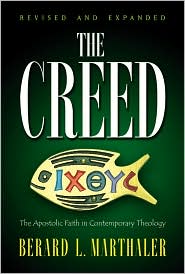
Berard L. Marthaler, The Creed: The Apostolic Faith in Contemporary Theology
Bultmann calls the “coming of the Redeemer an 'eschatological event,' 'the turning-point of the ages.”
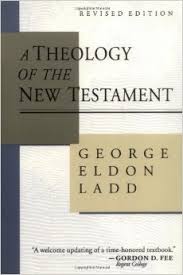
G. Ladd, A Theology of the New Testament
“The Paraclete equated with the Holy Spirit, is the only mediator of the word of the exalted Christ.”
Benny Thettayil, In Spirit and Truth
“The divine Paraclete, and no lessor agency, must show the world how wrong it was about him who was in the right.”
Daniel B. Stevick , Jesus and His Own: A Commentary on John 13-17
Stephen Smalley asserts that “The Spirit-Paraclete ... in John's Gospel is understood as personal, indeed, as a person.”
Marianne Thompson, The God of the Gospel of John
“The Messiah will come and the great age of salvation will dawn (for the pious).”
Eric Eve, The Jewish context of Jesus' Miracles
“The remembrance is to relive and re-enact the Christ event, to bring about new eschatological decision in time and space.”
Daniel Rathnakara Sadananda, The Johannine Exegesis of God
“The Spirit acts in such an international situation as the revealer of 'judgment' on the powers that rule the world.”
Michael Welker, God the Spirit
The Paraclete's “Appearance means that sin, righteousness, and judgment will be revealed.”
Georg Strecker, Theology of the New Testament
“While the Spirit-Paraclete is the true broker, the brokers they rely on are impostors.”
T. G. Brown, Spirit in the writings of John
“The pneumatological activity ... of the Paraclete ... may most helpfully be considered in terms of the salvific working of the hidden Spirit.”
Michael Welker, The work of the Spirit
“The pneuma is the peculiar power by which the word becomes the words of eternal life.”
Robert Kysar, Voyages with John
“The gift of peace, therefore, is intimately associated with the gift of the Spirit-Paraclete.”
Francis J. Moloney, The Gospel of John
“This utopian hope, even when modestly expressed, links Jesus and the prophets to a much wider history of human longing.”
Harvey Cox, The Future of Faith
“Because of the presence of the Paraclete in the life of the believer, the blessings of the end-times—the eschaton—are already present.”
Robert Kysar, John
“They are going, by the Holy Spirit's power, to be part of the greatest miracle of all, bringing men to salvation.”
R. Picirilli, The Randall House Bible Commentary
“The Kingdom of God stands as a comprehensive term for all that the messianic salvation included... is something to be sought here and now (Mt. 6:33) and to be received as children receive a gift (Mk. 10:15 = Lk. 18:16-17).”
G. Ladd, A Theology of the New Testament
Disclaimer: Our material may be copied, printed and distributed by referring to this site. This site also contains copyrighted material the use of which has not always been specifically authorized by the copyright owner. We are making such material available to our readers under the education and research provisions of "fair use" in an effort to advance freedom of inquiry for a better understanding of religious, spiritual and inter-faith issues. The material on this site is distributed without profit. If you wish to use copyrighted material for purposes other than “fair use” you must request permission from the copyright owner.

