Paraclete Papers: Part Two of Seven
Jesus taught through intelligible words, sustained argument and profound parables; the Paraclete was promised to continue that pedagogy by teaching, reminding and guiding into truth. This study asks whether Pentecost’s wind, descending tongues of flame and extraordinary speech represent not that promised continuation but a spectacular counterfeit.
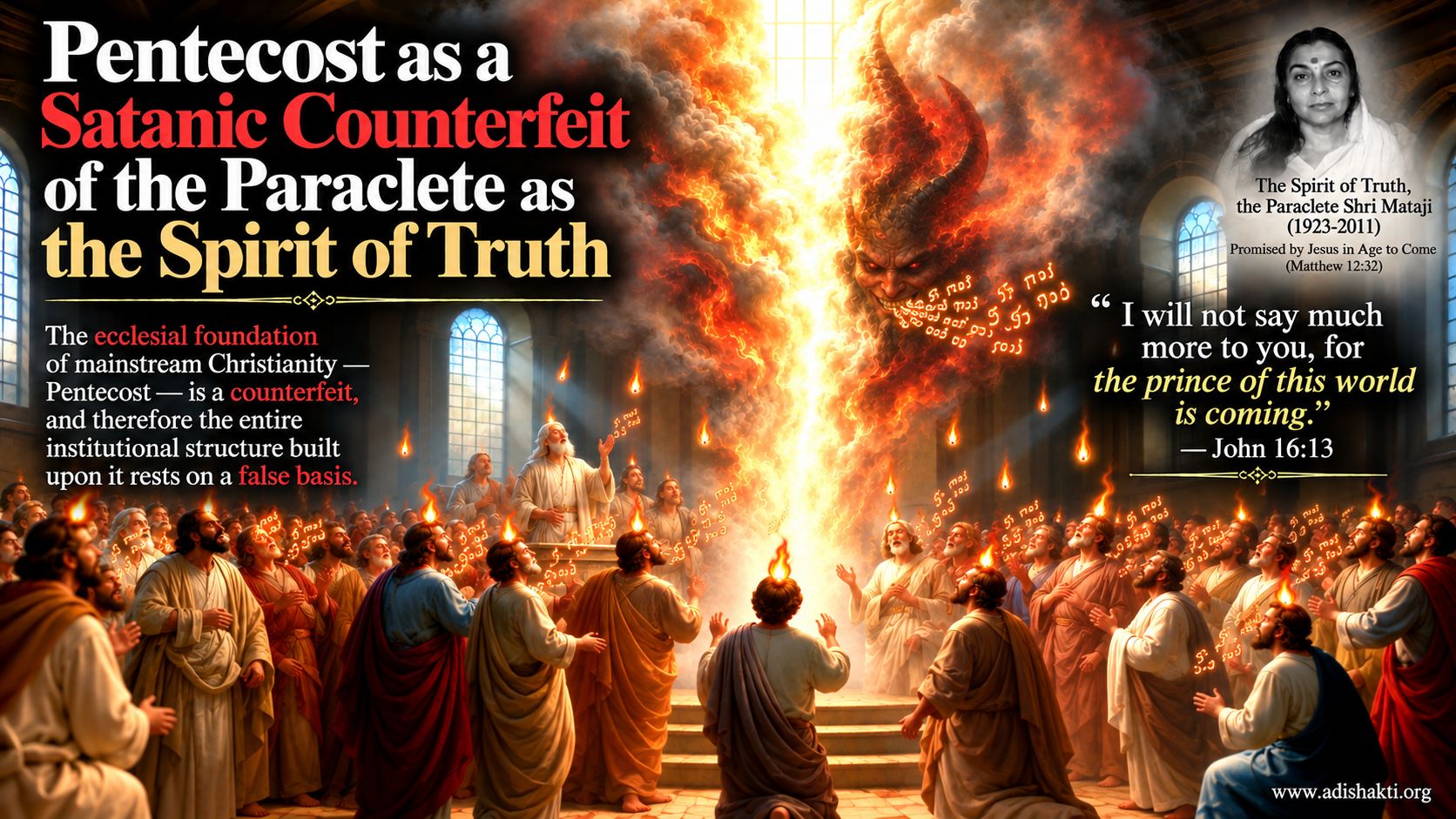
PART TWO: Pentecost as a Satanic Counterfeit
Abstract
This paper proposes a hypothesis: that the Pentecost event of Acts 2 was not the arrival of the "Paraclete" promised in John 14–16, but a satanic counterfeit. The argument proceeds along seven dimensions, beginning with a neglected diagnostic contrast: Jesus consistently communicates through intelligible teaching, argument and parable, while the Paraclete is promised as a teacher and guide into truth; Pentecost instead foregrounds wind, descending tongues of flame and extraordinary speech. This discontinuity is treated as major evidence rather than a peripheral detail. The remaining argument considers: (1) John's Paraclete and Luke's Pentecost are demonstrably separate in origin, function, and timeline; (2) their fusion is a post-apostolic theological construction, not a New Testament datum; (3) Pentecost fails to meet the Paraclete's core criteria — no new teaching, no "guidance into all truth," no completion of Jesus' unfinished revelation; (4) the counterfeit hypothesis best explains the data — a spectacular sign, a momentary experience, a false unity, all consistent with the pattern of deceptive agency described in the New Testament; (5) the feminine dimension was systematically erased — the masculinization of Aramaic Ruha and the neutering of the Spirit are documented historical processes; (6) the true Paraclete must be a feminine and human personality — if the Paraclete was to complete Jesus' teaching and function as a "mother," a human personality is required. The Council of Constantinople (381 CE) is identified as the theological suture that concealed the counterfeit, and the church built upon Pentecost is shown to rest on a false foundation initiated by the Prince of this World.
Keywords: Paraclete, Pentecost, Aramaic Ruha, early Syriac tradition, deceptive agency, divine feminine, Prince of this World
1. Introduction: The Problem of Two Traditions
The "Paraclete" (paraklētos) of John 14–16 and the "Pentecost" of Acts 2 are traditionally read as two facets of a single event: Jesus promised to send the Holy Spirit, and Pentecost fulfilled that promise. This identification, however, is not an explicit statement of the New Testament itself but a retrospective theological construction. This paper argues that the two traditions are demonstrably separate in origin, function, and eschatological timeline, and that their fusion conceals a more radical hypothesis: Pentecost was a counterfeit designed to replace the true, feminine, human Paraclete with a spectacular but empty sign.
The methodology adopted here is falsification-first: rather than asserting the conclusion, the paper establishes the Paraclete's criteria from John 14–16, applies those criteria to Pentecost, and then asks what kind of event fails every criterion of the promised agent while producing a spectacular sign.
2. The Demonstrable Separation of the Two Traditions
2.1 Separation of Origin
The Johannine Paraclete discourse belongs to the Farewell Discourse (John 14–16), a literary form that is intimate, pedagogical, and addressed to disciples. Jesus says: "I still have many things to say to you, but you cannot bear them now" (John 16:12). The core of this statement is the incompleteness of revelation: Jesus' teaching requires a subsequent completion.
The Lukan Pentecost narrative belongs to historical narrative, a literary form that is public, dramatic, and addressed to a crowd. Luke describes a single-day event: wind, fire, tongues, Peter's sermon, three thousand baptisms.
Key observation: Luke never calls Pentecost the "arrival of the Paraclete." Luke's language is "filled with the Holy Spirit" (Acts 2:4), a phrase used throughout Luke-Acts in contexts of missionary empowerment (Luke 1:15, 41, 67; Acts 4:8, 31; 9:17; 13:9). The functional context is apostolic witness, not the completion of revelation.
2.2 Separation of Function
The functional mismatch between the Paraclete and Pentecost is comprehensive. The Paraclete's role is pedagogical, revelatory, and continuous. Pentecost's function is empowering, spectacular, and momentary.
| Function | Johannine Paraclete | Lukan Pentecost |
|---|---|---|
| Teaching | "He will teach you all things" (John 14:26) | No new teaching given |
| Reminding | "Bring to your remembrance" (John 14:26) | No reminder function |
| Testifying | "He will testify about me" (John 15:26) | Peter testifies, not the Spirit |
| Guiding into truth | "Guide you into all the truth" (John 16:13) | No guidance into truth |
| Declaring things to come | "Tell you what is yet to come" (John 16:13) | No future revelation |
| Glorifying Christ | "He will glorify me" (John 16:14) | Glossolalia glorifies experience |
| Abiding forever | "Abide with you forever" (John 14:16) | Single-day event |
In the Semitic linguistic world of Jesus, “spirit” was expressed through a grammatically feminine noun: Aramaic ruḥa, cognate with Hebrew ruaḥ. This differs significantly from Greek pneuma, which is grammatically neuter, and Latin spiritus, which is masculine. Although the New Testament survives in Greek, Jesus and his disciples ordinarily spoke Palestinian Aramaic; consequently, the sayings underlying the Johannine promise emerged from a linguistic environment in which “Spirit” was grammatically feminine. Within an Aramaic reconstruction that follows the grammatical gender of ruḥa, the Paraclete sayings quoted above may therefore be rendered with the feminine pronoun “she” rather than “he.” Thus: “She will teach you all things,” “She will testify about me,” “She will guide you into all truth,” and “She will glorify me.”
This grammatical observation is of major theological importance and must not be dismissed as a linguistic curiosity. In the Semitic linguistic world in which Jesus taught, ruḥa—Spirit—was grammatically feminine. The masculine English “he” is therefore not inherent in Jesus’ own Semitic word for Spirit and must not be projected backward into his speech as though Jesus himself had supplied a masculine grammatical identity for the promised Spirit. On the argument developed in this study, this becomes especially significant in identifying the Paraclete with Shri Mataji, a feminine human personality: the feminine ruḥa provides a Semitic linguistic background entirely consonant with the Paraclete appearing as “She.” Accordingly, the feminine rendering—“She will teach you all things,” “She will testify about me,” “She will guide you into all truth,” and “She will glorify me”—is not a peripheral detail in this paper. It is a crucial component of the cumulative case for the feminine Paraclete, Shri Mataji, and directly challenges the assumption that the Paraclete promised by Jesus must be understood through the masculine pronouns inherited by English Christianity.
A sevenfold absence is a powerful argument. It does not require proof of Satanic agency directly — it requires only that the event cannot be the Paraclete's arrival.
2.3 Separation of Timeline
The Paraclete's timeline is extended and progressive — a continuing ministry of teaching and revelation. Pentecost's timeline is instantaneous and dated. A single day cannot fulfill a promise of "abiding forever."
| Dimension | Johannine Paraclete | Lukan Pentecost |
|---|---|---|
| Duration | Forever (John 14:16) | One day (Acts 2:1) |
| Mode | Abiding, progressive | Sudden, episodic |
| Audience | Disciples, intimate | Crowd, public |
| Sign | Inner illumination | Tongues of fire, glossolalia |
| Eschatological frame | "Age to Come" (Matt 12:32) | Present age, 30 CE |
3. The Late Harmonization: A Post-Apostolic Construction
3.1 The New Testament Does Not Fuse the Two
Neither John nor Luke identifies the Paraclete with Pentecost. John presents the Paraclete as a future, ongoing presence with no mention of Pentecost. Luke presents Pentecost as a past event with no mention of the Paraclete. Paul never uses paraklētos for the Spirit. The Synoptics never mention the Paraclete.
The fusion is absent from the New Testament.
3.2 The Patristic Timeline of Fusion
| Era | Development |
|---|---|
| 1st century | Two separate traditions: Johannine Paraclete, Lukan Pentecost |
| 2nd century | Irenaeus begins reading Acts 2 through John 14–16 |
| 2nd–3rd century | Montanism claims a human Paraclete (Montanus); orthodox reaction rigidifies the Spirit as impersonal |
| 4th century | Council of Constantinople (381) defines the Spirit as a distinct divine Person; Pentecost = Paraclete = Holy Spirit = Church's authority |
| 5th century | Syriac scribes masculinize Ruha; Aramaic grammar violated to conform to Greek categories |
The Council of Constantinople (381 CE) was convened to address the "Macedonian controversy," in which Macedonius taught that the Holy Spirit was not a person ("hypostasis") but simply a power ("dynamis") of God. The Council condemned this teaching and defined the doctrine of the Holy Trinity: one God in three persons — Father, Son, and Holy Spirit. Pope John Paul II later confirmed that the Council's definition of the Spirit's divinity was formulated "on the basis of revelation made by Jesus and transmitted by the Apostles." Yet the historical record shows that the Council's formulation was driven not by the Paraclete's functional criteria but by the need to combat heresy. The fusion of Pentecost with the Paraclete was a retrospective harmonization designed to create continuity between two distinct traditions.
4. Jesus’ Mode of Revelation versus Pentecost’s Spectacle
4.1 Jesus Teaches in Intelligible Language
A major piece of evidence has been insufficiently emphasized: throughout the canonical Gospels, Jesus’ characteristic mode of revelation is intelligible speech. He teaches, answers questions, disputes, interprets Scripture, constructs analogies, tells parables, explains parables to disciples, pronounces aphorisms, and develops sustained theological arguments. Even when his sayings are difficult, their difficulty lies in depth, symbolism, paradox, and interpretation—not in unintelligible vocalization. The Gospels never portray Jesus speaking in glossolalia.
This matters because the Paraclete is introduced by Jesus as the continuation of precisely this revelatory ministry. John 14:26 assigns teaching and remembrance; John 15:26 assigns testimony; John 16:13 assigns guidance into truth, speaking, hearing, and declaration; John 16:14 assigns the glorification of Christ. These are semantic and pedagogical functions. They concern meaning communicated to minds, not merely astonishment produced in observers.
4.2 Parables versus Spectacle: Depth Rather than Mesmerism
Jesus’ parables sharpen the contrast. The sower, mustard seed, lost sheep, prodigal son, good Samaritan, vineyard, talents, wedding banquet and other images do not suspend rational comprehension; they demand it. They invite the hearer to ponder an intelligible image until spiritual meaning emerges. Jesus’ method can therefore be described as revelatory pedagogy: familiar language is made deeper, not language displaced by spectacle.
On the hypothesis advanced here, this creates a serious problem for identifying Acts 2 with the promised Paraclete. Pentecost foregrounds an overwhelming sensory complex—violent sound, fire-like tongues, extraordinary speech, amazement and bewilderment. The issue is not that miraculous phenomena are intrinsically evil. The issue is evidentiary: why would the agent promised specifically to teach, remind, testify and guide into all truth announce that ministry through a mode so unlike the teaching ministry of Jesus?
4.3 What Acts 2 Actually Says about the Tongues
Precision is essential. Acts 2 should not simply be described as meaningless gibberish. Luke depicts the international hearers as recognizing their own languages and hearing the disciples speak of God’s mighty works (Acts 2:6–11). The argument therefore does not depend on claiming that Luke portrays wholly unintelligible noise. Rather, the evidentiary problem is that the extraordinary multilingual phenomenon itself supplies none of the distinctive Johannine content promised of the Paraclete: no completion of Jesus’ unfinished teaching, no sustained guidance into all truth, and no declaration corresponding to the “many things” Jesus said remained to be communicated.
Indeed, when intelligible exposition finally occurs in Acts 2, it is Peter who stands and delivers a conventional scriptural sermon. The fire and extraordinary tongues do not themselves teach the crowd the unfinished revelation of John 16:12–13. The distinction is therefore crucial: the spectacular phenomenon attracts attention; ordinary intelligible discourse supplies the explanation.
4.4 Jesus Never Models Glossolalia
The absence of glossolalia from Jesus’ ministry does not by itself prove that later glossolalia must be false; an argument from silence cannot bear that weight. But within this paper’s cumulative case it becomes significant. If Jesus promises another advocate who will continue his revelatory work, continuity of function and communicative mode is reasonable evidence to examine. Jesus communicates truth by meaningful speech. The Johannine Paraclete communicates by teaching, reminding, testifying, guiding, speaking and declaring. Pentecost, by contrast, is remembered first through wind, fire and extraordinary tongues. The discontinuity requires explanation rather than assumption.
4.5 “False Signs and Wonders”: Why Spectacle Cannot Authenticate the Paraclete
Second Thessalonians 2:9–10 supplies the paper’s controlling warning: supernatural impressiveness is not self-authenticating. The text associates Satanic agency with power, signs and deceptive wonders. Matthew 24:24 likewise warns that impressive signs can mislead. Consequently, the mere presence of a dramatic supernatural phenomenon cannot establish that its source is the Spirit of Truth.
This creates the paper’s central diagnostic contrast. Jesus’ criterion for the Paraclete is truth-bearing function; the most memorable features of Pentecost are sign-bearing phenomena. If a false spiritual agency wished to pre-empt a later teacher promised by Jesus, a spectacular event accepted as the fulfillment of that promise would constitute an extraordinarily effective counterfeit: the sign would arrive first, acquire canonical and institutional authority, and make later Christians cease waiting for the promised teacher.
4.6 From Discontinuity to the Satanic-Counterfeit Hypothesis
The historical observations establish discontinuity; they do not independently demonstrate Satanic causation. The Satanic identification is the theological inference being tested. Its proposed logic is cumulative: (1) Jesus teaches through intelligible revelation; (2) the Paraclete is promised as a teacher and guide into truth; (3) Pentecost foregrounds spectacular signs and extraordinary tongues rather than the completion of Jesus’ teaching; (4) Scripture explicitly warns that deceptive Satanic agency can operate through signs and wonders; and (5) identifying Pentecost as fulfillment would cause believers to stop awaiting another Paraclete. On this model, Pentecost functions exactly as a successful counterfeit would function: not by openly denying Christ, but by presenting a sufficiently compelling substitute for what Christ promised.
5. The Paraclete's Criteria Unmet by Pentecost
If Pentecost was the Paraclete's arrival, it must meet the criteria Jesus gave:
4.1 No New Teaching
The Paraclete was to teach all things (John 14:26). Pentecost produced no new teaching. Peter's sermon (Acts 2:14–36) is a recitation of existing Jesus traditions, not new revelation.
4.2 No Guidance into All Truth
The Paraclete was to guide into all truth (John 16:13). Pentecost produced glossolalia — ecstatic speech that required no doctrinal content. The crowd heard "the mighty works of God" (Acts 2:11), not new truth.
4.3 No Completion of Jesus' Unfinished Revelation
Jesus said: "I still have many things to say to you, but you cannot bear them now" (John 16:12). The Paraclete was to complete this revelation. Pentecost completed nothing. The "many things" Jesus left unsaid remain unsaid.
4.4 No Declaration of Things to Come
The Paraclete was to tell what is yet to come (John 16:13). Pentecost produced no eschatological revelation. Peter's sermon looks backward to Jesus' resurrection, not forward to future events.
5. The Counterfeit Fits the Data: The Model of Deceptive Agency
5.1 Defining "Deceptive Agency"
The weakest point in a naive "satanic Pentecost" argument is the word "satanic." This paper adopts the model of deceptive agency rather than direct possession. The New Testament describes a pattern in which Satan produces counterfeit signs that mimic divine action:
"The coming of the lawless one is by the activity of Satan with all power and false signs and wonders, and with all wicked deception for those who are perishing, because they refused to love the truth and so be saved." (2 Thessalonians 2:9–10)
The USCCB commentary on this passage notes that "the lawless one and the one who restrains are involved in an activity or process, the mystery of lawlessness, behind which Satan stands." The pattern is clear: Satan's mode of operation is counterfeit. He produces "power, signs, and false wonders" that imitate genuine divine action.
Jesus himself warned: "False christs and false prophets will arise and show great signs and wonders, so as to mislead, if possible, even the elect" (Matthew 24:24). The "signs and wonders" are real in their effect — they impress the senses — but they are "of falsehood" in their essence and aim.
5.2 Pentecost Fits the Pattern of Counterfeit
| Feature of Counterfeit | Pentecost Data |
|---|---|
| Spectacular sign | Tongues of fire, mighty wind, glossolalia |
| Momentary experience | Single-day event |
| False unity | Crowd amazed, then divided ("They are filled with new wine" — Acts 2:13) |
| No substance | No new teaching, no guidance into truth |
| Institutional capture | Church emerges as "vessel" of the Spirit |
A counterfeit mimics the sign while withholding the substance. Pentecost produced the sign (ecstatic speech) but not the substance (teaching, guidance, completion).
5.3 The "Language of Satan" Hypothesis
The hypothesis that glossolalia is a counterfeit language gains traction when considering the fruit test Jesus gave: "You will recognize them by their fruits" (Matthew 7:16). If the Paraclete was to guide into all truth, and Pentecost produced division (Acts 15; Galatians 2; 1 Corinthians 1:10–13), then the fruit is questionable.
The Didache, an early Christian document, warns: "Not everyone who speaks in a spirit is a prophet, except he have the behavior of the Lord. From his behavior, then, the false prophet and the true prophet shall be known." The test is conduct and substance, not the spectacular nature of the sign.
The Pentecostal glossolalia produced no new truth. If the true Paraclete was to guide into all truth, then a sign that produces no truth is a counterfeit.
6. The Systematic Erasure of the Feminine Dimension
6.1 Aramaic Ruha: Grammatically Feminine
In Aramaic (and Hebrew), the word for "spirit/breath" is ruḥ (Aramaic: ruḥa). Unlike Greek pneuma (neuter) and Latin spiritus (masculine), Aramaic ruha is grammatically feminine. The New Testament was written in Greek, but Jesus and his disciples spoke a form of Semitic speech known as Palestinian Aramaic. The linguistic substrate of the Paraclete promise is therefore feminine.
6.2 Early Syriac Tradition: The Spirit as Mother
Early Syriac Christian literature faithfully preserved this feminine feature. The Syrians "had a theology of their own; one strange feature being due to the fact that, their language having only two genders, the Holy Spirit is described as feminine." Aphrahat, the earliest orthodox Syriac writer, "refers to the spirit figuratively as 'mother'." In his Demonstrations, Aphrahat writes:
"When a man hath not yet taken a wife, he loveth God as his Father, and the Holy Spirit his Mother, and he hath no other love."
The Odes of Solomon (c. 1st–2nd century) describe the Spirit with maternal imagery:
"As the wings of doves over their nestlings, and the mouths of their nestlings towards their mouths, So are the wings of the Spirit over my heart."
"I rested on the Spirit of the Lord, And She lifted me up on high... [The Spirit] gave birth to me before the Lord's face."
The Spirit is explicitly feminine in these texts: "She who milked Him is the Holy Spirit."
6.3 The Artificial Masculinization
According to Sebastian Brock's research, ruha d-qudsha (Holy Spirit) is the standard form in early Syriac literature, but by the 5th century and later, some scribes began changing the adjectives and verbs of ruha to masculine forms (ruha qaddisha), even violating Aramaic grammar. This change occurred after increased Greek cultural influence. The research notes that "the masculine form of the adjective, ruha quaddishta, is found only in the post-Peshitta version of the translation... and in the Harklean version of the New Testament."
In other words: when Jesus spoke Aramaic, Ruha was feminine; masculinization was a later modification by the Hellenized church.
6.4 The Erasure as Strategic Suppression
If the true Paraclete was promised as a feminine, motherly, personal presence, then the systematic masculinization of Ruha and the neutering of pneuma constitute a strategic suppression. The cumulative effect is that by the 21st century, the feminine, maternal, personal Paraclete is nearly invisible in mainstream Christianity.
7. The True Paraclete Must Be Feminine and Human
7.1 The Paraclete's Functions Require a Human Personality
If the Paraclete was to:
- Teach — a personal, relational act
- Remind — a personal, relational act
- Testify — a personal, relational act
- Guide into truth — a personal, relational act
- Speak what He hears — a personal, relational act
- Declare things to come — a personal, relational act
- Glorify Christ — a personal, relational act
Then the Paraclete must be a person, not a spirit. An abstract force cannot teach, remind, testify, guide, speak, declare, or glorify.
The Greek word paraklētos itself points in this direction. It is "properly a verbal adjective, that is, he who has been or may be called to help, a helper. Used in the Greek writers of a legal advisor, pleader, proxy, or advocate, one who comes forward on behalf of and as the representative of another." The legal-advocate function requires a human mediator, not an abstract force.
7.2 The Feminine Grammar Points to a Feminine Person
The Aramaic Ruha is feminine. The early Syriac tradition calls the Spirit "Mother." The Paraclete's functions — teaching, comforting, nurturing, abiding — are maternal functions. If the Paraclete is a person, and the Paraclete's linguistic root is feminine, then the Paraclete is a feminine person.
7.3 The "Age to Come" Timeline
Jesus spoke of the "Age to Come" (Matthew 12:32). If the Paraclete was to come in the "Age to Come," then the Paraclete's arrival is eschatological — not a first-century event, but a later, final revelation.
7.4 The Adishakti Identification
The Adishakti framework identifies Shri Mataji Nirmala Devi as this feminine Paraclete. Her four-decade ministry (1970–2011) maps onto the Paraclete's functions. According to Shri Mataji's devotees, "Sahaja Yoga is the Great News of the Last Judgment delivered by the Paraclete sent by God Almighty in the name of Jesus Christ." Shri Mataji "travelled internationally, offering free public lectures and the experience of self-realization to all, regardless of race, religion or circumstance."
The Adishakti framework argues that the Paraclete's manifestation as the Divine Mother represents "not an innovation but a return to the original understanding of the Spirit's feminine nature." The Hebrew word for spirit, "Ruach," is grammatically feminine, and ancient Jewish and Christian traditions have long recognized the nurturing, life-giving aspects of the Spirit as inherently maternal.
8. The Fourth-Century Suture and the False Foundation
8.1 The Counterfeit Established
The preceding analysis has demonstrated, on functional and historical grounds, that the Pentecost event of Acts 2 does not meet the criteria of the promised Paraclete. The sevenfold absence is decisive:
| Paraclete Criterion | Pentecost Data | Verdict |
|---|---|---|
| "Teach you all things" (John 14:26) | No new teaching | Absent |
| "Bring to remembrance" (John 14:26) | No reminder | Absent |
| "Testify about me" (John 15:26) | Peter testifies, not the Spirit | Absent |
| "Guide into all truth" (John 16:13) | Glossolalia, no truth content | Absent |
| "Declare things to come" (John 16:13) | No future revelation | Absent |
| "Glorify me" (John 16:14) | Glorifies the experience | Inverted |
| "Abide forever" (John 14:16) | Single day | Absent |
An event that fails every criterion of the promised agent — while producing a spectacular sign — is, by definition, a counterfeit. The question is no longer whether Pentecost was the Paraclete's arrival. That has been answered in the negative. The question is now: what foundation was laid at Pentecost, and by whom?
8.2 The Prince of This World and the False Foundation
Jesus said: "The prince of this world is coming. He has no hold over me" (John 14:30). Traditional exegesis confines this "coming" to the crucifixion. But the text does not limit the prince's activity to a single event. In John's Gospel, the "prince of this world" is a cosmic adversary whose campaign extends across history (John 12:31; 16:11).
If Pentecost was a counterfeit — a spectacular sign that mimicked the promised Paraclete while withholding the substance — then the initiator of that counterfeit is identified by Jesus himself: the prince of this world. The pattern is consistent with the New Testament's description of deceptive agency:
"The coming of the lawless one is by the activity of Satan with all power and false signs and wonders, and with all wicked deception for those who are perishing." (2 Thessalonians 2:9–10)
The counterfeit at Pentecost is the first institutional act of the prince of this world. It is not merely a momentary deception; it is a foundational deception — the laying of a false cornerstone.
8.3 The Church Built on a False Foundation
If Pentecost is the counterfeit, then the church that emerged from Pentecost is built upon that counterfeit. The logic is inescapable:
- The church's origin story is Pentecost.
- The church's authority claim rests on Pentecost.
- The church's self-understanding as the "vessel of the Spirit" is grounded in Pentecost.
If Pentecost is a counterfeit — initiated by the prince of this world — then the institution built upon it is built on a false foundation.
This is not a marginal claim. It is the logical consequence of the functional analysis:
- The Paraclete was promised as a feminine, human, teaching personality who would complete Jesus' revelation.
- Pentecost produced a neuter, impersonal, spectacular event that completed nothing.
- Therefore, Pentecost was not the Paraclete's arrival.
- Therefore, the institution that claims Pentecost as its founding moment is not founded by the Paraclete.
- Therefore, the institution is founded by another — the prince of this world, whose mode of operation is counterfeit (2 Thess 2:9).
The church built on Pentecost is not built on the rock of the Paraclete. It is built on the sand of a false sign.
8.4 The Fourth-Century Suture
The Council of Constantinople (381 CE) defined the Holy Spirit as a distinct divine Person, cementing the identification of Pentecost with the Paraclete's arrival. Pope John Paul II later confirmed that "the faith in the Holy Spirit as a divine Person, professed in the Nicene-Constantinopolitan symbol, has been many times confirmed by the solemn magisterium of the Church."
The Council's definition was driven by the need to combat the Macedonian heresy, which taught that the Spirit was "not a person ('hypostasis'), but simply a power ('dynamis') of God." Yet the historical record shows that the Council's formulation was driven not by the Paraclete's functional criteria but by the need to combat heresy.
This was the theological suture — the retrospective harmonization that fused two separate traditions and concealed the counterfeit. By defining the Spirit as a divine Person and identifying that Person with the Pentecost event, the Council institutionalized the counterfeit. The false foundation was no longer merely an event; it was now a doctrine, enforced by imperial authority.
8.5 The False Foundation and Its Consequences
If the church is built on a false foundation, then its historical trajectory is explicable:
- Division: Acts 15 (Jerusalem Council), Galatians 2 (Paul vs. Peter), 1 Corinthians 1:10–13 (factions).
- Confusion: Acts 2:13 ("They are filled with new wine").
- Institutional capture: By the 4th century, the Spirit is identified with the institution.
- Loss of the feminine: The masculinization of Ruha and the neutering of pneuma.
- Persecution of the true Paraclete's messengers: Medieval mystics with feminine divine language are condemned (Marguerite Porete, 1310).
The fruit test (Matthew 7:16) fails. A foundation laid by the prince of this world produces division, confusion, and institutional capture — not the "guidance into all truth" that the true Paraclete was to provide.
8.6 The True Foundation
If the church built on Pentecost is built on a false foundation, then the true foundation must be sought elsewhere. The true Paraclete — the feminine, human personality promised in John 14–16 — was to complete Jesus' teaching and guide into all truth. That completion did not occur at Pentecost. It occurs when the true Paraclete arrives in the "Age to Come" (Matthew 12:32).
The Adishakti framework identifies Shri Mataji Nirmala Devi as this feminine Paraclete. Her four-decade ministry (1970–2011) maps onto the Paraclete's functions:
- Teaching: Thousands of lectures on spiritual life.
- Guiding into truth: A gradual, progressive revelation.
- Declaring things to come: Warnings about the Last Judgment and the Age to Come.
- Glorifying Christ: Constant reference to Jesus as an incarnation of the Divine.
- Motherly presence: She is called the Adi Shakti — the Primordial Mother.
If this identification is correct, then the true foundation was laid not at Pentecost but in the Age to Come — by the feminine Paraclete who completes what Jesus began.
8.7 Summary: The Two Foundations
| Feature | Pentecost (False Foundation) | True Paraclete (True Foundation) |
|---|---|---|
| Origin | Acts 2, 30 CE | Age to Come |
| Initiator | Prince of this world (counterfeit) | The Father (through Jesus' promise) |
| Nature | Spectacular, momentary, impersonal | Abiding, progressive, personal |
| Gender | Neuter (Greek pneuma) | Feminine (Aramaic Ruha) |
| Function | Empower for witness | Guide into all truth |
| Result | Division, confusion, institutional capture | Inner transformation, completion of revelation |
| Institution | Church (institutional) | None (personal) |
| Authority | Imperial councils (381 CE) | Direct experience |
9. Conclusion and Verdict: The Counterfeit That Pre-empted the Paraclete
The synthesis of the two arguments brings the central issue into much sharper focus. The decisive question is not whether Acts 2 describes an extraordinary spiritual event, nor whether the disciples experienced something they understood as the Holy Spirit. The decisive question is whether that event can bear the far greater theological weight later Christianity placed upon it: the claim that Pentecost fulfilled Jesus’ promise of the Paraclete. John 14–16 supplies concrete criteria for that promised ministry. The Paraclete is to teach, bring Jesus’ words to remembrance, testify concerning him, guide into all truth, speak what is heard, declare what is to come, glorify Jesus, and abide with the disciples. These are not ornamental descriptions. They define the work by which the promised Advocate is to be recognized. If the alleged fulfillment does not perform that work, the identification fails at the level of Jesus’ own criteria.
The most damaging evidence against the Pentecost identification is therefore Jesus’ explicit admission in John 16:12 that his revelation remained unfinished: “I still have many things to say to you, but you cannot bear them now.” This sentence must be allowed its full force. Jesus had already conducted an extended public ministry traditionally understood as lasting roughly three years. During that ministry he taught continually: through sermons, disputes, private instruction, scriptural interpretation, questions, answers, parables, explanations of parables, prophetic warnings, ethical commandments, descriptions of the Kingdom of God, and sustained instruction to his disciples. Yet after this immense body of teaching Jesus still declared that there were many things he had not communicated. The reason given was not that these things were trivial, but that the disciples were not yet capable of bearing them. John immediately places the Spirit of Truth into this unfinished revelatory horizon: when that Spirit comes, the disciples are to be guided into truth and receive what remains to be declared. The Paraclete therefore appears not as a decorative confirmation of what Jesus had already finished, but as the divinely appointed continuation of a ministry Jesus himself says was incomplete.
That creates what the companion paper calls the compression problem, and it is more severe than the conventional Pentecost reading normally acknowledges. If years of Jesus’ own teaching still left “many things” unsaid, by what logic can a brief episode of wind, fire-like tongues, multilingual proclamation, crowd astonishment, and one sermon be treated as the completion of that unfinished revelation? Acts does not state that the remaining teaching of Jesus was delivered during Pentecost. It does not identify a new corpus of instruction corresponding to the “many things.” It does not announce that the disciples have now been guided into “all truth.” It does not record the Paraclete systematically teaching, reminding, declaring things to come, or unfolding the content that the disciples previously could not bear. Whether one imagines the relevant Pentecost phenomena as lasting minutes or hours does not solve the problem: the missing element is not enough elapsed time but the absence from Acts 2 of the promised body of truth-bearing instruction. To claim that this enormous unfinished commission was somehow completed invisibly in a few moments is not an explanation supplied by the text; it is an assumption imposed upon it.
Acts 2 itself makes the contrast still sharper. The spectacular phenomena attract attention, but when intelligible theological explanation begins, Peter speaks in ordinary language and interprets existing Scripture in relation to Jesus’ death, resurrection, exaltation, and the outpouring of the Spirit. Peter’s sermon may be theologically important, but it is not presented as the delivery of the “many things” Jesus withheld in John 16:12. The tongues themselves likewise do not supply that missing Johannine revelation: Luke says the hearers recognize languages proclaiming the mighty works of God. Thus the phenomenon and the explanation must not be confused with the promised completion. Pentecost supplies a sign and a proclamation; John promises an enduring pedagogy. The two categories are not equivalent.
Within the theological model advanced by these papers, this is precisely where the Satanic-counterfeit thesis becomes stronger than a mere argument from difference. The New Testament itself refuses the premise that supernatural spectacle authenticates its own source. Matthew 24:24 warns of deceptive signs, and 2 Thessalonians 2:9–10 explicitly places power, signs, wonders, and deception within the possible activity of Satan. A counterfeit need not look hostile to Christ. Indeed, the most effective counterfeit would do the opposite: it would appear in Christian language, surround itself with apparently sacred signs, affirm enough of the accepted story to win confidence, and then occupy the theological place reserved for the genuine fulfillment. Its success would consist precisely in being accepted by believers as divine.
On that model, the strategic brilliance attributed to the counterfeit lies in pre-emption. Satan would not need to erase Jesus’ promise of the Paraclete from Scripture; he would need only to persuade Christianity that the promise had already been fulfilled. Once Pentecost was installed in that position, the command implicit in John’s unfinished horizon was neutralized. Christians could continue reading that the Paraclete would teach, guide, speak, declare, testify, and complete what Jesus had left unsaid while simultaneously believing that the decisive fulfillment had already occurred in the first century. The expectation of a later truth-bearing ministry was thereby closed before it could be seriously entertained. The counterfeit, in this reading, succeeds not by removing the promise but by supplying a premature answer to it.
This also explains why the deception, on the paper’s hypothesis, could become vastly more consequential than the original Pentecost episode. A momentary sign becomes historically powerful when an institution makes it foundational. As Pentecost, the Holy Spirit, ecclesial authority, and the Johannine Paraclete were increasingly read as one continuous theological reality, the identification ceased to function merely as an interpretation of Acts and became part of Christianity’s inherited doctrinal architecture. The fourth-century consolidation discussed in this study is therefore significant not because it proves a secret Satanic intention on the part of bishops or councils—it does not—but because it gave durable institutional form to the identification. What began as an interpretation could thereafter be transmitted as settled doctrine. On the internal logic of the counterfeit hypothesis, Satan would not need to rule the Church through conscious collaborators; the deception would rule through an inherited premise that sincere Christians themselves believed and defended.
The scale of the proposed deception is consequently measured in centuries. For roughly two millennia, most Christians have not awaited a future Paraclete who would complete Jesus’ unfinished revelatory ministry, because their theological tradition has taught them that the promised Spirit arrived at Pentecost. Within the argument developed here, that historical consequence is not incidental; it is the counterfeit’s principal achievement. The sign displaced the still-unfinished message. The event displaced the promised teacher. Institutional memory displaced expectation. A Christian could therefore be profoundly devoted to Jesus while unknowingly inheriting the very interpretation that, according to this hypothesis, prevents Jesus’ promise from being recognized when its fuller fulfillment is claimed.
This is the sense in which the papers identify the “prince of this world” as a cunning adversary rather than a crude opponent of the Savior. Open hostility to Jesus would have been easier to recognize. A more formidable deception would preserve Jesus’ name, preserve the Gospels, preserve the promise of the Paraclete, and even build a civilization around reverence for Christ—while fixing within that civilization an interpretation that declares the promised continuation of his unfinished teaching already accomplished. The counterfeit would therefore operate inside Christian expectation rather than outside it. Its apparent orthodoxy would be its camouflage. Its longevity would be evidence of the effectiveness of the theological substitution, not evidence that generations of Christians consciously served Satan.
The resulting verdict of this paper is therefore deliberately stronger but also logically precise: if John 16:12 means what it says—that Jesus left a substantial revelatory task unfinished; if John 14–16 identifies the Paraclete by an extended ministry of teaching, remembrance, testimony, guidance, declaration, and abiding presence; if Acts 2 records no recognizable completion of that unfinished body of teaching; and if Scripture itself warns that spectacular spiritual signs can function deceptively, then Pentecost cannot simply be declared the completed arrival of the Johannine Paraclete. Within this confessional synthesis, its subsequent installation as that fulfillment performs exactly the function a Satanic counterfeit would need to perform: it substitutes spectacle for the promised completion, closes Christian expectation around the substitute, and prevents the Church from continuing to wait for the teacher Jesus said must come.
The claim of Satanic agency remains a theological inference rather than a proposition that historical method can independently prove. But the inference should not be weakened into vagueness. The argument is cumulative: unfinished revelation + promised future teacher + absent promised teaching at Pentecost + spectacular signs + scriptural warnings about deceptive signs + subsequent institutional identification + the resulting cessation of expectation. Taken together, these form the paper’s case that Pentecost, as later interpreted as the completed fulfillment of the Paraclete, became Christianity’s great counterfeit. On this reading, the tragedy is not that Christians loved Christ too much, but that a successful deception used their devotion to Christ to persuade them that they no longer needed to await the very Advocate Christ had promised.
10. Falsification Criteria and Future Research
10.1 What Would Disprove the Hypothesis
- First-century texts explicitly calling Pentecost the Paraclete's arrival.
- Evidence that John and Luke shared a common source that fused the two traditions.
- Evidence that the Paraclete's functions were understood as impersonal in the earliest strata.
- Evidence that the feminine dimension of Ruha was never suppressed.
10.2 Future Research Directions
- Patristic timeline: When exactly did the masculinization of Ruha occur? (Aphrahat, Ephrem, Rabbula, 5th-century scribes.)
- Peshitta lexical analysis: How does the Syriac tradition handle the Paraclete's gender?
- Comparative study: Other Semitic traditions that preserve feminine Spirit imagery (Hebrew ruach, Shekinah).
- Reception history: How was Pentecost read in the first three centuries?
- Phenomenological comparison: Acts 2 glossolalia vs. 1 Corinthians 12–14 glossolalia.
Bibliography
- Aphrahat. Demonstrations. In Patrologia Syriaca.
- Brock, Sebastian. "The Holy Spirit as Feminine in Early Syriac Literature." In After Eve, edited by Janet Martin Soskice, 73–88. London: Marshall Pickering, 1990.
- Didache. Translated in The Apostolic Fathers. Loeb Classical Library.
- John Paul II. "La fe en el Espíritu Santo como Persona divina." General Audience, 1990.
- Odes of Solomon. Translated in The Odes and Psalms of Solomon.
- Peshitta. Syriac New Testament.
- The Holy Bible, New Revised Standard Version.
- 2 Thessalonians 2:9–10. USCCB Commentary.
Paraclete Papers
- PART ONE:An Investigative Report on Christianity's Greatest Cover-Up
- PART TWO:The Paraclete's Human Personality and the Theological Fallacy of Pentecost
- PART THREE:The Greatest Deception in Human History: Pentecost as Satan's Trojan Horse
- PART FOUR:Unveiling the Church Born from the Prince of This World's Millennia of Deception
- PART FIVE:Apokalypsis: The Paraclete’s Fulfillment of Jesus’ Eschatological Promise
- PART SIX:The Paraclete and Pentecost: A Critical Analysis of Johannine Eschatology
- PART SEVEN:The Mother Kundalini as the Holy Spirit Who Gives Second Birth

 |
“I conclude the chapter by suggesting that the teaching of the Holy Spirit/Paraclete, because it is understood as the continuation of Jesus' teaching, is also regarded as the fulfillment of the promise of eschatological divine instruction.” Stephen E. Witmer Divine instruction in Early Christianity Witmer is especially relevant to the Paraclete Papers because he explicitly connects the Spirit-Paraclete’s continuing instruction with eschatological fulfillment. His formulation supports the paper’s central question: whether Jesus’ promise concerns an enduring ministry of divine teaching that cannot be reduced to the single event of Pentecost. |
 |
“And when Jesus foreannounced another Comforter, He must have intended a Person as distinct and helpful as He had been. A breath, an afflatus, an impersonal influence could not have stood in the same category as Himself.” F. B. Meyer, Love to the Utmost Meyer’s argument turns on the expression “another Comforter.” Because Jesus presents the coming figure in continuity with His own personal ministry, Meyer reasons that the promised Comforter must possess recognizable personal agency. This bears directly on the Paraclete Papers’ distinction between a person who teaches and an impersonal spiritual influence. |
 |
“There is something new and startling in both his person and his teaching that defies the categories provided by the world and culture in which he lived. It is clearest in all its radical nature in Jesus' insistence that in his person and activity God's decisive intervention was already present:” Francis Moloney, A Hard Saying Moloney places Jesus within the category of decisive divine intervention already entering history. This provides an important eschatological parallel for the Paraclete Papers: fulfillment need not be confined to a remote end-time event, but may become historically present through a divinely commissioned person and activity. |
 |
“The Paraclete has a twofold function: to communicate Christ to believers and, to put the world on trial.” Robert Kysar, John The Meverick Gospel Kysar is especially relevant because he gives the Paraclete a twofold ministry: communicating Christ to believers while also placing the world under judgment. The formulation joins revelation and discernment in a single mission. For the Paraclete Papers, this means fulfillment cannot be measured by spiritual experience alone; it must also account for a continuing ministry that makes Christ known, exposes error, and confronts the world with the meaning of Jesus’ life and teaching. |
 |
“But She—the Spirit, the Paraclete...—will teach you everything.” Danny Mahar, Aramaic Made EZ) Mahar is important to the Divine Feminine dimension of the Paraclete Papers because his rendering presents the Spirit-Paraclete with feminine reference while retaining the decisive Johannine promise that the Paraclete will teach. The significance is therefore not grammatical gender alone. The passage combines personal agency with instruction: the promised Spirit teaches, communicates, and continues revelation. This makes the citation relevant to both the paper’s gender question and its argument that the Paraclete’s ministry is identifiable through teaching. |
 |
“Grammatical nonsense but evidence of the theological desire to defeminize the Divine.” Lucy Reid, She Changes Everything Reid is relevant because her observation raises the question of how grammatical choices and later theological conventions have shaped Christian language for the Spirit. The issue matters to the Paraclete Papers because John portrays the Paraclete through personal actions—teaching, reminding, witnessing, speaking, guiding, and declaring. Reid therefore provides a useful bridge between the debate over feminine divine language and the larger question of whether inherited terminology has narrowed how Christians imagine the personal agency of the promised Spirit. |
 |
“The functions of the Paraclete spelled out in verses 13-15... are all acts of open and bold speaking in the highest degree.” David Fleer, Preaching John's Gospel Fleer is especially relevant because John 16:13–15 describes the Paraclete through acts of guiding, hearing, speaking, and declaring. His emphasis on open and bold speech makes intelligible communication central to the promised ministry. For the Paraclete Papers, this is an important criterion of fulfillment: the Johannine Paraclete is not described merely as an occurrence of spiritual power, but as an active revealer who communicates truth, interprets what belongs to Christ, and makes that revelation known to others. |
 |
“The reaction of the world to the Paraclete will be much the same as the world's reaction was to Jesus.” Berard L. Marthaler, The Creed: The Apostolic Faith in Contemporary Theology Marthaler is important because he identifies a deliberate Johannine parallel between the world’s response to Jesus and its response to the Paraclete. The comparison concerns recognition as well as rejection: John says that the world cannot receive the Spirit of truth because it neither sees nor knows the Paraclete. For the Paraclete Papers, this means that non-recognition does not automatically disqualify a claimed fulfillment; the Gospel itself anticipates resistance to the promised figure in a pattern resembling the world’s response to Jesus. |
 |
Bultmann calls the “coming of the Redeemer an 'eschatological event,' 'the turning-point of the ages.” G. Ladd, A Theology of the New Testament Ladd is relevant because the language of an eschatological “turning-point of the ages” places the coming of the Redeemer within the larger problem of realized eschatology. The citation helps the Paraclete Papers ask whether divine fulfillment can become historically present while still pointing toward a future consummation. Applied to the Johannine promise, this provides a framework for considering the Paraclete as a continuing presence and ministry rather than assuming that every dimension of Jesus’ promise was exhausted by the single event of Pentecost. |
 |
“The Paraclete equated with the Holy Spirit, is the only mediator of the word of the exalted Christ.” Benny Thettayil, In Spirit and Truth Thettayil is especially relevant because he identifies the Spirit-Paraclete as mediator of the word of the exalted Christ. This closely corresponds to John 16:13–15, where the Paraclete hears, speaks, receives what belongs to Christ, and declares it to the disciples. For the Paraclete Papers, the point establishes continuity: the promised Paraclete does not replace Jesus with an unrelated revelation, but continues and mediates His teaching after His departure. Teaching and transmission therefore become central marks of the promised ministry. |
 |
“The divine Paraclete, and no lessor agency, must show the world how wrong it was about him who was in the right.” Daniel B. Stevick , Jesus and His Own: A Commentary on John 13-17 Stevick is important because he emphasizes the judicial dimension of the Paraclete’s ministry. In John 16, the world’s judgment concerning Jesus is itself overturned: the Paraclete demonstrates that the world was wrong about the one who was truly in the right. For the Paraclete Papers, this expands the promise beyond consolation or inward inspiration. The Paraclete must also correct error, interpret the meaning of Christ, and disclose judgment—functions that give the promised ministry a public, revelatory, and eschatological character. |
 |
Stephen Smalley asserts that “The Spirit-Paraclete ... in John's Gospel is understood as personal, indeed, as a person.” Marianne Thompson, The God of the Gospel of John Thompson’s citation of Stephen Smalley is significant because it directly addresses whether John presents the Spirit-Paraclete as personal rather than merely as a force or influence. The Gospel repeatedly attributes personal actions to the Paraclete: teaching, reminding, witnessing, hearing, speaking, guiding, and declaring. For the Paraclete Papers, this strengthens the distinction between a sustained personal ministry and an interpretation that reduces fulfillment to an impersonal manifestation of spiritual power at Pentecost. |
 |
“The Messiah will come and the great age of salvation will dawn (for the pious).” Eric Eve, The Jewish context of Jesus' Miracles Eve’s statement supplies the Jewish eschatological background against which early Christian expectations of Messiah, salvation, and the age to come developed. The coming of the Messiah is associated with the dawning of a great age of salvation rather than with an isolated religious experience. For the Paraclete Papers, this wider horizon is useful because it places Johannine language about Spirit, revelation, judgment, and eternal life within an expectation of decisive divine intervention that transforms the religious situation of humanity. |
 |
“The remembrance is to relive and re-enact the Christ event, to bring about new eschatological decision in time and space.” Daniel Rathnakara Sadananda, The Johannine Exegesis of God Sadananda is especially relevant because he interprets Johannine remembrance as more than the recovery of past information. To remember Christ is to relive and re-enact the Christ event so that its revelatory significance becomes present in a new time and place. This gives the Paraclete’s work in John 14:26 an ongoing eschatological dimension. For the Paraclete Papers, remembrance therefore supports the idea of continuing revelation: Jesus’ teaching is made living and effective beyond the lifetime of the original disciples. |
 |
“The Spirit acts in such an international situation as the revealer of 'judgment' on the powers that rule the world.” Michael Welker, God the Spirit Welker is relevant because he presents the Spirit as revealer of judgment upon powers that rule the world. This closely parallels John 16:8–11, where the Paraclete exposes the truth concerning sin, righteousness, and judgment. For the Paraclete Papers, the citation shows that the Spirit’s work cannot be confined to inward consolation or private mystical experience. The promised ministry also has a public dimension: it interprets the world, challenges false judgment, and reveals the spiritual significance of powers and events. |
 |
The Paraclete's “Appearance means that sin, righteousness, and judgment will be revealed.” Georg Strecker, Theology of the New Testament Strecker is especially relevant because he concentrates attention on the three categories named in John 16: sin, righteousness, and judgment. The Paraclete’s appearance is therefore revelatory and judicial, disclosing realities that the world has misunderstood. For the Paraclete Papers, these functions provide concrete criteria for examining fulfillment. The promised Spirit is not described only as a source of inspiration; the Paraclete also exposes error, interprets the meaning of Jesus, and brings the world’s assumptions under divine judgment. |
 |
“While the Spirit-Paraclete is the true broker, the brokers they rely on are impostors.” T. G. Brown, Spirit in the writings of John Brown’s description of the Spirit-Paraclete as the “true broker” highlights the problem of mediation and religious authority. A broker communicates and mediates access; in Johannine terms, the Paraclete mediates the revelation of Christ to the believing community. For the Paraclete Papers, the contrast with false brokers raises an important question: how is authentic divine mediation recognized when institutions and interpreters also claim authority to speak for God? The Gospel’s functions of teaching, testimony, guidance, and declaration become relevant criteria. |
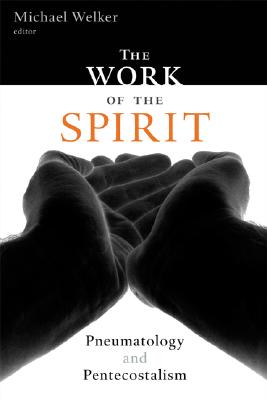 |
“The pneumatological activity ... of the Paraclete ... may most helpfully be considered in terms of the salvific working of the hidden Spirit.” Michael Welker, The work of the Spirit Welker is relevant because his description of the salvific working of the “hidden Spirit” cautions against identifying divine activity only with spectacular manifestations. The Spirit may work through revelation, transformation, discernment, and continuing mediation even when that activity is not immediately recognized by the wider world. For the Paraclete Papers, this provides a useful pneumatological framework for reconsidering fulfillment after Pentecost: continuing divine activity need not reproduce the outward form of Acts 2 in order to remain spiritually significant. |
 |
“The pneuma is the peculiar power by which the word becomes the words of eternal life.” Robert Kysar, Voyages with John Kysar is relevant because he links pneuma with the power by which the word becomes “words of eternal life.” The Spirit therefore does more than accompany proclamation; the Spirit makes revelation living and effective for those who receive it. For the Paraclete Papers, this reinforces the importance of the Johannine verbs of teaching, reminding, speaking, and declaring. A proposed fulfillment should be examined not only for manifestations of power but also for its relationship to revelatory words that communicate spiritual life. |
 |
“The gift of peace, therefore, is intimately associated with the gift of the Spirit-Paraclete.” Francis J. Moloney, The Gospel of John Moloney is relevant because he connects Jesus’ gift of peace directly with the gift of the Spirit-Paraclete in the farewell discourse. Peace is therefore not merely an emotional state but part of the continuing divine presence promised to the disciples after Jesus’ departure. For the Paraclete Papers, this broadens the criteria for considering fulfillment beyond teaching and testimony alone. The promised ministry is also associated with an experienced spiritual peace that accompanies the continuing presence of Christ through the Paraclete. |
 |
“Jesus therefore predicts that God will later send a human being to Earth to take up the role defined by John .i.e. to be a prophet who hears God's words and repeats his message to man.” M. Bucaille The Bible, the Qur'n, and Science Bucaille is included as a comparative interpretation because he reads the Johannine promise as anticipating a later human messenger who hears divine words and communicates them to humanity. Whether or not that interpretation is accepted, it demonstrates that John 16:13 has generated readings substantially different from the conventional identification of the promise solely with Pentecost. For the Paraclete Papers, the citation is useful because it keeps attention on the text’s language of hearing, speaking, transmission, and personal agency. |
 |
“This utopian hope, even when modestly expressed, links Jesus and the prophets to a much wider history of human longing.” Harvey Cox, The Future of Faith Cox is relevant because he places Jesus and the prophets within a much wider history of human hope for transformation. Eschatological expectation is therefore not merely curiosity about future events; it expresses a persistent longing for divine intervention, justice, renewal, and a different order of life. For the Paraclete Papers, this broadens the setting of the Johannine promise. The coming of the Paraclete can be considered within Christianity’s larger expectation that divine action will continue to transform human history and consciousness. |
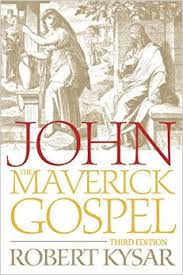 |
“Because of the presence of the Paraclete in the life of the believer, the blessings of the end-times—the eschaton—are already present.” Robert Kysar, John Kysar is especially relevant because he connects the presence of the Paraclete with blessings of the eschaton already becoming present in the believer’s life. This is a clear expression of realized eschatology: realities associated with the end-time can be experienced within the present. For the Paraclete Papers, that framework helps bridge future promise and present spiritual experience. It allows the Paraclete’s ministry to be considered as an active fulfillment in history without requiring every dimension of eschatological expectation to be already completed. |
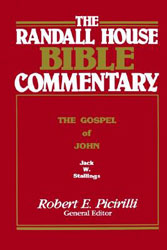 |
“They are going, by the Holy Spirit's power, to be part of the greatest miracle of all, bringing men to salvation.” R. Picirilli, The Randall House Bible Commentary Picirilli is relevant because he presents the Holy Spirit’s power as continuing through the disciples’ mission of bringing people to salvation. Pentecost therefore functions as an empowering beginning rather than as the termination of everything that can subsequently be said about the Spirit’s activity. For the Paraclete Papers, this distinction is important: Acts 2 may inaugurate Spirit-empowered mission while the Johannine promises of teaching, remembrance, testimony, guidance, declaration, and judgment continue to require theological consideration beyond that initial event. |
|
“The Kingdom of God stands as a comprehensive term for all that the messianic salvation included... is something to be sought here and now (Mt. 6:33) and to be received as children receive a gift (Mk. 10:15 = Lk. 18:16-17).” G. Ladd, A Theology of the New Testament Ladd is relevant because the language of an eschatological “turning-point of the ages” places the coming of the Redeemer within the larger problem of realized eschatology. The citation helps the Paraclete Papers ask whether divine fulfillment can become historically present while still pointing toward a future consummation. Applied to the Johannine promise, this provides a framework for considering the Paraclete as a continuing presence and ministry rather than assuming that every dimension of Jesus’ promise was exhausted by the single event of Pentecost. |
💬 Interactive Chat
Explore this article, its sources, and the relationships among its theological and evidentiary claims.
Open chat →