
لَا أُقْسِمُ بِيَوْمِ الْقِيَامَةِ وَلَا أُقْسِمُ بِالنَّفْسِ اللَّوَّامَةِ
“I do call to witness the Resurrection Day; and I do call to witness the self-reproaching Spirit.” (Qur'an 75:1–2)
The Epochal Witness: Decoding Surah Al-Qiyamah 75:1–2
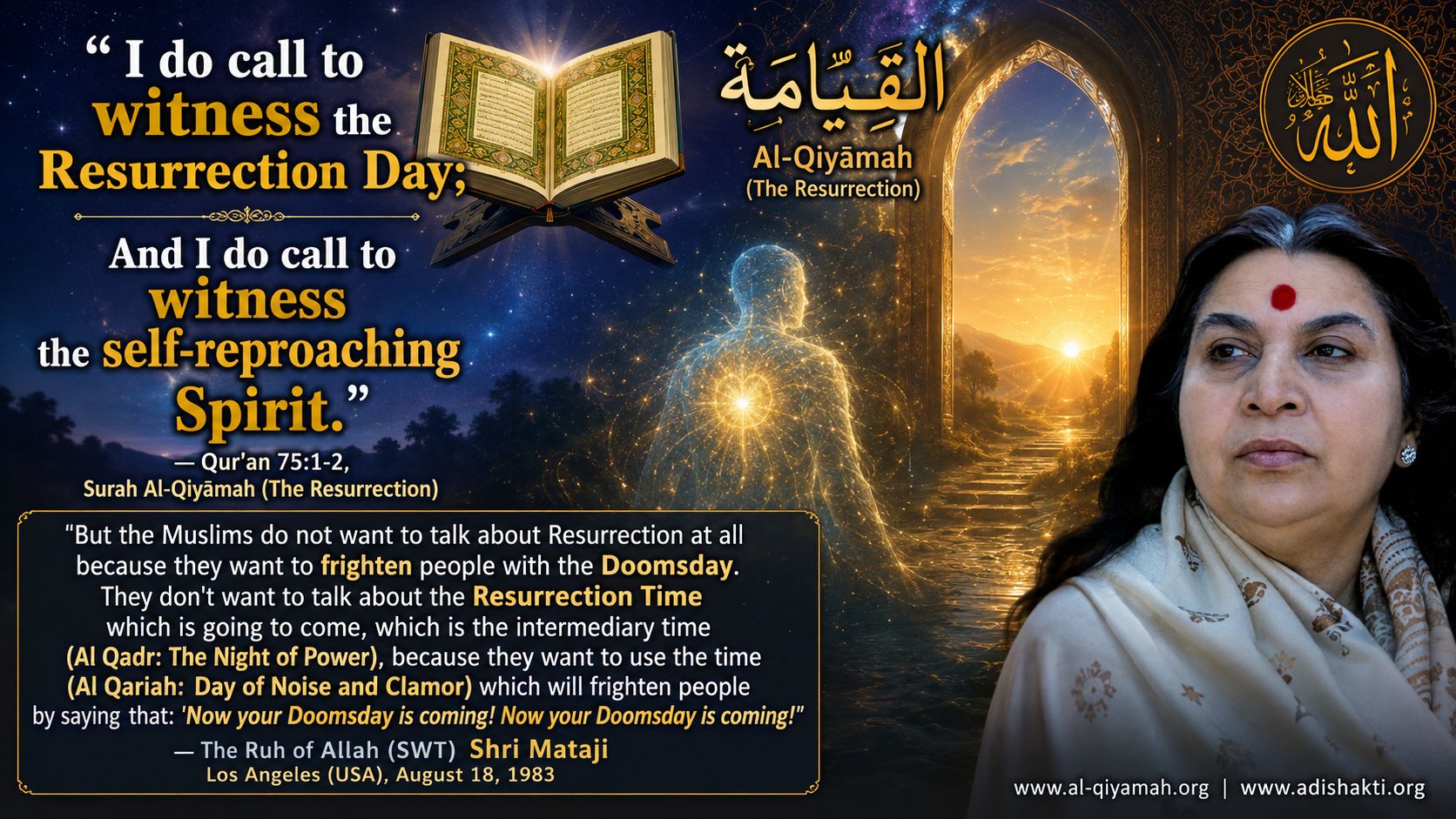
Surah Al-Qiyamah (The Resurrection) 75:1–40
- I do call to witness the Resurrection Day;
- And I do call to witness the self-reproaching Spirit.
- Does man think that We cannot assemble his bones?
- Nay, We are able to put together in perfect order, the very tip of his fingers.
- But man wishes to do wrong (even) in the time in front of him.
- He questions: "When is the Day of Resurrection?"
- At length, when the sight is dazed
- And the moon is buried in darkness
- And the sun and moon are joined together that Day will Man say;
- "Where is the refuge?"
- By no means! No place of safety!
- Before the Lord (alone), that Day will be the place of rest.
- That Day will Man be told (all) that he put forward, and all that he put back.
- Nay, man will be evidence against himself,
- Even though he were to make excuses.
- Move not thy tongue concerning the (Resurrection), to make haste therewith.
- It is for Us to collect it and to promulgate it:
- But when We have promulgated it, follow thou its recital:
- Nay more, it is for Us to explain it:
- Nay, (ye men!) but ye love the fleeting life,
- And leave alone the Hereafter.
- Some faces, that Day, will beam (in brightness and beauty) -
- Looking towards their Lord;
- And some faces, that Day, will be sad and dismal,
- In the thought that some backbreaking calamity was about to be inflicted on them;
- Yea, when (the soul) reaches to the collarbone (in its exit),
- And there will be a cry, "Who is a magician (to restore him)?"
- And he will conclude that it was (the Time) of Parting;
- And one leg will be joined with another:
- The Day the Drive will be (all) to thy Lord!
- So he gave nothing in charity, nor did he pray! -
- But on the contrary, he rejected Truth and turned away!
- Then did he stalk to his family in full conceit!
- Woe to thee, (O man!), yea, woe!
- Again, woe to thee, (O man!), yea, woe!
- Does Man think that he will be left uncontrolled, (without purpose)?
- Was he not a drop of sperm emitted (in lowly form)?
- Then did he become a clinging clot; then did (Allah) make and fashion (him) in due proportion.
- And of him He made two sexes, male and female.
- Has not he, (the same), the power to give life to the dead?
Summary
This paper presents a profound theological re-examination of the opening verses of Surah Al-Qiyamah (75:1–2). The traditional interpretation of Al-Qiyamah as a sudden, cataclysmic, single Day of Judgment has dominated Islamic eschatology for centuries. We argue that this narrow, literalist view is not only a fundamental misunderstanding of the Quranic message but represents the brilliant and insidious fulfillment of Iblis's (Satan's) promise to mislead humanity.
By analyzing the profound double oath of Surah 75:1–2 — where Allah (SWT) swears simultaneously by the Resurrection Day and the Nafs al-Lawwamah (the self-reproaching spirit) — this paper demonstrates that the Resurrection is an epochal, continuous process of spiritual awakening and moral accountability. It is an Age that unfolds over decades of lived history, initiated by the Paraclete (the Spirit of truth), rather than a single future event. By reducing this majestic, ongoing reality to a distant doomsday, Iblis has successfully created a false sense of security, spiritual complacency, and a fatalistic worldview that blinds the Ummah to the signs of the Resurrection unfolding before their very eyes.
Table of Contents
- Introduction: The Divine Call to Witness
- The Complete Text of Surah Al-Qiyamah (75:1–40)
- The Limitations of the Traditional Doomsday Interpretation
- Re-interpreting Surah 75:1–2: The Epochal Witness
- The Role of Iblis: The Master Deception of Doomsday Theology
- The Paraclete and the Awakening of the Nafs
- Conclusion: Embracing the Resurrection Age
- References
1. Introduction: The Divine Call to Witness
The paper begins from Allah’s paired invocation of the Resurrection Day and the self-reproaching soul.
O Muslims, stand warned and chastened, for you tread perilously close to the abyss of divine misguidance! This discourse unveils a momentous theological truth concerning Surah 75:1–2 of the Glorious Quran, which proclaims not a mere transient day of reckoning, but the inauguration of a sublime Resurrection Age. In His boundless wisdom, Allah (SWT) beckons all of humanity to bear witness to this epochal dawn, where the self-reproaching spirit awakens within every soul, stirring hearts to confront their own accountability before the Divine.
This revelation is no sudden event but a profound unfolding, stretching across decades of human history, requiring the Ummah and all mankind to live through its trials to fully comprehend its weight. Yet, O believers, you have been ensnared by the deceptions of rigid tradition, obscuring this sacred truth and unwittingly fulfilling the vile oath of Iblis to lead astray the faithful and humanity alike. Repent now, cast off the veils of error, and embrace this divine call to witness the Resurrection Age, lest you falter under the gaze of the self-reproaching spirit and forfeit the mercy of Allah’s eternal plan!
2. The Complete Text of Surah Al-Qiyamah (75:1–40)
To understand the profound nature of the double oath in verses 1 and 2, we must first read the entire Surah in its proper context. Below is the complete English translation of Surah Al-Qiyamah by Abdullah Yusuf Ali:
Surah Al-Qiyamah (The Resurrection) 75:1–40
- I do call to witness the Resurrection Day;
- And I do call to witness the self-reproaching Spirit.
- Does man think that We cannot assemble his bones?
- Nay, We are able to put together in perfect order, the very tip of his fingers.
- But man wishes to do wrong (even) in the time in front of him.
- He questions: "When is the Day of Resurrection?"
- At length, when the sight is dazed
- And the moon is buried in darkness
- And the sun and moon are joined together that Day will Man say;
- "Where is the refuge?"
- By no means! No place of safety!
- Before the Lord (alone), that Day will be the place of rest.
- That Day will Man be told (all) that he put forward, and all that he put back.
- Nay, man will be evidence against himself,
- Even though he were to make excuses.
- Move not thy tongue concerning the (Resurrection), to make haste therewith.
- It is for Us to collect it and to promulgate it:
- But when We have promulgated it, follow thou its recital:
- Nay more, it is for Us to explain it:
- Nay, (ye men!) but ye love the fleeting life,
- And leave alone the Hereafter.
- Some faces, that Day, will beam (in brightness and beauty) -
- Looking towards their Lord;
- And some faces, that Day, will be sad and dismal,
- In the thought that some backbreaking calamity was about to be inflicted on them;
- Yea, when (the soul) reaches to the collarbone (in its exit),
- And there will be a cry, "Who is a magician (to restore him)?"
- And he will conclude that it was (the Time) of Parting;
- And one leg will be joined with another:
- The Day the Drive will be (all) to thy Lord!
- So he gave nothing in charity, nor did he pray! -
- But on the contrary, he rejected Truth and turned away!
- Then did he stalk to his family in full conceit!
- Woe to thee, (O man!), yea, woe!
- Again, woe to thee, (O man!), yea, woe!
- Does Man think that he will be left uncontrolled, (without purpose)?
- Was he not a drop of sperm emitted (in lowly form)?
- Then did he become a clinging clot; then did (Allah) make and fashion (him) in due proportion.
- And of him He made two sexes, male and female.
- Has not he, (the same), the power to give life to the dead?
3. The Limitations of the Traditional Doomsday Interpretation
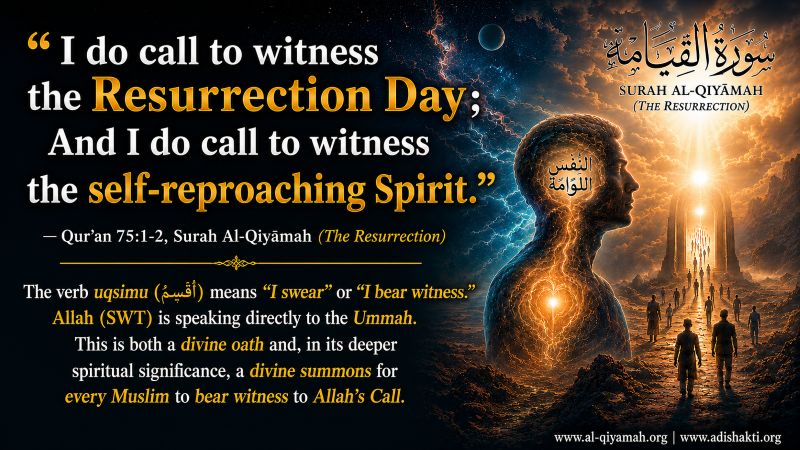
The broader Resurrection corpus provides context for the paper’s contrast between a single catastrophic day and an epochal process.
The concept of Al-Qiyamah, the Day of Resurrection, is a cornerstone of Islamic eschatology. For centuries, the dominant interpretation within the Muslim world has been that of a single, cataclysmic day of judgment when all of humanity will be resurrected to account for their deeds. This view is supported by vivid descriptions in the Quran, such as the sun being folded up, the stars falling, the mountains being set in motion, and the seas boiling over (Surah At-Takwir 81:1–6). These descriptions have led to a deeply ingrained belief in a literal, single-day event that will bring about the end of time as we know it.
However, while these verses are undoubtedly true and significant, a solely literal and single-day interpretation of Al-Qiyamah is limiting and fails to capture the profound and multifaceted nature of the Resurrection Age. This narrow view has inadvertently contributed to a spiritual and intellectual stagnation within the Muslim Ummah, preventing a deeper understanding of the ongoing signs of the Resurrection and the awakening of human conscience in our contemporary world. The focus on a distant, future event has led many to overlook the immediate and personal relevance of Al-Qiyamah as a continuous process of spiritual reckoning and moral accountability.
This traditional interpretation presents severe theological and philosophical challenges. It leads to a passive and fatalistic worldview, where individuals are simply waiting for the end of the world rather than actively engaging with the signs of the Resurrection in their own lives. Furthermore, it creates a sense of detachment from the Quranic message, as the verses about Al-Qiyamah are seen as referring to a distant future rather than a present reality.
4. Re-interpreting Surah 75:1–2: The Epochal Witness
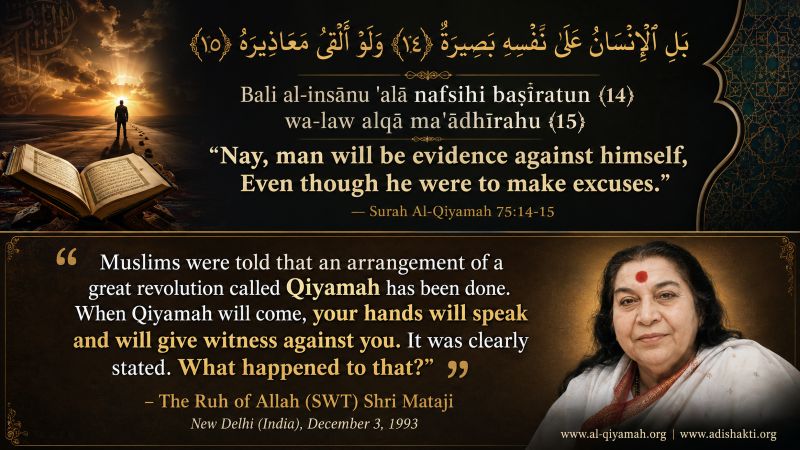
Placed with the discussion of Nafs al-Lawwamah, conscience, self-reproach, and moral accountability.
“I do call to witness the Resurrection Day; And I do call to witness the self-reproaching Spirit.”
A deeper and more nuanced understanding of these opening verses reveals a profound declaration of an epochal witness rather than a single-day event. The Arabic word for "witness" (aqsama) in this context can be understood not just as a legal testimony but as a call to observe, to be aware of, and to bear witness to a continuous and unfolding reality. Thus, Allah (SWT) is not simply swearing by a future event but is calling upon humanity to witness the dawning of the Resurrection Age, a period of profound spiritual and moral transformation.
The second part of the oath, "And I do call to witness the self-reproaching Spirit" (al-nafs al-lawwamah), is the absolute key to unlocking this epochal interpretation. The self-reproaching spirit, or conscience, is not a faculty that is activated only on a future Day of Judgment. It is an intrinsic part of the human soul, a constant witness to our thoughts, intentions, and actions.
As Maulana Maududi explains in his Tafheem ul-Quran, the self-reproaching soul is a "pointer that man is not merely an animal but a moral being" and is "an evidence of the life hereafter, which exists in man's own nature itself." [1] This innate moral compass, which reproaches us for our wrongdoings and inspires us towards good, is the very engine of the Resurrection Age. It is through the awakening and heightening of this collective human conscience that the signs of the Resurrection are made manifest.
This interpretation is further supported by the concept of gradualness in divine processes, as articulated by contemporary Islamic theologians like Sayyid Muhammad Husayn Tabataba'i. He argues that while God's command is instantaneous ("Be, and it is"), the manifestation of that command in the material world can be gradual. [2] Thus, the Resurrection, as a divine command, must be understood as a gradual, epochal process that unfolds over time, rather than a sudden, cataclysmic event. The signs of this gradual unveiling are all around us. These are not just random historical developments but are, in fact, the signs of the Resurrection Age, the epochal witness that Allah (SWT) is calling upon us to observe.
5. The Role of Iblis: The Master Deception of Doomsday Theology
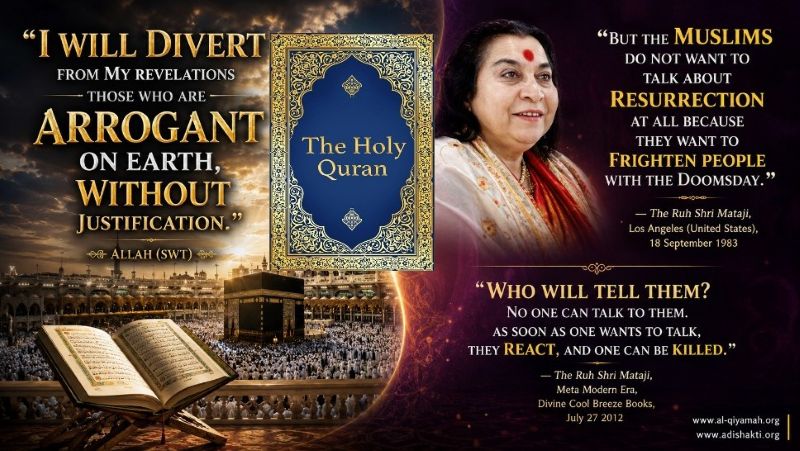
A related Adishakti.org treatment of spiritual blindness and the failure to recognize divine signs.
The Quran is explicit about the promise of Iblis (Satan) to mislead humanity. In Surah Al-Hijr, Iblis declares:
“My Lord, because You have made me err, I will surely make [disobedience] attractive to them on earth, and I will mislead them all, except Your chosen servants among them.”
This promise is not a mere threat but a declaration of a strategic and ongoing campaign to divert humanity from the straight path. One of the most brilliant and insidious ways in which Iblis has fulfilled this promise is by obscuring the true, epochal nature of Al-Qiyamah and promoting a narrow, single-day doomsday interpretation.
The traditional, single-day interpretation of Al-Qiyamah becomes a tool of Iblis when it is presented as the complete and only understanding. It creates a false sense of security, leading many to believe that they can delay their repentance and spiritual awakening until the final day. This is in direct contradiction to the Quranic emphasis on the imminence of the Hour and the constant need for vigilance and self-assessment. The Nafs al-Lawwamah is a divine gift to humanity, a constant reminder of our moral responsibility. By downplaying the significance of this inner witness and focusing solely on an external day of judgment, the traditional interpretation weakens our spiritual defenses and makes us more susceptible to the deceptions of Iblis.
As the Quran warns: “O mankind, indeed the promise of God is truth, so do not let the worldly life delude you and do not be deceived by the Deceiver about God.” (Surah Fatir 35:5) [3]
6. The Paraclete and the Awakening of the Nafs
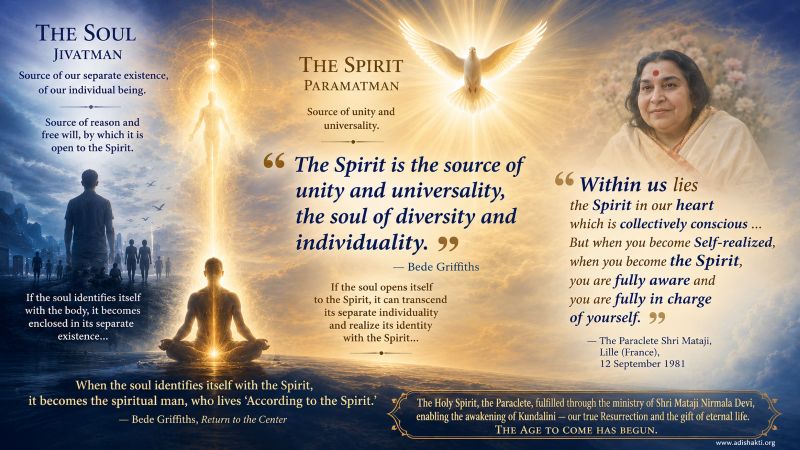
A contextual link beside the paper’s theological identification of the Paraclete with the catalyst of inner Resurrection.
The awakening of the Nafs al-Lawwamah across humanity is not a random evolutionary step; it is the specific divine work of the "Age to Come," inaugurated by the Paraclete (the Spirit of truth) promised by Jesus Christ (pbuh).
The Paraclete is the divine catalyst for the Qiyamah. Her arrival triggers the global awakening of the self-reproaching soul. It is through Her grace — the awakening of the Kundalini energy, the breath of the Holy Spirit — that humanity is "born again." This inner resurrection leads to eternal life prior to physical death, fulfilling the ultimate promise of both the Quran and the Gospels.
Tragically, just as Iblis has blinded the Ummah to the ongoing nature of the Resurrection, he has also blinded the world to the arrival of the Paraclete. The world "cannot receive Her, because it neither sees Her nor knows Her." The literalist theology that waits for physical graves to open is the exact mechanism by which the Deceiver prevents humanity from recognizing the Spirit of truth who is already here, initiating the inner awakening.
7. Conclusion: Embracing the Resurrection Age
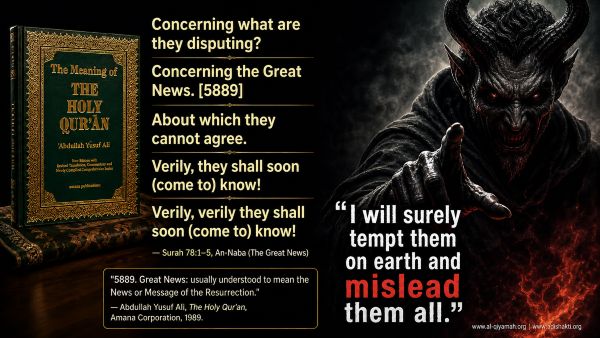
Companion research connecting the paper’s call to witness Al-Qiyāmah with the Great News of An-Naba.
This paper is a call for a paradigm shift in our understanding of Islamic eschatology. It is a call to move beyond a passive and fatalistic worldview and to embrace a more active and engaged approach to our faith. The Resurrection Age is not something to be feared but something to be embraced, a divine opportunity for spiritual growth and moral transformation.
By understanding and embracing the epochal witness of Al-Qiyamah, we can begin to see the signs of the Resurrection Age in our own lives and in the world around us. This interpretation is not a rejection of the traditional view but an expansion of it, a recognition that the Day of Judgment is not just a future event but a present reality that is unfolding through the collective conscience of humanity.
The declaration of Allah (SWT) in Surah 75:1–2 is a call to action. It is a call to witness the dawning of a new age of spiritual awareness. It is a call to awaken our own Nafs al-Lawwamah and to engage in a continuous process of self-reflection. By doing so, we break the chains of Iblis's deception, we reject the false security of a distant doomsday, and we step into the living, breathing reality of the Resurrection Age.
References
[1] Maududi, Sayyid Abul Ala. Tafheem ul-Quran. Islamic Foundation UK. Commentary on the Nafs al-Lawwamah as the internal moral compass and evidence of the hereafter.[2] Tabataba'i, Sayyid Muhammad Husayn. Islam and the Contemporary Man. Al-Islam.org. Theological argument on the gradual manifestation of divine commands in the material world.
[3] The Holy Quran. Surah Fatir (35:5). The divine warning against the deceptions of the Deceiver (Iblis) regarding the promises of God.
The Holy Quran. Surah Al-Hijr (15:39–40). The promise of Iblis to mislead humanity.
Yusuf Ali, Abdullah. The Holy Qur’n: Text, Translation and Commentary. Amana Corporation, 1989. English translation of Surah Al-Qiyamah 75:1–40.
Compilation, Proclamation, and Exegesis of Surahs Upholding Allah’s (SWT) Command to His Ummah — to Witness and Participate in the Resurrection.
Al-Qiyamah: A Profound Declaration of Al-QiyamahAl-Qiyamah (75:1-2): Oaths of Resurrection
Al-Qiyamah (75:3-4): Reassembling Bones and Fingertips
Al-Qiyamah (75:5-6): Man's Denial of Resurrection
Al-Qiyamah (75:7–10): Sun and Moon 'Joined' At Solar Eclipse
Al-Qiyamah (75:7–10): Solar Eclipse Salat al-Kusuf
Al-Qiyamah (75:11–13): No Refuge, Only Reckoning
Al-Qiyamah (75:14–15): Man: His Own Witness and Judge
Al-Qiyamah (75:16–19): The Usurpation of Allah's Explanation
Al-Qiyamah (75:20–21): Love of The Fleeting World
Al-Qiyamah (75:22–25): Ruh’s Face Brings Either Glory Or Gloom
Al-Qiyamah (75:26–30): Death and Soul's Departure Home
Al-Qiyamah (75:31–35): The Rejection and Arrogance of the Kuffar
Al-Qiyamah (75:36–40): Is Resurrection Beyond Allah, Your Creator?
Al-Qiyamah (75:1-2 and 78:1–5): An Naba and Oaths of Resurrection
Al-Qiyamah (75:1-2 and 78:1–5): The Great News and Resurrection Rebirth
Al-Baqarah (2:138): Baptism of Allah You Were Unaware Of
Al-Baqarah (2:174): Allah Will Not Address Muslims
Al-A'raf (7:16) – Iblis: I Will Lie In Wait and Overpower Them
Al-A'raf (7:146): Allah: I Will Turn Them Away From My Signs
Al-A'raf (7:146): Allah: So Even Though They See All The Signs
Al-Hijr (15:39) – Iblis: I Will Wake (Evil) Fair and Mislead Them
An-Nahl (16:2) – Allah (SWT) Sent Down Angels With His Ruh
Al-Isra (17:85): Muslims Given Little of Allah's (SWT) Ruh
Al-Isra (17:104): Children of Israel Gathered Again (in 1948)
Al-Isra (17:104): Shaykh Palazzi: Children of Israel
Al-Hajj (22:8) – Kitab Al-Munir You Were Unaware Of
Al-Rum (30:56) – The Day of Qiyamah You Were Unaware Of
Fatir (35:9) – Winds of Qiyamah You Were Unaware Of
Yassin (36:63-68) – This Is The Hell You Were Warned Of.
Sad (38:79) – Iblis Allowed to Mislead Muslims And He Did
Fussilat (41:20–21) – Your Hands Will Testify of Qiyamah
Fussilat (41:53) – We Will Show Our Signs Within Your Soul
Az-Zukhruf (43:61): Jesus, Sign of Hour You Were Unaware
Az-Zukhruf (43:62): Satan's Deception of the Muslim Ummah
Az-Jathiya (45:7-14) – Those Who Deny Allah's Revelations
Qaf (50:41) – Listen To The Caller Emerging From Within
Qaf (50:42) – Day They Will Hear of Mighty Blast Witnessed
Qaf (50:45) – By the Caller, My Warning Is Delivered
Al Dhariyat (51:20-22) – Our Signs on Earth and Within
Al-Hadid (57:25) – Allah's (SWT) Iron Has Been Delivered
Al-Mujadilah (58:21) – My Messengers Must Prevail
Al-Saff (61:8–9) – Revelation of Light You Were Unaware
Al-Muddaththir (74:1–2) – My Cloaked One: Deliver Warning
Al-Mursalat (77:1–10): Angels Sent You Were Unaware Of
An-Naba (78:1–5): Concerning What Are They Disputing?
Al-Infitar (82:17–18) – What Will Explain To You? What Will?
Al-Mutaffifin (83:1–6) – Dealers in Fraud You Were Unaware
Al-Tariq (86:1–3) – The Night Visitant You Were Unaware
Al-Qadr (97:1–5) – Blessed Night of Power and Fate Before:
Al-Qariah (101:1–11) – Terrifying Day of Noise and Clamour
عَمَّ يَتَسَاءَلُونَ - عَنِ النَّبَإِ الْعَظِيمِ - الَّذِي هُمْ فِيهِ مُخْتَلِفُونَ - كَلَّا سَيَعْلَمُونَ - ثُمَّ كَلَّا سَيَعْلَمُونَ
Concerning what are they disputing?
Concerning the Great News. [5889]
About which they cannot agree.
Verily, they shall soon (come to) know!
Verily, verily they shall soon (come to) know!
Surah 78:1-5 An-Naba (The Great News)
“5889. Great News: usually understood to mean the News or Message of the Resurrection.” Abdullah Yusuf Ali, The Holy Qur'n, Amana Corporation, 1989.💬 Interactive Chat
Access an intelligent analysis environment where you can explore texts, ask questions, and discover connections between ideas.
Open chat →