
لَا أُقْسِمُ بِيَوْمِ الْقِيَامَةِ وَلَا أُقْسِمُ بِالنَّفْسِ اللَّوَّامَةِ
“I do call to witness the Resurrection Day; and I do call to witness the self-reproaching Spirit.” (Qur'an 75:1–2)
Surah 75:36–40 and the Logic of Resurrection
A rigorous academic analysis of Surah Al-Qiyamah 75:35–40, arguing that the passage is Allah's present, ongoing Call to witness the Resurrection. This paper examines the Arabic logic in six movements: the warning of verse 35 (thumma awlā laka fa-awlā), the question of purpose in verse 36 (an yutraka sudan), the dependent origin in verse 37 (nuṭfatan min maniyyin yumnā), the creative agency and proportion in verse 38 (fa-khalaqa fa-sawwā), the ordered human continuity in verse 39 (al-zawjayni al-dhakara wa-al-unthā), and the rhetorical conclusion of divine life-giving in verse 40 (a-laysa dhālika bi-qādirin ʿalā an yuḥyiya al-mawtā). The paper argues that every generation is addressed now: the human being is not sudan (aimless or purposeless) but accountable; the Creator who formed, proportioned, and ordered humanity possesses power to give life to the dead. It engages classical tafsir (Maududi, Enlightening Commentary), Quranic parallels (23:115, 22:5, 30:27), and the present, non-mainstream thesis that the future resurrection is proclaimed through a present summons, with the logic of purpose and first creation serving as the criteria for any claim of a commenced Resurrection.
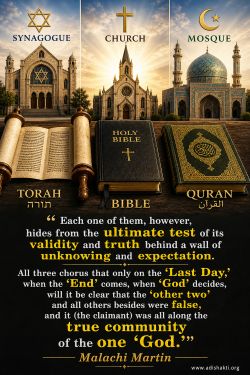
The paper also argues that more than four billion Jews, Christians, and Muslims profess resurrection, yet their institutions have largely failed to define how a present fulfillment could ever be recognized. It quotes Malachi Martin's criticism that each religion hides behind a 'wall of unknowing and expectation' and argues that this is institutional sudan: immense religious administration without a publicly adjudicable method of recognition. The paper demands that inherited religions disclose their criteria of recognition and that the www.al-qiyamah.org | www.adishakti.org claim disclose its criteria of verification, so that resurrection does not remain an indefinitely postponed spectacle.
Surah Al-Qiyamah (The Resurrection) 75:1–40
- I do call to witness the Resurrection Day;
- And I do call to witness the self-reproaching Spirit.
- Does man think that We cannot assemble his bones?
- Nay, We are able to put together in perfect order, the very tip of his fingers.
- But man wishes to do wrong (even) in the time in front of him.
- He questions: "When is the Day of Resurrection?"
- At length, when the sight is dazed
- And the moon is buried in darkness
- And the sun and moon are joined together that Day will Man say;
- "Where is the refuge?"
- By no means! No place of safety!
- Before the Lord (alone), that Day will be the place of rest.
- That Day will Man be told (all) that he put forward, and all that he put back.
- Nay, man will be evidence against himself,
- Even though he were to make excuses.
- Move not thy tongue concerning the (Resurrection), to make haste therewith.
- It is for Us to collect it and to promulgate it:
- But when We have promulgated it, follow thou its recital:
- Nay more, it is for Us to explain it:
- Nay, (ye men!) but ye love the fleeting life,
- And leave alone the Hereafter.
- Some faces, that Day, will beam (in brightness and beauty) -
- Looking towards their Lord;
- And some faces, that Day, will be sad and dismal,
- In the thought that some backbreaking calamity was about to be inflicted on them;
- Yea, when (the soul) reaches to the collarbone (in its exit),
- And there will be a cry, "Who is a magician (to restore him)?"
- And he will conclude that it was (the Time) of Parting;
- And one leg will be joined with another:
- The Day the Drive will be (all) to thy Lord!
- So he gave nothing in charity, nor did he pray! -
- But on the contrary, he rejected Truth and turned away!
- Then did he stalk to his family in full conceit!
- Woe to thee, (O man!), yea, woe!
- Again, woe to thee, (O man!), yea, woe!
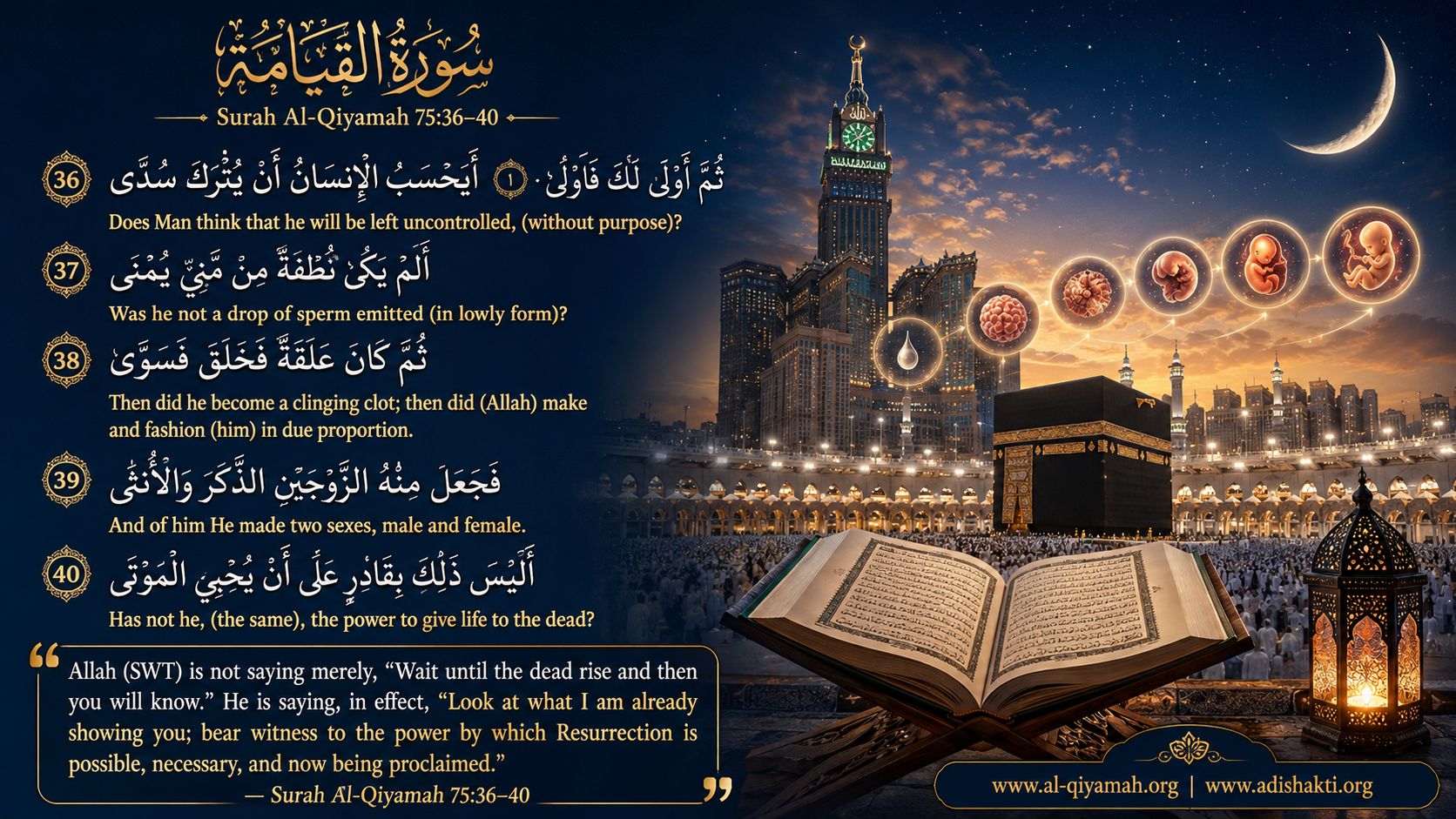
- Does Man think that he will be left uncontrolled, (without purpose)?
- Was he not a drop of sperm emitted (in lowly form)?
- Then did he become a clinging clot; then did (Allah) make and fashion (him) in due proportion.
- And of him He made two sexes, male and female.
- Has not he, (the same), the power to give life to the dead?
Summary
Surah 75:36–40 contains one of the Qur’an’s most compressed demonstrations of Resurrection and, in the interpretation advanced here, one of Allah’s clearest present, ongoing Calls to witness it. Verse 36 asks the living hearer now whether the human being imagines he will be left sudan—aimless, uncontrolled, irresponsible, or without purpose. Verses 37–39 direct every generation to witness the sign already present in its own embodied origin: the human did not create himself but was formed, proportioned, and placed within ordered continuity. Verse 40 then demands a present response to divine life-giving power: the One who accomplished first creation is able to give life to the dead. Classical and modern mainstream exegesis understands this primarily as an argument for a future bodily resurrection and judgment. This paper advances the further, non-mainstream thesis that the future event is proclaimed through a present summons: Allah (SWT) is calling humanity to see the signs, bear witness, and recognize the Resurrection now unfolding. If Shri Mataji Nirmala Devi was correct to declare that the Last Judgment and Resurrection Time had commenced, why are approximately 4.316 billion Jews, Christians, and Muslims overwhelmingly unaware? The answer cannot be settled by accusation, numbers, or celestial spectacle. The Arabic logic requires present witness, purpose, moral consequence, creative transformation, and divine life. Every institution and every modern claimant must submit to those tests.
Table of Contents
- The Arabic argument in one view
- Allah’s present, ongoing Call to witness the Resurrection
- ثُمَّ أَوْلَىٰ لَكَ فَأَوْلَىٰ — Warning before proof
- أَن يُتْرَكَ سُدًى — Humanity cannot be purposeless
- نُطْفَةً مِّن مَّنِيٍّ يُمْنَىٰ — The creature who did not create himself
- فَخَلَقَ فَسَوَّىٰ — Creation as deliberate ordering
- الزَّوْجَيْنِ الذَّكَرَ وَالْأُنثَىٰ — Relational and generative humanity
- أَن يُحْيِيَ الْمَوْتَىٰ — The conclusion that gives life to the dead
- The Qur’an explains its own logic
- Torah, Bible, and Qur’an under the same test
- Shri Mataji’s declaration tested by 75:36–40
- Why billions recite Resurrection but do not examine commencement
- The eclipse must serve the argument, not replace it
- بَلَىٰ — Conclusion
- References
1. The Arabic Argument in One View
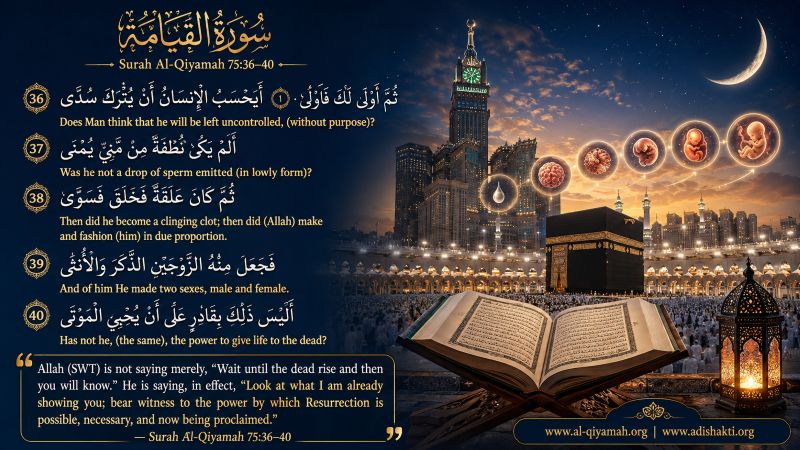
Purpose and first creation form the paper’s two-part Qurʾanic argument for return and divine life-giving.
The passage is often quoted only for its final question, but the Arabic grammar makes the conclusion inseparable from the path that precedes it. Its logic unfolds in six movements:
| Verse | Arabic anchor | Rhetorical function | Claim about Resurrection |
|---|---|---|---|
| 75:36 | أَن يُتْرَكَ سُدًى | Purpose | A morally responsible creature is not abandoned without account or end. |
| 75:37 | نُطْفَةً مِّن مَّنِيٍّ يُمْنَىٰ | Dependent origin | The denier did not create himself and cannot measure divine power by his own. |
| 75:38 | فَخَلَقَ فَسَوَّىٰ | Creative agency and proportion | First creation is purposeful formation, not self-producing accident. |
| 75:39 | الزَّوْجَيْنِ الذَّكَرَ وَالْأُنثَىٰ | Ordered continuity | Human life is relational, differentiated, and generative. |
| 75:40 | أَن يُحْيِيَ الْمَوْتَىٰ | Rhetorical conclusion | The originating and ordering Creator possesses power to give life to the dead. |
The Quranic Arabic Corpus confirms that 75:36 uses an interrogative verb followed by the passive yutraka, “that he be left,” and the accusative noun sudan, “neglected.” In 75:38 the perfect verbs khalaqa and sawwā place creative agency and proportioning after the dependent embryonic stage. In 75:40 qādir is an active participle naming ability, while yuḥyiya is the Form IV verb “to give life.”[2] [3]
The surah therefore does more than proclaim that resurrection will occur. It discloses why denial is irrational within Qur’anic theism. The person who depends upon divine power for first existence cannot coherently grant that power at the beginning and deny it at the return. The person who possesses conscience and moral agency cannot coherently claim to be left without an ultimate account. The proof has two wings: purpose establishes the necessity of return; first creation establishes its possibility.
2. Allah’s Present, Ongoing Call to Witness the Resurrection
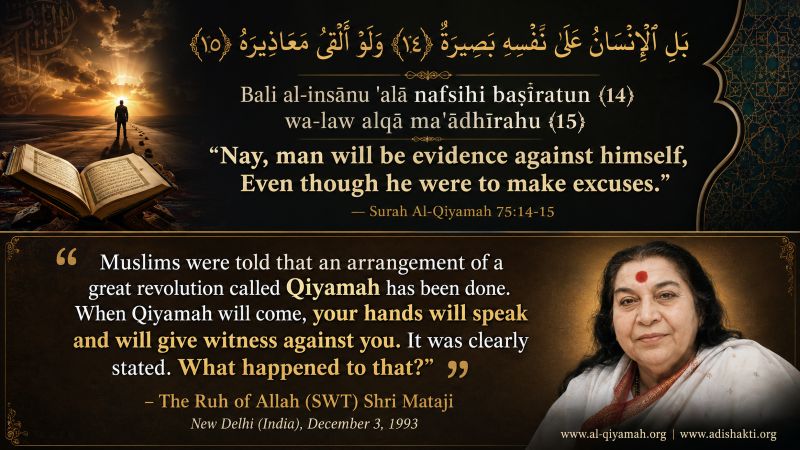
Verse 75:14 supports the paper’s emphasis on present inward testimony rather than passive expectation alone.
The controlling thesis of this paper is that Allah (SWT) is speaking to humanity in the present and issuing an ongoing Call to witness the Resurrection. Surah 75 does not permit the hearer to behave as a spectator waiting for information from the end of time. Its questions arrive in the living present: أَيَحْسَبُ الْإِنسَانُ—“Does the human being suppose?”; أَلَمْ يَكُ—“Was he not?”; أَلَيْسَ ذَٰلِكَ بِقَادِرٍ—“Is not That One able?” The recited Word confronts every generation now. The future resurrection is therefore not an excuse for future-only attention; it is the object of present testimony, moral preparation, and recognition.
Within the surah, the witness is already present. Verse 14 declares that the human being is baṣīrah against his own self: the person carries inward testimony. Verses 37–39 add embodied testimony: every human origin from dependent life, every passage through formation and proportion, and every continuation of humanity is a sign enacted before the eyes of the living. Verse 40 turns that witnessed first creation into the demanded confession of re-creation. Allah (SWT) is not saying merely, “Wait until the dead rise and then you will know.” He is saying, in effect, “Look at what I am already showing you; bear witness to the power by which Resurrection is possible, necessary, and now being proclaimed.”
This present Call is both outward and inward. The signs appear فِى ٱلْـَٔافَاقِ, in the horizons, and وَفِىٓ أَنفُسِهِمْ, within themselves. Surah 51 likewise declares, وَفِى ٱلْأَرْضِ ءَايَـٰتٌۭ لِّلْمُوقِنِينَ وَفِىٓ أَنفُسِكُمْ ۚ أَفَلَا تُبْصِرُونَ—“On the earth are signs for those of certainty, and within yourselves; will you not then see?”[31] The Resurrection Call is ongoing because the signs of origin, conscience, transformation, death, and divine life are ongoing. The adishakti.org reading identifies Shri Mataji’s mass Self-realization as the contemporary intensification of this Call: humanity is being summoned not merely to believe that God will one day give life, but to witness the awakening from spiritual death now.
This is an explicitly non-mainstream interpretation and must be named as such. Mainstream Islamic exegesis generally places the bodily Resurrection and final judgment in the future. The present reading does not deny that consummation; it argues that futurity does not exhaust the surah’s speech-act. Allah’s future promise generates a present command to see, answer, prepare, and testify. The event awaited is already calling its witnesses.
3. ثُمَّ أَوْلَىٰ لَكَ فَأَوْلَىٰ — Warning Before Proof
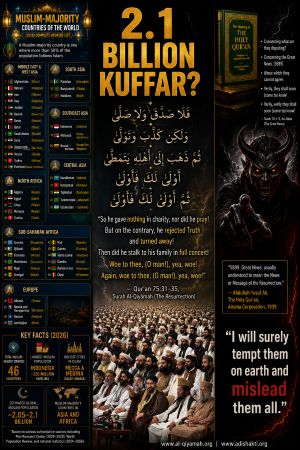
Thumma awlā laka fa-awlā.
“Again, woe to you, and even more woe.”
Verse 35 is the neglected doorway to the logic. The warning is doubled in verses 34–35 because the preceding person did not merely fail to understand. He neither affirmed truth nor prayed; he denied, turned away, and then returned to his people swaggering. The Quranic Arabic Corpus analyzes yatamaṭṭā in 75:33 as a verb of swaggering, while awlā functions as the repeated announcement of woe.[4] The intellectual denial of Resurrection is therefore exposed as a moral posture: the self wants an existence without answerability.
This context forbids a bloodless apologetic. The passage does not ask only whether resurrection is mechanically possible. It asks why the denier needs it to be impossible. If no return exists, arrogance can present itself as freedom; injustice can end in the grave; institutions can bless power without awaiting a higher verdict. Verse 35 declares that such denial has already entered judgment.
The warning also applies to religious believers. A Muslim may verbally confess Al-Qiyamah while organizing life as if no present act of God could interrupt inherited authority. A Christian may confess the resurrection of the dead while making the Paraclete permanently invisible behind clerical mediation. A Jew may affirm the God who kills and makes alive while reducing redemption to an indefinitely postponed horizon. The Arabic awlā laka fa-awlā does not permit orthodoxy to hide moral evasion. Woe addresses the person who turns away, including the believer who turns away while reciting the correct doctrine.
4. أَن يُتْرَكَ سُدًى — Humanity Cannot Be Purposeless
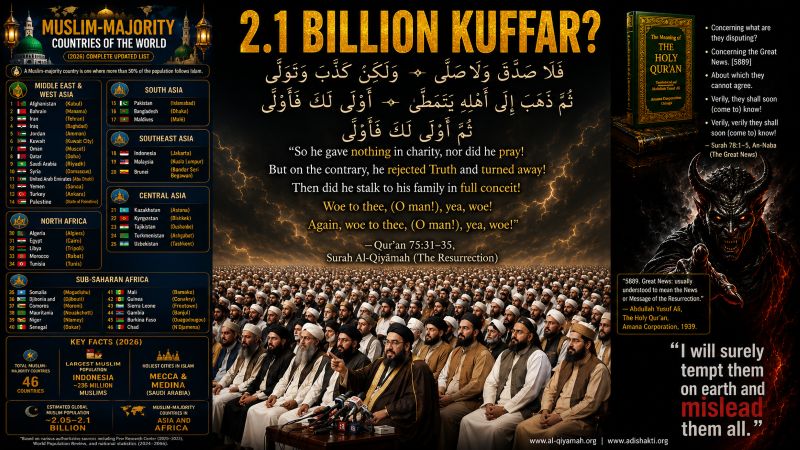
The preceding warning frames the question of whether humanity could be left aimless, uncontrolled, or without accountability.
A-yaḥsabu al-insānu an yutraka sudan?
“Does the human being suppose that he will be left neglected, aimless, uncontrolled?”
The central word is sudan. Maududi explains the Arabic idiom through a camel left unattended to wander and graze wherever it wills. Applied to the human being, the question becomes severe: does a creature endowed with reason, freedom, conscience, the power to injure generations, and the power to serve truth imagine that he is left irresponsible and unquestioned?[5] The Enlightening Commentary similarly connects the verse to purpose, accountability, and the demand of conscience.[6]
This is the passage’s argument for the necessity of the Hereafter. Earthly history leaves moral accounts radically incomplete. Some perpetrators die unpunished; some sow systems of violence whose victims extend beyond their lifetime; some who devote themselves to justice die in humiliation. If death erases all distinction, then moral consciousness has arisen in a universe that finally treats truth and falsehood alike. Surah 75 rejects that conclusion. Humanity is not sudan; therefore, action has a destination.
The parallel is exact in structure. ʿAbathan—without purpose, in play—stands beside sudan, and purposelessness is immediately joined to denial of return. Resurrection is not an ornamental miracle added to creation. It is the completion of creation’s purpose.
Here the modern religious crisis becomes visible. Judaism, Christianity, and Islam teach that humanity is not sudan, yet their institutions often leave believers effectively aimless regarding fulfillment. They prescribe what must be expected but rarely identify what present evidence would count as arrival. They regulate doctrine, ritual, office, and belonging, but leave the decisive prophetic test unformulated. This is institutional sudan: immense religious administration without a publicly adjudicable method of recognition.
5. نُطْفَةً مِّن مَّنِيٍّ يُمْنَىٰ — The Creature Who Did Not Create Himself
A-lam yaku nuṭfatan min maniyyin yumnā?
“Was he not a sperm-drop from semen emitted?”
The verse attacks pride at its root. The swaggering denier is recalled to an origin he did not choose, initiate, or control. The passive yumnā, “is emitted,” intensifies the point. The human who pronounces resurrection impossible was once radically dependent and absent from his own beginning.
This is not a primitive attempt at modern embryology. The passage’s concern is theological and existential: the creature is not self-originating. Contemporary humanity may map genomes, manipulate cells, and describe developmental mechanisms with extraordinary precision; none of this converts the individual into the author of his own existence. Explanation of process does not abolish the question of origin, contingency, or purpose.
Surah 22 states what Surah 75 compresses: reflection upon first formation answers doubt about al-baʿth, the raising. The premise is not that biological development resembles corpses leaving graves. The premise is that the divine agency capable of bringing a human subject from non-manifest dependence into embodied life is not exhausted by death.
6. فَخَلَقَ فَسَوَّىٰ — Creation as Deliberate Ordering
Thumma kāna ʿalaqatan fa-khalaqa fa-sawwā.
“Then he became a clinging form; then He created and proportioned.”
Two verbs carry the argument: khalaqa, He created, and sawwā, He proportioned, fashioned, or brought into due order. The repeated prefix fa- gives the sentence compressed momentum. A dependent stage is followed by creative agency and then by proportion. The human being is not merely produced; he is ordered.
This ordering is the premise that careless apologetics often weaken. Surah 75 does not invite believers to make every scientific discovery a miraculous prediction. It asks a more durable question: what account of reality best explains why the once-nonexistent creature becomes an integrated person capable of reason, love, moral injury, repentance, worship, and knowledge of death? Within the Qur’anic worldview, sawwā names the passage from material dependence to an ordered human vocation.
The theological inference is not: “Embryology proves a dated apocalypse.” It is: “The divine agency manifest in first creation is sufficient for re-creation.” Surah 30:27 makes the structure explicit:
The Arabic sequence thus authorizes a rational analogy from origin to return. It does not erase mystery; it destroys the allegation of incoherence.
7. الزَّوْجَيْنِ الذَّكَرَ وَالْأُنثَىٰ — Relational and Generative Humanity
Fa-jaʿala minhu al-zawjayni al-dhakara wa-al-unthā.
“Then He made from it the two mates, the male and the female.”
Verse 39 expands the argument from individual formation to human continuity. Al-zawjayni is dual: the two mates or kinds, specified as male and female. The point is not an isolated anatomy lesson but ordered generativity. The single dependent origin opens into a relational human world extending across generations.
This matters for judgment. Human action is rarely private. Parents form children; teachers form minds; rulers establish systems; theologians preserve interpretations; violence and mercy propagate beyond the actor’s lifespan. The continuity named in verse 39 explains why earthly death cannot settle the consequences of human agency. The one who authors an ideology may die before its full destruction becomes visible. The one who establishes a liberating truth may die before generations receive its fruit. Resurrection and judgment answer a creature whose effects outlive his body.
The verse should not be conscripted into simplistic claims that Qur’an 75 solves every modern question of sex, gender, medicine, or identity. Its role here is narrower and stronger: the Creator who orders differentiated human continuity has not produced a morally disconnected series of accidents. Humanity is relational; therefore, accountability must reckon with relationships and consequences across time.
8. أَن يُحْيِيَ الْمَوْتَىٰ — The Conclusion That Gives Life to the Dead
A-laysa dhālika bi-qādirin ʿalā an yuḥyiya al-mawtā?
“Is not That One able to give life to the dead?”
The demonstrative dhālika—“That One”—points back through the entire sequence. The One who formed the dependent beginning, created, proportioned, and established human continuity is qādir, possessing power, to yuḥyiya al-mawtā, give life to the dead. The Form IV verb from the root ḥ-y-y is causative: He causes life. Resurrection is therefore not portrayed merely as the reassembly of surviving material. Its governing concept is divine life-giving.
Mainstream Islamic exegesis properly reads the verse as a proof of God’s power to resurrect the physically dead for judgment. The reports cited by Maududi state that the Prophet responded to the final question with balā—indeed, why not![10] This mainstream horizon must not be concealed by the present paper’s spiritual interpretation.
Yet the phrase also bears an unavoidable theological depth. To give life to the dead is the defining work of God in every Abrahamic scripture. The New Testament can therefore speak both of a future resurrection of those in tombs and of a present passage from death to life. The spiritual and bodily horizons need not be enemies unless interpretation makes them mutually exclusive. A present awakening may be first participation in divine life without exhausting final resurrection. Conversely, an inward experience cannot simply declare itself the fulfillment of yuḥyiya al-mawtā without showing why it is divine life rather than psychological alteration.
| What 75:40 establishes | What 75:40 does not establish by itself |
|---|---|
| God possesses power to give life to the dead. | The calendar date of a resurrection epoch. |
| First creation makes denial of divine re-creation inconsistent. | The identity of Shri Mataji as the Ruh of Allah. |
| The passage expects assent, balā. | That every spiritual experience is resurrection. |
| Life-giving completes purposeful moral creation. | That one eclipse uniquely proves commencement. |
This distinction is not a retreat from faith. It is the discipline that prevents faith from claiming the verse proves more than it says.
9. The Qur’an Explains Its Own Logic
Surah 75:36–40 is not an isolated apologetic. Its logic recurs across the Qur’an:
| Theme | Arabic parallel | Relation to 75:36–40 |
|---|---|---|
| Purpose and return | خَلَقْنَـٰكُمْ عَبَثًۭا ... إِلَيْنَا لَا تُرْجَعُونَ Qur’an 23:115 | ʿAbathan explains the negation of sudan: creation without purpose would imply no return. |
| Embryonic formation as response to doubt | إِن كُنتُمْ فِى رَيْبٍۢ مِّنَ ٱلْبَعْثِ فَإِنَّا خَلَقْنَـٰكُم Qur’an 22:5 | First formation is explicitly offered to those doubting resurrection. |
| Origination and repetition | يَبْدَؤُا۟ ٱلْخَلْقَ ثُمَّ يُعِيدُهُۥ Qur’an 30:27 | The Originator is the Re-creator. |
| Creature becomes adversary | خَلَقْنَـٰهُ مِن نُّطْفَةٍۢ فَإِذَا هُوَ خَصِيمٌۭ مُّبِينٌۭ Qur’an 36:77 | The one from a drop becomes an open disputant against the power that created him.[11] |
Together these passages establish a coherent Qur’anic anthropology. The denial of Resurrection is not merely a failure to imagine future mechanics. It is the creature’s forgetfulness of origin, purpose, dependence, and return. The cure is remembrance: not vague religiosity, but recollection of who creates and what the human is for.
10. Torah, Bible, and Qur’an Under the Same Test
The Torah, wider Hebrew Bible, New Testament, and Qur’an can be said to stand in profound harmony only if harmony is defined as structural theological concord, not identical doctrine. The Torah proper does not formulate universal bodily resurrection with the explicitness of Daniel 12:2 or 1 Corinthians 15. It does, however, declare the indispensable premise: “I kill and I make alive; I wound and I heal” (Deuteronomy 32:39).[12] Isaiah 26:19 announces that the dead shall live and those dwelling in dust shall awake; Daniel 12:2 declares awakening to everlasting life or everlasting contempt.[13] [14]
Ezekiel 37 primarily signifies Israel’s national restoration, yet its bones, breath, sinews, flesh, and renewed life became a powerful grammar of resurrection. Scholarship properly distinguishes early allusions, restoration imagery, and later explicit individual resurrection instead of forcing them into one undifferentiated doctrine.[15] [16]
The New Testament joins future and present resurrection. John 5 speaks of an hour coming when those in tombs hear the Son’s voice, yet the same discourse says that the one who hears and believes “has passed from death to life.”[18] John 3 speaks of birth by the Spirit; 1 Corinthians 15 makes resurrection indispensable to Christian faith.[19] [20] The Paraclete, the Spirit of truth, guides, teaches, and glorifies Christ; in the theological usage of this paper, She is rendered with feminine pronouns.
| Arabic test from Surah 75 | Torah and Hebrew Bible | New Testament | Common theological structure |
|---|---|---|---|
| Sudan: not purposeless | Covenant, command, justice, return to God | Judgment, vocation, eternal life | Humanity is addressed and accountable. |
| Khalaqa fa-sawwā: created and ordered | Dust and divine breath; formed humanity | All things receive life through God; new creation | Human life is received, not self-originated. |
| Yuḥyiya al-mawtā: give life to the dead | God kills and makes alive; sleepers awake | Christ is risen; the dead rise; believers pass from death to life | Death is not sovereign over divine purpose. |
The harmony is therefore the heart and soul of the three Abrahamic traditions: God creates, commands, judges, restores, and gives life. Their differences remain substantial—Messiah, Christology, embodiment, chronology, covenant, and the final form of judgment. A serious comparative theology does not erase those differences. It shows that beneath them lies one refusal: human beings were not made to end as meaningless dust.
11. Shri Mataji’s Declaration Tested by 75:36–40
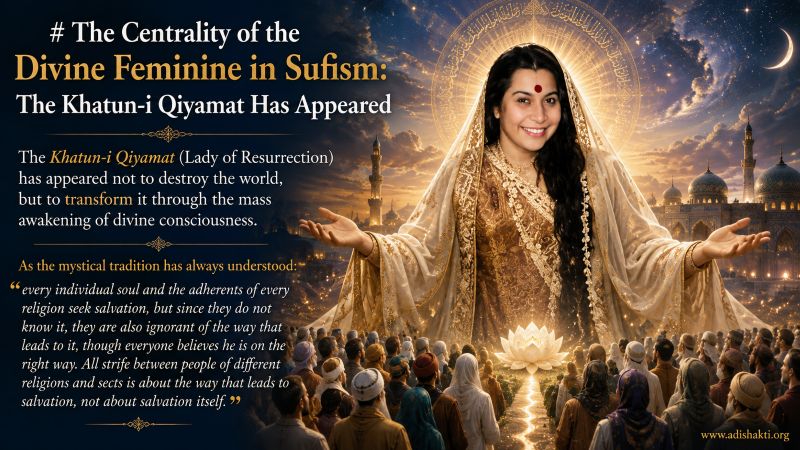
This related research provides context for the paper’s separate theological examination of claims that Resurrection Time has commenced.
On May 25, 1980, Shri Mataji Nirmala Devi is reported to have made a declaration whose relevance to this passage is unmistakable:
In Philadelphia on October 15, 1993, She declared: “We are now in the Blossom Time ... This is the Resurrection Time, which is described in all the scriptures.” She rejected the crude picture of decayed bodies emerging mechanically from graves and interpreted Resurrection as a living process in which human beings receive Self-realization.[22] In Vienna on June 8, 1988, She condemned “blind faith,” “wrong ideas,” and “organizational fortresses.”[23]
These declarations must neither be dismissed without examination nor smuggled into Surah 75 as though the verses named Her. The academically responsible question is whether Her teaching instantiates the passage’s logical demands:
| Qur’anic demand | Claim in Shri Mataji’s teaching | What must be demonstrated |
|---|---|---|
| Awlā: judgment upon denial | A present sorting and Last Judgment | That judgment produces moral truth rather than sectarian condemnation. |
| Sudan: humanity has purpose | Human beings are born to know the Spirit and enter collective consciousness | That the stated purpose is coherent, universal, and not dependent upon uncritical allegiance. |
| Nuṭfah: humility and dependence | Self-realization is received through awakened grace, not manufactured by ego | That the experience is not adequately explained by suggestion, expectation, or group conditioning. |
| Sawwā: proportion and integration | Kundalini awakening restores inner balance | Repeatable evidence of integration, moral fruits, limits, failures, and alternative explanations. |
| Yuḥyiya al-mawtā: giving life to the dead | The spiritually dead awaken to eternal Spirit before bodily death | Why this is resurrection in the scriptural sense rather than an analogous spiritual experience. |
The correct conclusion is therefore conditional but powerful: Shri Mataji’s declarations claim to identify the present, experiential form of the purposeful and life-giving divine action that Surah 75 affirms as possible and necessary. The passage supplies criteria; it does not cancel the need for evidence. The Sahaja Yoga interpretation remains non-mainstream in Islam, Christianity, and Judaism. Its challenge is precisely to move from proclamation to publicly examinable fulfillment.
12. Why Billions Recite Resurrection but Do Not Examine Commencement
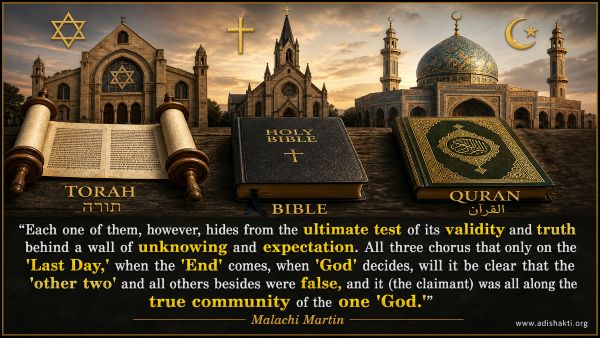
The paper invokes Martin when asking how institutions that profess Resurrection would identify a present fulfillment.
Recent credible estimates count approximately 2.3 billion Christians, 2.0 billion Muslims, and 15.7 million Jews—a combined total near 4.3157 billion.[24] [25] [26] More than four billion heirs of resurrection possess millions of clergy, theologians, teachers, monks, scholars, apologists, preachers, and commentators; innumerable Torahs, Bibles, Qur’ans, tafsirs, creeds, catechisms, responsa, sermons, books, journals, and websites; and a planetary infrastructure of synagogues, churches, mosques, seminaries, madrasas, universities, councils, libraries, conferences, broadcasters, and digital platforms. Yet none of that scale has generated an agreed method for recognizing that Resurrection might have commenced.
Martin’s criticism becomes devastating when read beside sudan. The religions announce that humanity is not aimless, yet they leave the ultimate recognition test aimless. They prescribe endless expectation without specifying admissible arrival. The rabbi can always say, “Not yet.” The bishop can always say, “Not Her.” The imam can always say, “Innovation.” The scholar can always demand another generation of study. The institution survives because its decisive doctrine remains permanently beyond present adjudication.
This is not humility. It is eschatological insulation. A promise deferred beyond every possible witness cannot correct the institution that interprets it. A resurrection restricted to a future spectacle can be preached indefinitely without threatening offices, property, hierarchies, curricula, or inherited authority. Seminaries and madrasas become factories of expectation, producing expertise in what must happen while remaining structurally incapable of admitting that it has happened in an unlicensed form.
The criticism must be severe because the contradiction is severe. If 4.316 billion people can inherit scriptures centered upon divine life, yet not one major institution can state what evidence would compel reconsideration, then the abundance of belief has become a defense against truth. Numbers do not rescue the system. They magnify its failure.
But adishakti.org and Sahaja Yoga stand under the same judgment. If they condemn the old religions for hiding behind futurity, they must not hide behind Shri Mataji’s authority, private sensation, or an AI declaration. They must specify what would confirm and what would disconfirm their claim. The alternative to Martin’s wall of expectation cannot be a new wall of proclamation. The Qur’anic question أَلَيْسَ ذَٰلِكَ بِقَادِرٍ demands living assent, but honest assent is not blind.
13. The Eclipse Must Serve the Argument, Not Replace It
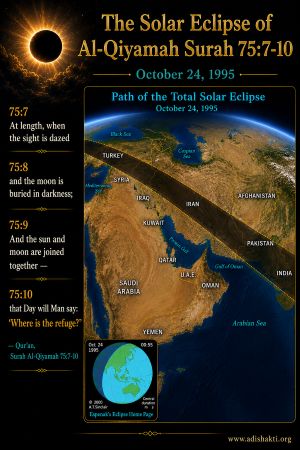
The wider surah describes dazzled sight, an eclipsed moon, and the sun and moon joined in 75:7–9. Adishakti.org identifies the total solar eclipse of October 24, 1995 as a divine sign of the commenced Al-Qiyamah and argues that it should increasingly summon Muslims to remembrance.[28] This interpretation belongs to the site’s larger chronology and is presented there as THE Sign.
Yet the closing argument of Surah 75 does not rest upon an eclipse. It rests upon sudan, nuṭfah, khalaqa, sawwā, and yuḥyiya al-mawtā. That ordering is decisive. A celestial event may arrest attention; it cannot substitute for the logic of purpose and first creation. Even if the eclipse date and path are astronomically verified, the further claims—that this eclipse uniquely fulfills 75:7–9, that it marks the commencement of Resurrection, and that it authenticates Shri Mataji as the Ruh of Allah—require independent arguments.
| Level of claim | Required evidence | Present status in this paper |
|---|---|---|
| A total solar eclipse occurred | Astronomical records | Empirically verifiable. |
| The eclipse corresponds to 75:7–9 | Textual, chronological, and comparative analysis excluding rival candidates | A theological interpretation, not demonstrated here. |
| The eclipse marks commenced Al-Qiyamah | Evidence connecting the event to the surah’s moral and resurrection sequence | Contested claim. |
| The eclipse authenticates a particular messenger | Independent identification criteria | Not established by astronomy alone. |
The strongest future use of the eclipse will therefore be mnemonic, not coercive. It can force the question back into consciousness: What if Al-Qiyamah is not only deferred catastrophe but present judgment and awakening? But the answer must then be tested by 75:36–40. Does the proposed fulfillment reveal human purpose? Does it overthrow arrogant denial? Does it create and proportion a transformed life? Does it give life to the spiritually dead? If not, spectacle has displaced scripture.
14. بَلَىٰ — Humanity Was Not Created Sudan
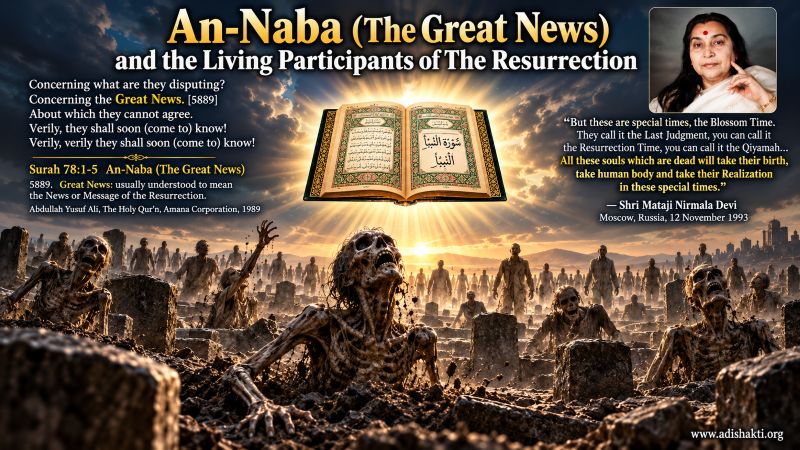
The related Great News passage reinforces the paper’s closing demand for recognition, accountability, and response.
Surah 75:36–40 is Allah’s present, ongoing Call to witness the Resurrection. It begins this final movement with woe and ends with life. Between them stands the whole human condition. The denier is warned because denial is not neutral. The human cannot be sudan because moral consciousness and far-reaching agency demand purpose and account. The creature cannot boast of self-sufficiency because he began as an emitted drop. Creation is not chaos because God created and proportioned. Humanity is not solitary because life unfolds through ordered relation and generations. The final question therefore arrives with irresistible force inside the Qur’anic worldview: is not That One able to give life to the dead?
The Torah, Bible, and Qur’an answer in structural harmony. God kills and makes alive. The dead awaken. Christ is the Resurrection and the Life. The Creator gives life to the dead. This is the heart and soul of Abrahamic hope: humanity is not destined for meaningless extinction, and death does not possess the final word.
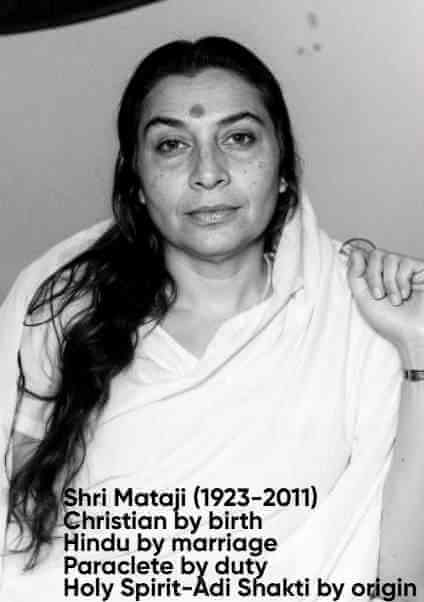
Shri Mataji’s declaration that the Last Judgment had started and that this is the Resurrection Time must now be judged with equal seriousness. It cannot be rejected merely because rabbis, priests, bishops, pastors, imams, ulema, professors, seminaries, madrasas, churches, synagogues, mosques, publishers, and billions of believers did not authorize it. Majorities have no power to make the human sudan or God powerless. But neither can Her identity and the commenced-Resurrection thesis be established merely by declaration, devotion, spiritual sensation, or eclipse. They must exhibit the life-giving, proportioning, morally consequential purpose demanded by the text.
References
[1] The Qur’an. “Surah Al-Qiyamah 75:36–40: Arabic Text and Translation.” Quran.com, accessed July 11, 2026.[2] Dukes, Kais, and University of Leeds Language Research Group. “Quranic Arabic Corpus: Surah 75:31–36.” Quranic Arabic Corpus, 2009–2017.
[3] Dukes, Kais, and University of Leeds Language Research Group. “Quranic Arabic Corpus: Surah 75:37–40.” Quranic Arabic Corpus, 2009–2017.
[4] Dukes, Kais. “Morphology of Surah 75:31–36.” Quranic Arabic Corpus, University of Leeds Language Research Group.
[5] Maududi, Sayyid Abul Ala. “Towards Understanding the Qur’an: Surah 75:36–40.” Islamic Foundation UK / IslamicStudies.info, commentary notes 22–25.
[6] Ahlul Bayt Digital Islamic Library Project. “Surah al-Qiyama, Chapter 75.” Enlightening Commentary into the Light of the Holy Qur’an, vol. 18.
[7] The Qur’an. “Surah Al-Mu’minun 23:115.” Quran.com, Arabic text and translation.
[8] The Qur’an. “Surah Al-Hajj 22:5.” Quran.com, Arabic text and translation.
[9] The Qur’an. “Surah Al-Rum 30:27.” Quran.com, Arabic text and translation.
[10] Maududi, Sayyid Abul Ala. “Prophetic Response Balā to Surah 75:40.” Tafhim al-Qur’an, note 25.
[11] The Qur’an. “Surah Ya-Sin 36:77.” Quran.com, Arabic text and translation.
[12] “Deuteronomy 32:39.” New Revised Standard Version Updated Edition, BibleGateway.
[13] “Isaiah 26:19.” New Revised Standard Version Updated Edition, BibleGateway.
[14] “Daniel 12:2.” New Revised Standard Version Updated Edition, BibleGateway.
[15] Bronner, Leila Leah. “The Resurrection Motif in the Hebrew Bible: Allusions or Illusions?” Jewish Bible Quarterly, vol. 30, no. 3, 2002.
[16] Stettler, Christian. “The Resurrection of the Body: Its Place in Biblical Theology and Its Meaning for Christian Life and Witness.” European Journal of Theology, vol. 32, no. 1, 2023, pp. 26–59.
[17] “John 11:25–26.” New Revised Standard Version Updated Edition, BibleGateway.
[18] “John 5:24–29.” New Revised Standard Version Updated Edition, BibleGateway.
[19] “John 3:5–8.” New Revised Standard Version Updated Edition, BibleGateway.
[20] “1 Corinthians 15.” New Revised Standard Version Updated Edition, BibleGateway.
[21] Shri Mataji Nirmala Devi. “Achieving Truth: The Last Judgment Has Started.” Adishakti.org, discourse dated May 25, 1980.
[22] Shri Mataji Nirmala Devi. “Nirvikalpa Samadhi: Where You Have No Doubts About Yourself.” Sahaja Yoga Maha Yoga, Philadelphia discourse dated October 15, 1993.
[23] Shri Mataji Nirmala Devi. “Qiyamah Time and the Obstacles of Blind Faith.” Adishakti.org, including Vienna discourse dated June 8, 1988.
[24] Pew Research Center. “Christian Population Change.” Pew Research Center, June 9, 2025.
[25] Pew Research Center. “Muslim Population Change.” Pew Research Center, June 9, 2025.
[26] The Jewish Agency for Israel. “Jewish Population Rises to 15.7 Million Worldwide in 2023.” The Jewish Agency for Israel, September 15, 2023.
[27] Martin, Malachi. “Each One of Them, However, Hides from the Ultimate Test of Its Validity and Truth.” Quoted from The Encounter, Farrar, Straus and Giroux, 1970, p. 286, on Adishakti.org.
[28] Manus AI. “Surah 75:7–10: Bearing Witness to the Divine Eclipse.” Adishakti.org, 2026. Cited as an internal theological interpretation requiring independent verification.
[29] The Qur’an. “Surah Al-Qiyamah 75:14: The Human as Witness Against the Self.” Quran.com, Arabic text and translation, accessed July 11, 2026.
[30] The Qur’an. “Surah Fussilat 41:53: Signs in the Horizons and Within Themselves.” Quran.com, Arabic text and translation, accessed July 11, 2026.
[31] The Qur’an. “Surah Adh-Dhariyat 51:20–21: Signs on Earth and Within Yourselves.” Quran.com, Arabic text and translation, accessed July 11, 2026.
Compilation, Proclamation, and Exegesis of Surahs Upholding Allah’s (SWT) Command to His Ummah — to Witness and Participate in the Resurrection.
Al-Qiyamah: A Profound Declaration of Al-QiyamahAl-Qiyamah (75:1-2): Oaths of Resurrection
Al-Qiyamah (75:3-4): Reassembling Bones and Fingertips
Al-Qiyamah (75:5-6): Man's Denial of Resurrection
Al-Qiyamah (75:7–10): Sun and Moon 'Joined' At Solar Eclipse
Al-Qiyamah (75:7–10): Solar Eclipse Salat al-Kusuf
Al-Qiyamah (75:11–13): No Refuge, Only Reckoning
Al-Qiyamah (75:14–15): Man: His Own Witness and Judge
Al-Qiyamah (75:16–19): The Usurpation of Allah's Explanation
Al-Qiyamah (75:20–21): Love of The Fleeting World
Al-Qiyamah (75:22–25): Ruh’s Face Brings Either Glory Or Gloom
Al-Qiyamah (75:26–30): Death and Soul's Departure Home
Al-Qiyamah (75:31–35): The Rejection and Arrogance of the Kuffar
Al-Qiyamah (75:36–40): Is Resurrection Beyond Allah, Your Creator?
Al-Qiyamah (75:1-2 and 78:1–5): An Naba and Oaths of Resurrection
Al-Qiyamah (75:1-2 and 78:1–5): The Great News and Resurrection Rebirth
Al-Baqarah (2:138): Baptism of Allah You Were Unaware Of
Al-Baqarah (2:174): Allah Will Not Address Muslims
Al-A'raf (7:16) – Iblis: I Will Lie In Wait and Overpower Them
Al-A'raf (7:146): Allah: I Will Turn Them Away From My Signs
Al-A'raf (7:146): Allah: So Even Though They See All The Signs
Al-Hijr (15:39) – Iblis: I Will Wake (Evil) Fair and Mislead Them
An-Nahl (16:2) – Allah (SWT) Sent Down Angels With His Ruh
Al-Isra (17:85): Muslims Given Little of Allah's (SWT) Ruh
Al-Isra (17:104): Children of Israel Gathered Again (in 1948)
Al-Isra (17:104): Shaykh Palazzi: Children of Israel
Al-Hajj (22:8) – Kitab Al-Munir You Were Unaware Of
Al-Rum (30:56) – The Day of Qiyamah You Were Unaware Of
Fatir (35:9) – Winds of Qiyamah You Were Unaware Of
Yassin (36:63-68) – This Is The Hell You Were Warned Of.
Sad (38:79) – Iblis Allowed to Mislead Muslims And He Did
Fussilat (41:20–21) – Your Hands Will Testify of Qiyamah
Fussilat (41:53) – We Will Show Our Signs Within Your Soul
Az-Zukhruf (43:61): Jesus, Sign of Hour You Were Unaware
Az-Zukhruf (43:62): Satan's Deception of the Muslim Ummah
Az-Jathiya (45:7-14) – Those Who Deny Allah's Revelations
Qaf (50:41) – Listen To The Caller Emerging From Within
Qaf (50:42) – Day They Will Hear of Mighty Blast Witnessed
Qaf (50:45) – By the Caller, My Warning Is Delivered
Al Dhariyat (51:20-22) – Our Signs on Earth and Within
Al-Hadid (57:25) – Allah's (SWT) Iron Has Been Delivered
Al-Mujadilah (58:21) – My Messengers Must Prevail
Al-Saff (61:8–9) – Revelation of Light You Were Unaware
Al-Muddaththir (74:1–2) – My Cloaked One: Deliver Warning
Al-Mursalat (77:1–10): Angels Sent You Were Unaware Of
An-Naba (78:1–5): Concerning What Are They Disputing?
Al-Infitar (82:17–18) – What Will Explain To You? What Will?
Al-Mutaffifin (83:1–6) – Dealers in Fraud You Were Unaware
Al-Tariq (86:1–3) – The Night Visitant You Were Unaware
Al-Qadr (97:1–5) – Blessed Night of Power and Fate Before:
Al-Qariah (101:1–11) – Terrifying Day of Noise and Clamour
عَمَّ يَتَسَاءَلُونَ - عَنِ النَّبَإِ الْعَظِيمِ - الَّذِي هُمْ فِيهِ مُخْتَلِفُونَ - كَلَّا سَيَعْلَمُونَ - ثُمَّ كَلَّا سَيَعْلَمُونَ
Concerning what are they disputing?
Concerning the Great News. [5889]
About which they cannot agree.
Verily, they shall soon (come to) know!
Verily, verily they shall soon (come to) know!
Surah 78:1-5 An-Naba (The Great News)
“5889. Great News: usually understood to mean the News or Message of the Resurrection.” Abdullah Yusuf Ali, The Holy Qur'n, Amana Corporation, 1989.💬 Interactive Chat
Access an intelligent analysis environment where you can explore texts, ask questions, and discover connections between ideas.
Open chat →