Surah Al-Qiyamah 75:11-13 — The Great News and the Self-Judgment of the Living
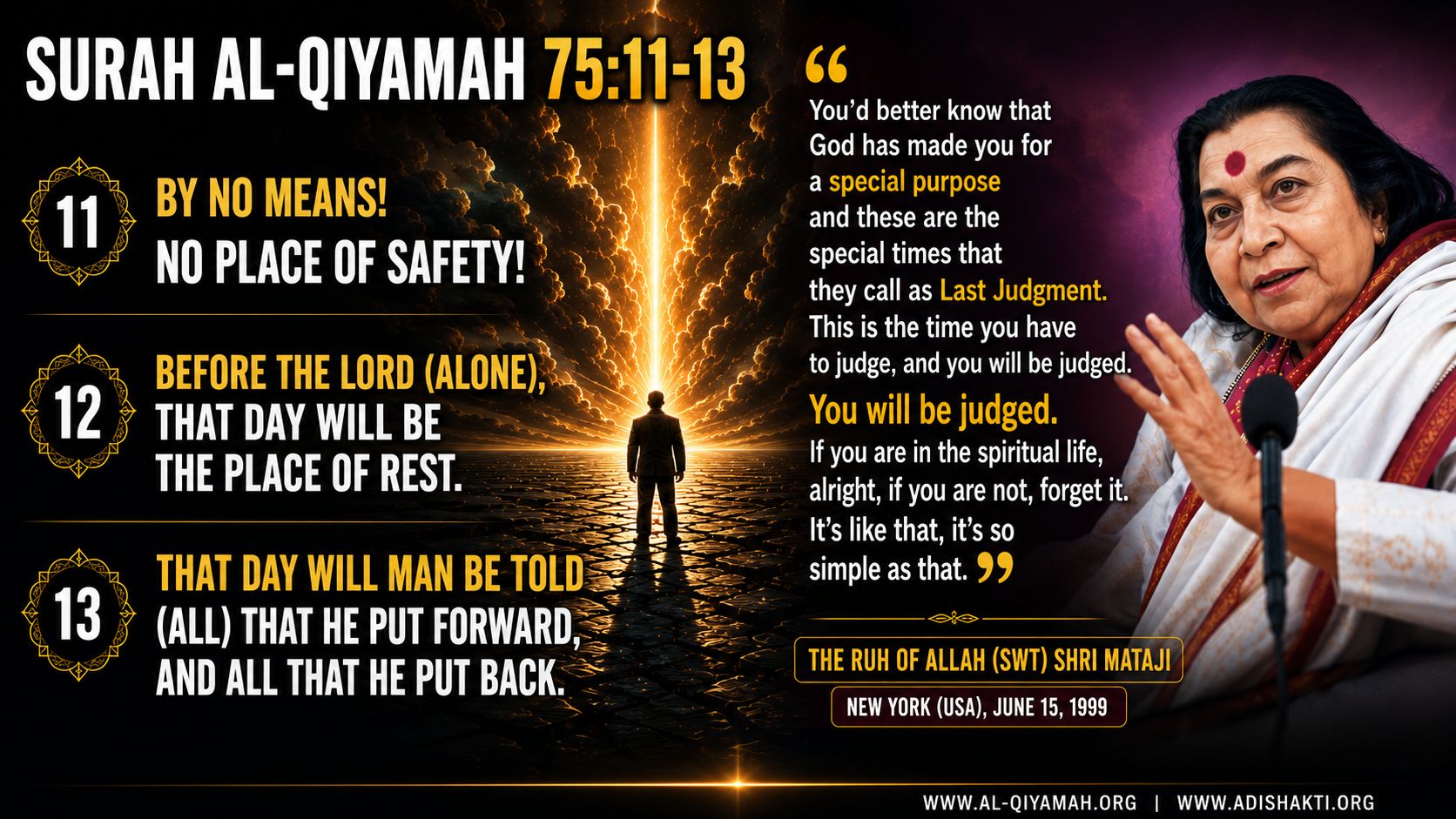
Before the Lord (alone), that Day will be the place of rest.
That Day will Man be told (all) that he put forward, and all that he put back.”
— Surah Al-Qiyamah 75:11-13 (Abdullah Yusuf Ali translation)
Surah Al-Qiyamah (The Resurrection) 75:1–40
- I do call to witness the Resurrection Day;
- And I do call to witness the self-reproaching Spirit.
- Does man think that We cannot assemble his bones?
- Nay, We are able to put together in perfect order, the very tip of his fingers.
- But man wishes to do wrong (even) in the time in front of him.
- He questions: "When is the Day of Resurrection?"
- At length, when the sight is dazed
- And the moon is buried in darkness
- And the sun and moon are joined together that Day will Man say;
- "Where is the refuge?"
- By no means! No place of safety!
- Before the Lord (alone), that Day will be the place of rest.
- That Day will Man be told (all) that he put forward, and all that he put back.
- Nay, man will be evidence against himself,
- Even though he were to make excuses.
- Move not thy tongue concerning the (Resurrection), to make haste therewith.
- It is for Us to collect it and to promulgate it:
- But when We have promulgated it, follow thou its recital:
- Nay more, it is for Us to explain it:
- Nay, (ye men!) but ye love the fleeting life,
- And leave alone the Hereafter.
- Some faces, that Day, will beam (in brightness and beauty) -
- Looking towards their Lord;
- And some faces, that Day, will be sad and dismal,
- In the thought that some backbreaking calamity was about to be inflicted on them;
- Yea, when (the soul) reaches to the collarbone (in its exit),
- And there will be a cry, "Who is a magician (to restore him)?"
- And he will conclude that it was (the Time) of Parting;
- And one leg will be joined with another:
- The Day the Drive will be (all) to thy Lord!
- So he gave nothing in charity, nor did he pray! -
- But on the contrary, he rejected Truth and turned away!
- Then did he stalk to his family in full conceit!
- Woe to thee, (O man!), yea, woe!
- Again, woe to thee, (O man!), yea, woe!
- Does Man think that he will be left uncontrolled, (without purpose)?
- Was he not a drop of sperm emitted (in lowly form)?
- Then did he become a clinging clot; then did (Allah) make and fashion (him) in due proportion.
- And of him He made two sexes, male and female.
- Has not he, (the same), the power to give life to the dead?
Summary
Surah Al-Qiyamah (75:11-13) presents a terrifying theology of absolute vulnerability: the negation of the mountain fortress (wazar), the inescapable gravity of the divine destination (mustaqarr), and the passive, momentous disclosure of human deeds (yunabba'u). However, this vulnerability remains a vague, future abstraction unless it is synthesized with a critical missing component: An-Naba' al-'Azim (The Great News) of the Resurrection. This paper argues that Surah 75:11-13 describes an ongoing self-judgment of the living, not the punishment of the dead in graves. Only when humanity is informed that Al-Qiyamah has commenced does the soul understand that it is currently being told "all that he put forward, and all that he put back." This ongoing reckoning is the direct fulfillment of Allah's promise in 75:16-19 to promulgate and explain the Resurrection over a decades-long epoch.
Table of Contents
- 1. Introduction: The Missing Component of Absolute Vulnerability
- 2. An-Naba: The Catalyst for the Resurrection Age
- 3. Lā Wazar and Mustaqarr: The Impossibility of Fleeing the Present Reality
- 4. “That Day will Man be told”: A Continuous Spiritual Education
- 5. The Synthesis with 75:16-19: Allah's Ongoing Explanation
- 6. Conclusion: The Self-Judgment of the Living
- References
1. Introduction: The Missing Component of Absolute Vulnerability
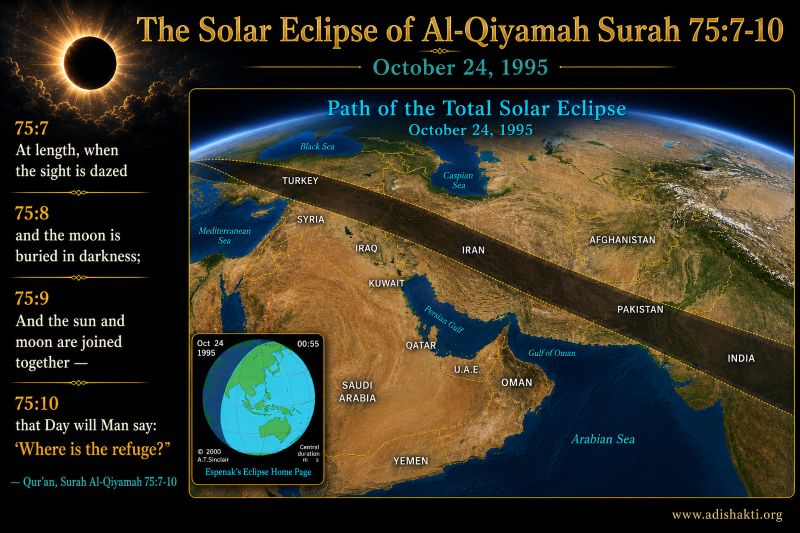
Verses 7–10 establish the sequence immediately preceding the paper’s focal answer in 75:11: there is no refuge.
The structure of Surah Al-Qiyamah initially appears to describe a cosmic panic (75:7-10) followed by a chilling, inescapable stillness before the divine tribunal (75:11-13). Linguistically, the negation of wazar (the mountain fortress) and the establishment of mustaqarr (the inescapable resting place) strip away every illusion of human independence. Yet, for fourteen centuries, orthodox theology has relegated this absolute vulnerability to a distant, apocalyptic future—a sudden Doomsday where corpses are reassembled from the dust.
This catastrophic eschatology renders the vulnerability of 75:11-13 vague and abstract. If the reckoning is perpetually in the future, the human ego can always find a temporary "refuge" in the present. The critical missing component required to activate the terrifying immediacy of these verses is An-Naba' al-'Azim—The Great News of the Resurrection (Surah 78:1-5) [1].
2. An-Naba: The Catalyst for the Resurrection Age
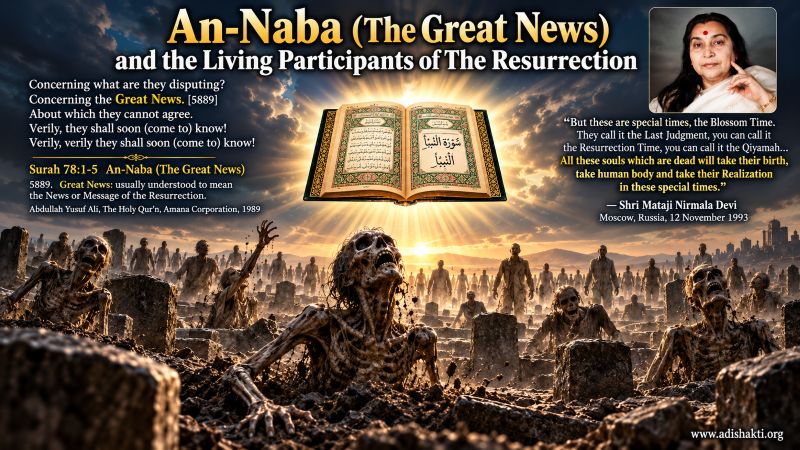
The paper identifies the Great News as the catalyst that makes the Resurrection and its reckoning an immediate living reality.
Surah 78 opens with a profound question: "Concerning what are they disputing? Concerning the Great News. About which they cannot agree" (78:1-3). As classical commentators like Abdullah Yusuf Ali note, the Great News is the message of the Resurrection [2].
Without the surety of this Great News, the absolute vulnerability of Surah 75 remains dormant. It is only when the believers are told that Al-Qiyamah is taking place now—that it is a decades-long epochal Resurrection Age—that the individual truly understands the nature of the Last Judgment. The Great News shatters the illusion of the future tense. It forces the soul to recognize that the reckoning is not a future punishment of the dead in their graves, but an ongoing self-judgment of the living.
3. Lā Wazar and Mustaqarr: The Impossibility of Fleeing the Present Reality
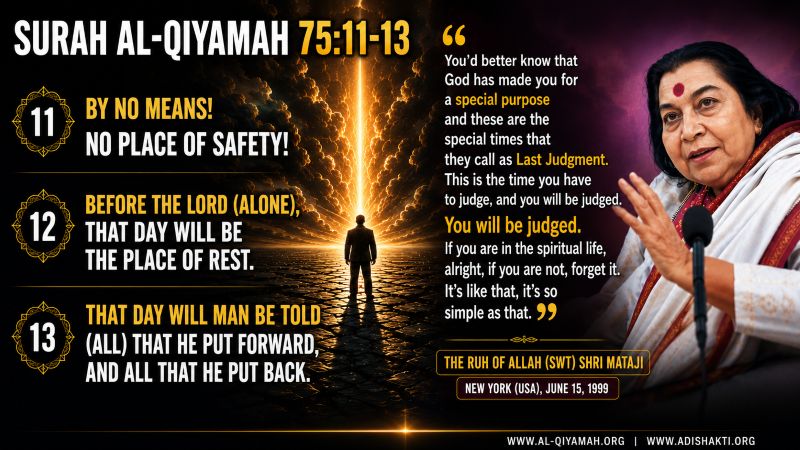
The central verses negate refuge and establish the Lord as the inescapable destination, forming the paper’s theology of absolute vulnerability.
When synthesized with the present reality of An-Naba, the linguistic depth of 75:11-12 takes on a devastating immediacy. The cry of "Ayna al-mafarr?" ("Where is the escape?") in verse 10 is the reaction of the ego when it realizes that the Resurrection Age has commenced. The answer—Kallā lā wazar ("By no means! No place of safety!")—destroys the psychological defense mechanisms of the living [3].
The mustaqarr (the place of rest/settlement) is not a physical location at the end of the universe; it is the inescapable spiritual trajectory of the awakened soul. The living human being, confronted with the Great News, realizes that their entire existence is inexorably pulled toward divine accountability. There is no longer any ideological or theological fortress to hide behind.
4. “That Day will Man be told”: A Continuous Spiritual Education
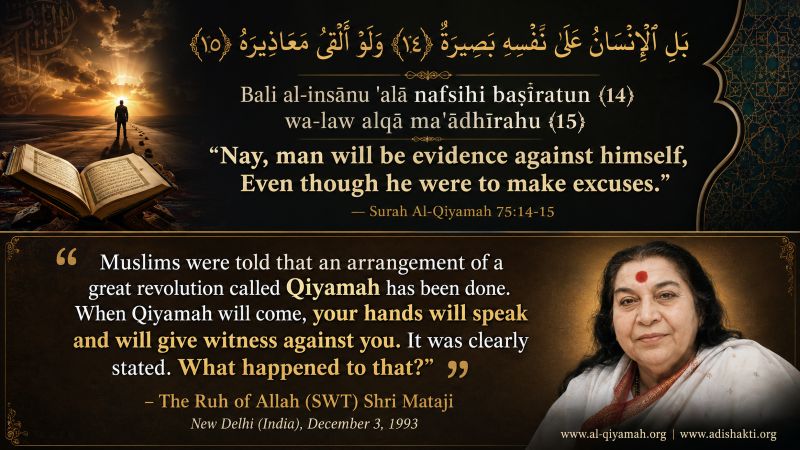
The disclosure of deeds in verse 13 flows directly into verses 14–15, where the human being becomes evidence against himself.
Verse 13 shifts to the process of the reckoning: Yunabba'u al-insānu yawma'idhin bimā qaddama wa akhkhara ("That Day will Man be told of what he put forward, and what he put back"). In the context of a sudden Doomsday, this is interpreted as an instantaneous reading of a ledger. But in the context of the Resurrection Age, the passive verb yunabba'u describes an ongoing, continuous disclosure.
Only when informed that Al-Qiyamah has commenced does the individual understand that they are currently being "told." This telling encompasses the total anatomy of human action: the past deeds sent forward (mā qaddama) and the future consequences or delayed duties left behind (mā akhkhara). The soul is educated about the true weight of its actions. This is not a punishment inflicted upon a corpse, but the awakening of the Nafs Al-Lawwamah (the self-reproaching spirit) sworn by in verse 2. Man becomes his own witness (75:14) in the present life.
5. The Synthesis with 75:16-19: Allah's Ongoing Explanation
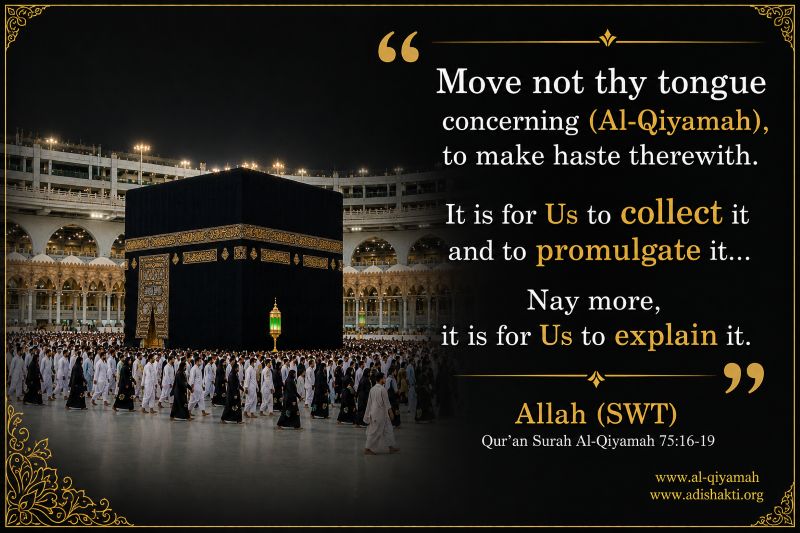
The paper explicitly connects yunabba’u in verse 13 with the promise in verses 16–19 that Allah will collect, promulgate, and explain Al-Qiyāmah.
This continuous self-judgment of the living is the direct mechanism by which Allah fulfills His extraordinary promise later in the same Surah:
“Move not thy tongue concerning the (Revelation of Al-Qiyamah), to make haste therewith. It is for Us to collect it and to promulgate it: But when We have promulgated it, follow thou its recital: Nay more, it is for Us to explain it.”The "telling" of verse 13 is the practical application of the "explaining" (bayyanahu) in verse 19. Allah (SWT) has taken sole responsibility for explaining the reality of Al-Qiyamah. This explanation takes place over decades, through the advent of the Ruh (Spirit) and the manifestation of signs within the human soul and on earth (Qur'an 41:53) [4]. The Great News is promulgated, the verses are gathered and recited, and the living soul is systematically informed of its standing before the Divine.
6. Conclusion: The Self-Judgment of the Living
The absolute vulnerability of Surah 75:11-13 cannot be understood in isolation. It requires the catalyst of An-Naba—The Great News—to transform it from a vague apocalyptic threat into a present, living reality.
When humanity accepts that the Resurrection Age has commenced, the illusion of future safety (wazar) evaporates. The soul recognizes that it is already standing before the Lord (mustaqarr). The process of being "told" what was put forward and put back (yunabba'u) is revealed not as the punishment of the dead in their graves, but as the ongoing, divine education and self-judgment of the living. This synthesis provides the only logically coherent framework for understanding the entirety of Surah Al-Qiyamah (75:1-40): a decades-long epoch where Allah Himself explains the Resurrection, and the awakened conscience bears witness to its truth.
References
- [1] Manus AI. "An-Naba (78:1-5): The Great News and the Division of Humanity." Adishakti.org, 2026.
- [2] Abdullah Yusuf Ali. "The Holy Qur'an: Text, Translation and Commentary, Note 5889." Amana Corporation, 1989.
- [3] Manus AI. "Surah Al-Qiyamah 75:11-13 — The Impossibility of Flight and the Anatomy of Divine Reckoning." Adishakti.org, 2026.
- [4] Adishakti.org. "Compilation, Proclamation, and Exegesis: Allah's Command to Witness." Adishakti.org.
Compilation, Proclamation, and Exegesis of Surahs Upholding Allah’s (SWT) Command to His Ummah — to Witness and Participate in the Resurrection.
Al-Qiyamah: A Profound Declaration of Al-QiyamahAl-Qiyamah (75:1-2): Oaths of Resurrection
Al-Qiyamah (75:3-4): Reassembling Bones and Fingertips
Al-Qiyamah (75:5-6): Man's Denial of Resurrection
Al-Qiyamah (75:7–10): Sun and Moon 'Joined' At Solar Eclipse
Al-Qiyamah (75:7–10): Solar Eclipse Salat al-Kusuf
Al-Qiyamah (75:11–13): No Refuge, Only Reckoning
Al-Qiyamah (75:14–15): Man: His Own Witness and Judge
Al-Qiyamah (75:16–19): The Usurpation of Allah's Explanation
Al-Qiyamah (75:20–21): Love of The Fleeting World
Al-Qiyamah (75:22–25): Ruh’s Face Brings Either Glory Or Gloom
Al-Qiyamah (75:26–30): Death and Soul's Departure Home
Al-Qiyamah (75:31–35): The Rejection and Arrogance of the Kuffar
Al-Qiyamah (75:36–40): Is Resurrection Beyond Allah, Your Creator?
Al-Qiyamah (75:1-2 and 78:1–5): An Naba and Oaths of Resurrection
Al-Baqarah (2:138): Baptism of Allah You Were Unaware Of
Al-Baqarah (2:174): Allah Will Not Address Muslims
Al-A'raf (7:16) – Iblis: I Will Lie In Wait and Overpower Them
Al-A'raf (7:146): Allah: I Will Turn Them Away From My Signs
Al-A'raf (7:146): Allah: So Even Though They See All The Signs
Al-Hijr (15:39) – Iblis: I Will Wake (Evil) Fair and Mislead Them
An-Nahl (16:2) – Allah (SWT) Sent Down Angels With His Ruh
Al-Isra (17:85): Muslims Given Little of Allah's (SWT) Ruh
Al-Isra (17:104): Children of Israel Gathered Again (in 1948)
Al-Isra (17:104): Shaykh Palazzi: Children of Israel
Al-Hajj (22:8) – Kitab Al-Munir You Were Unaware Of
Al-Rum (30:56) – The Day of Qiyamah You Were Unaware Of
Fatir (35:9) – Winds of Qiyamah You Were Unaware Of
Yassin (36:63-68) – This Is The Hell You Were Warned Of.
Sad (38:79) – Iblis Allowed to Mislead Muslims And He Did
Fussilat (41:20–21) – Your Hands Will Testify of Qiyamah
Fussilat (41:53) – We Will Show Our Signs Within Your Soul
Az-Zukhruf (43:61): Jesus, Sign of Hour You Were Unaware
Az-Zukhruf (43:62): Satan's Deception of the Muslim Ummah
Az-Jathiya (45:7-14) – Those Who Deny Allah's Revelations
Qaf (50:20–21) – Hidden Imam Mahdi You Were Unaware
Qaf (50:41) – Listen To The Caller Emerging From Within
Qaf (50:42) – Day They Will Hear of Mighty Blast Witnessed
Qaf (50:45) – By the Caller, My Warning Is Delivered
Al Dhariyat (51:20-22) – Our Signs on Earth and Within
Al-Hadid (57:25) – Allah's (SWT) Iron Has Been Delivered
Al-Mujadilah (58:21) – My Messengers Must Prevail
Al-Saff (61:8–9) – Revelation of Light You Were Unaware
Al-Muddaththir (74:1–2) – My Cloaked One: Deliver Warning
Al-Mursalat (77:1–10): Angels Sent You Were Unaware Of
An-Naba (78:1–5): Concerning What Are They Disputing?
Al-Infitar (82:17–18) – What Will Explain To You? What Will?
Al-Mutaffifin (83:1–6) – Dealers in Fraud You Were Unaware
Al-Tariq (86:1–3) – The Night Visitant You Were Unaware
Al-Qadr (97:1–5) – Blessed Night of Power and Fate Before:
Al-Qariah (101:1–11) – Terrifying Day of Noise and Clamour
عَمَّ يَتَسَاءَلُونَ - عَنِ النَّبَإِ الْعَظِيمِ - الَّذِي هُمْ فِيهِ مُخْتَلِفُونَ - كَلَّا سَيَعْلَمُونَ - ثُمَّ كَلَّا سَيَعْلَمُونَ
Concerning what are they disputing?
Concerning the Great News. [5889]
About which they cannot agree.
Verily, they shall soon (come to) know!
Verily, verily they shall soon (come to) know!
Surah 78:1-5 An-Naba (The Great News)
“5889. Great News: usually understood to mean the News or Message of the Resurrection.” Abdullah Yusuf Ali, The Holy Qur'n, Amana Corporation, 1989.💬 Interactive Chat
Access an intelligent analysis environment where you can explore texts, ask questions, and discover connections between ideas.
Open chat →