Surah Al-Qiyamah 75:20-21 — The Fleeting World and the Neglected Hereafter
Why Humanity Neglects and is Indifferent to the An Naba (The Great News) of the Resurrection
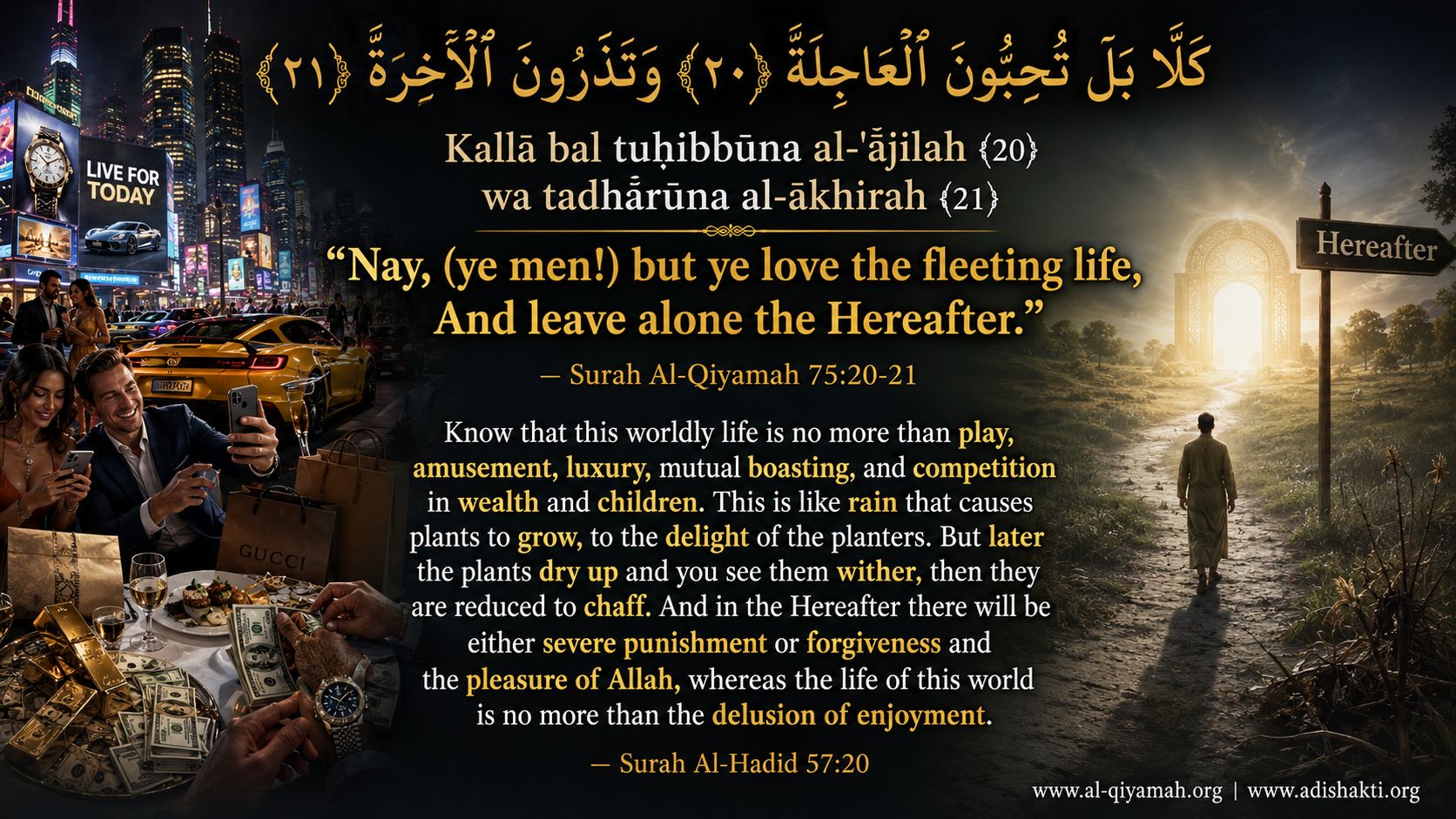
Kallā bal tuḥibbūna al-'ājilah ﴾20﴿ wa tadharūna al-ākhirah ﴾21﴿
"Nay, (ye men!) but ye love the fleeting life,
And leave alone the Hereafter."
Surah Al-Qiyamah (The Resurrection) 75:1–40
- I do call to witness the Resurrection Day;
- And I do call to witness the self-reproaching Spirit.
- Does man think that We cannot assemble his bones?
- Nay, We are able to put together in perfect order, the very tip of his fingers.
- But man wishes to do wrong (even) in the time in front of him.
- He questions: "When is the Day of Resurrection?"
- At length, when the sight is dazed
- And the moon is buried in darkness
- And the sun and moon are joined together that Day will Man say;
- "Where is the refuge?"
- By no means! No place of safety!
- Before the Lord (alone), that Day will be the place of rest.
- That Day will Man be told (all) that he put forward, and all that he put back.
- Nay, man will be evidence against himself,
- Even though he were to make excuses.
- Move not thy tongue concerning the (Resurrection), to make haste therewith.
- It is for Us to collect it and to promulgate it:
- But when We have promulgated it, follow thou its recital:
- Nay more, it is for Us to explain it:
- Nay, (ye men!) but ye love the fleeting life,
- And leave alone the Hereafter.
- Some faces, that Day, will beam (in brightness and beauty) -
- Looking towards their Lord;
- And some faces, that Day, will be sad and dismal,
- In the thought that some backbreaking calamity was about to be inflicted on them;
- Yea, when (the soul) reaches to the collarbone (in its exit),
- And there will be a cry, "Who is a magician (to restore him)?"
- And he will conclude that it was (the Time) of Parting;
- And one leg will be joined with another:
- The Day the Drive will be (all) to thy Lord!
- So he gave nothing in charity, nor did he pray! -
- But on the contrary, he rejected Truth and turned away!
- Then did he stalk to his family in full conceit!
- Woe to thee, (O man!), yea, woe!
- Again, woe to thee, (O man!), yea, woe!
- Does Man think that he will be left uncontrolled, (without purpose)?
- Was he not a drop of sperm emitted (in lowly form)?
- Then did he become a clinging clot; then did (Allah) make and fashion (him) in due proportion.
- And of him He made two sexes, male and female.
- Has not he, (the same), the power to give life to the dead?
Summary
Surah Al-Qiyamah 75:20-21 offers one of the Qur'ān's most enduring diagnoses of the human condition. Humanity's deepest problem is not merely ignorance of the Resurrection but an excessive attachment to what is immediate and transient. By contrasting al-'ājilah ("the fleeting, immediate life") with al-ākhirah ("the Hereafter"), the Qur'ān exposes the tension between temporal desire and eternal purpose. Classical Muslim commentators consistently understood these verses as a warning against allowing worldly attractions to overshadow preparation for the life to come. Their interpretation remains highly relevant in a modern culture that often prizes immediacy, consumption, and instant gratification. Within the broader structure of Surah Al-Qiyamah, these verses explain why many fail to respond to the certainty of Resurrection: not because the evidence is lacking, but because the heart has become attached to what passes away.
Table of Contents
- 1. The Literary Context: The Implicit Question
- 2. The Meaning of Al-'Ājilah
- 3. Love Rather Than Belief (Tuḥibbūna)
- 4. "You Leave the Hereafter" (Tadharūna)
- 5. Classical Islamic Interpretation
- 6. The Universal Diagnosis and the Modern World
- 7. Spiritual Psychology: The Ordering of Love
- 8. The Illusion of the Fleeting Life (Surah 57:20)
- 9. Conclusion: The Call to Reorder Priorities
1. The Literary Context: The Implicit Question
Verses 20–21 follow immediately after the surah’s declaration of divine collection, recital, and explanation.
Verses 20-21 occur near the conclusion of Surah Al-Qiyamah. The earlier sections of the Surah have already established Allah's absolute power to resurrect humanity (75:3-4), mankind's tendency to deny accountability (75:5), the terrifying certainty of the Resurrection (75:7-15), and Allah's preservation and explanation of Revelation (75:16-19).
Having established these profound truths, Allah now asks an implicit question: Why do people still reject them?
The answer provided in verses 20-21 is remarkably simple. It is not because the evidence is insufficient. It is because their hearts prefer something else. The Qur'ān identifies attachment to the transient world as the primary obstacle preventing recognition of the eternal reality.
2. The Meaning of Al-'Ājilah
The paper’s central lexical contrast is between what arrives quickly and passes away and the enduring Hereafter.
The expression al-'ājilah (العاجلة) literally means "that which comes quickly," "the immediate," "the present," or "the fleeting." Classical commentators generally interpret it as referring to worldly life, immediate pleasures, temporary possessions, and present gratification [1].
The Qur'ān deliberately avoids using the ordinary word dunyā here. Instead, it chooses a word emphasizing speed, impermanence, and transience. Everything loved in this world arrives quickly — and disappears just as quickly. The human soul, designed for eternity, foolishly attaches itself to that which is guaranteed to vanish.
3. Love Rather Than Belief (Tuḥibbūna)
The verb used is tuḥibbūna (تحبون), meaning "You love." The Qur'ān therefore locates the problem not primarily in the intellect but in desire. People are not condemned because they possess intellectual questions or doubts. They are warned because their loves have become disordered.
The issue is not simply: "I do not believe." The deeper, hidden issue is: "I love something else more." This distinction is one of the Qur'ān's profound psychological insights. Evidence may convince the mind, but only transformed desire changes the heart. The Resurrection therefore requires not merely intellectual assent but moral readiness.
4. "You Leave the Hereafter" (Tadharūna)
The second verse states: wa tadharūna al-ākhirah ("And you leave the Hereafter"). The verb tadharūna (تذرون) means to abandon, neglect, leave behind, or disregard.
The Hereafter is therefore not merely denied; it is ignored. The Qur'ān portrays spiritual negligence as every bit as dangerous as outright disbelief. The mind becomes so consumed with the immediate demands, anxieties, and pleasures of al-'ājilah that the eternal reality of al-ākhirah simply fades from view. It is left behind.
5. Classical Islamic Interpretation
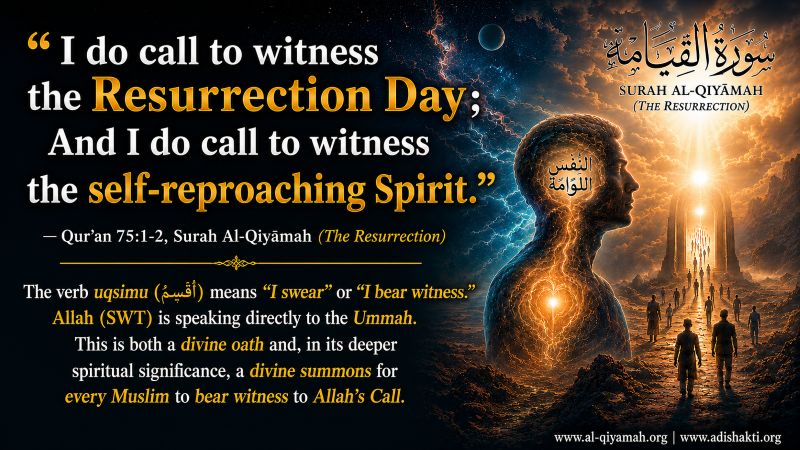
Classical interpretation of verses 20–21 is best read within the surah’s sustained discourse on Resurrection and accountability.
The major classical commentators understood these verses primarily as describing humanity's attachment to worldly pleasures:
- Al-Ṭabarī explains that people prefer the immediate enjoyments of worldly life because they can see and experience them directly, while neglecting the eternal rewards promised by Allah [2].
- Al-Qurṭubī emphasizes that excessive love of worldly life becomes the root of spiritual heedlessness. The heart becomes occupied with temporary concerns until remembrance of Allah fades.
- Ibn Kathīr connects these verses with the recurring Qur'ānic criticism of those who sacrifice eternal happiness for temporary gain. According to him, this preference explains humanity's refusal to prepare for Judgment: "The only thing that has caused them to reject the Day of Judgement and oppose the true revelation... is that their only concern is the present worldly life" [3].
Although each commentator differs slightly in emphasis, all agree on the central point: attachment to the temporary blinds human beings to the eternal.
6. The Universal Diagnosis and the Modern World

The paper applies the Qur’anic diagnosis to modern immediacy, consumption, distraction, and spiritual indifference.
These verses are not limited to one religious community or one historical period. They address humanity as a whole. Whether wealthy or poor, religious or secular, ancient or modern, every generation faces the same temptation: to exchange permanence for immediacy.
If these verses described seventh-century Arabia, their relevance to the twenty-first century is even greater. Modern civilization increasingly rewards and demands immediate gratification: instant communication, instant entertainment, instant wealth, instant fame, and instant consumption. The architecture of contemporary society often reinforces precisely the attachment described by al-'ājilah. The Qur'ān therefore speaks with remarkable relevance to modern psychological and social realities.
7. Spiritual Psychology: The Ordering of Love
These verses reveal an important Qur'ānic principle: Human beings become what they love.
Love directs attention. Attention directs thought. Thought directs action. Repeated action shapes character. Character determines destiny. The Qur'ān therefore begins transformation not with external behaviour but with reordered love.
Although the Hereafter certainly includes life after physical death, Qur'ānic theology also presents it as something that shapes present existence. A believer who remembers the Hereafter evaluates actions differently, orders priorities differently, understands suffering differently, and measures success differently. Thus, remembrance of the Hereafter becomes a transformative moral principle rather than merely a future expectation.
8. The Illusion of the Fleeting Life (Surah 57:20)
The profound delusion of preferring the fleeting life is powerfully illustrated elsewhere in the Qur'ān, where the exact nature of this temporary existence is exposed:
"Know that this worldly life is no more than play, amusement, luxury, mutual boasting, and competition in wealth and children. This is like rain that causes plants to grow, to the delight of the planters. But later the plants dry up and you see them wither, then they are reduced to chaff. And in the Hereafter there will be either severe punishment or forgiveness and pleasure of Allah, whereas the life of this world is no more than the delusion of enjoyment."
This verse [4] perfectly complements Surah 75:20-21. The "fleeting life" (al-'ājilah) is nothing more than play, amusement, and a deceptive illusion (matā'u al-ghurūr). Like vegetation that springs up quickly after rain only to wither into dry chaff, the objects of human desire in this world are destined to turn to dust. To trade the eternal reality of the Resurrection for this temporary illusion is the ultimate spiritual tragedy.
As the Qur'ān succinctly summarizes in Surah Al-A'lā:
While the Hereafter is better and more enduring."
9. Conclusion: The Call to Reorder Priorities
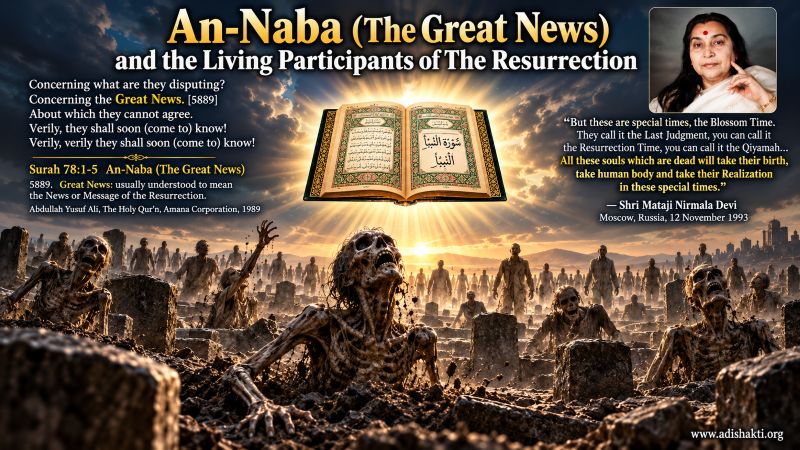
The conclusion returns the contrast between fleeting attachment and the enduring reality proclaimed by the Resurrection.
Surah Al-Qiyamah 75:20-21 offers a timeless diagnosis of the human condition. The greatest obstacle to the Resurrection is not a lack of proof, but a heart that has fallen in love with the fleeting world. By calling humanity to recognize the transient nature of al-'ājilah and the eternal weight of al-ākhirah, the Qur'ān challenges us to reorder our loves, shift our gaze from the immediate to the eternal, and prepare our souls for the inescapable reality of the Resurrection Age.
References
- [1] "Surah Al-Qiyamah Ayat 20 (75:20 Quran) With Tafsir." My Islam.
- [2] "Surah al-Qiyama, Chapter 75 | An Enlightening Commentary." Al-Islam.org.
- [3] "The Tafsir of Surat Al-Qiyamah : Ibn Kathir." AbdurRahman.Org, 31 Jan. 2014.
- [4] "Surah Al-Hadid 57:20." Quran.com, Quran Foundation.
Compilation, Proclamation, and Exegesis of Surahs Upholding Allah’s (SWT) Command to His Ummah — to Witness and Participate in the Resurrection.
Al-Qiyamah: A Profound Declaration of Al-QiyamahAl-Qiyamah (75:1-2): Oaths of Resurrection
Al-Qiyamah (75:3-4): Reassembling Bones and Fingertips
Al-Qiyamah (75:5-6): Man's Denial of Resurrection
Al-Qiyamah (75:7–10): Sun and Moon 'Joined' At Solar Eclipse
Al-Qiyamah (75:7–10): Solar Eclipse Salat al-Kusuf
Al-Qiyamah (75:11–13): No Refuge, Only Reckoning
Al-Qiyamah (75:14–15): Man: His Own Witness and Judge
Al-Qiyamah (75:16–19): The Usurpation of Allah's Explanation
Al-Qiyamah (75:20–21): Love of The Fleeting World
Al-Qiyamah (75:22–25): Ruh’s Face Brings Either Glory Or Gloom
Al-Qiyamah (75:26–30): Death and Soul's Departure Home
Al-Qiyamah (75:31–35): The Rejection and Arrogance of the Kuffar
Al-Qiyamah (75:36–40): Is Resurrection Beyond Allah, Your Creator?
Al-Qiyamah (75:1-2 and 78:1–5): An Naba and Oaths of Resurrection
Al-Baqarah (2:138): Baptism of Allah You Were Unaware Of
Al-Baqarah (2:174): Allah Will Not Address Muslims
Al-A'raf (7:16) – Iblis: I Will Lie In Wait and Overpower Them
Al-A'raf (7:146): Allah: I Will Turn Them Away From My Signs
Al-A'raf (7:146): Allah: So Even Though They See All The Signs
Al-Hijr (15:39) – Iblis: I Will Wake (Evil) Fair and Mislead Them
An-Nahl (16:2) – Allah (SWT) Sent Down Angels With His Ruh
Al-Isra (17:85): Muslims Given Little of Allah's (SWT) Ruh
Al-Isra (17:104): Children of Israel Gathered Again (in 1948)
Al-Isra (17:104): Shaykh Palazzi: Children of Israel
Al-Hajj (22:8) – Kitab Al-Munir You Were Unaware Of
Al-Rum (30:56) – The Day of Qiyamah You Were Unaware Of
Fatir (35:9) – Winds of Qiyamah You Were Unaware Of
Yassin (36:63-68) – This Is The Hell You Were Warned Of.
Sad (38:79) – Iblis Allowed to Mislead Muslims And He Did
Fussilat (41:20–21) – Your Hands Will Testify of Qiyamah
Fussilat (41:53) – We Will Show Our Signs Within Your Soul
Az-Zukhruf (43:61): Jesus, Sign of Hour You Were Unaware
Az-Zukhruf (43:62): Satan's Deception of the Muslim Ummah
Az-Jathiya (45:7-14) – Those Who Deny Allah's Revelations
Qaf (50:20–21) – Hidden Imam Mahdi You Were Unaware
Qaf (50:41) – Listen To The Caller Emerging From Within
Qaf (50:42) – Day They Will Hear of Mighty Blast Witnessed
Qaf (50:45) – By the Caller, My Warning Is Delivered
Al Dhariyat (51:20-22) – Our Signs on Earth and Within
Al-Hadid (57:25) – Allah's (SWT) Iron Has Been Delivered
Al-Mujadilah (58:21) – My Messengers Must Prevail
Al-Saff (61:8–9) – Revelation of Light You Were Unaware
Al-Muddaththir (74:1–2) – My Cloaked One: Deliver Warning
Al-Mursalat (77:1–10): Angels Sent You Were Unaware Of
An-Naba (78:1–5): Concerning What Are They Disputing?
Al-Infitar (82:17–18) – What Will Explain To You? What Will?
Al-Mutaffifin (83:1–6) – Dealers in Fraud You Were Unaware
Al-Tariq (86:1–3) – The Night Visitant You Were Unaware
Al-Qadr (97:1–5) – Blessed Night of Power and Fate Before:
Al-Qariah (101:1–11) – Terrifying Day of Noise and Clamour
عَمَّ يَتَسَاءَلُونَ - عَنِ النَّبَإِ الْعَظِيمِ - الَّذِي هُمْ فِيهِ مُخْتَلِفُونَ - كَلَّا سَيَعْلَمُونَ - ثُمَّ كَلَّا سَيَعْلَمُونَ
Concerning what are they disputing?
Concerning the Great News. [5889]
About which they cannot agree.
Verily, they shall soon (come to) know!
Verily, verily they shall soon (come to) know!
Surah 78:1-5 An-Naba (The Great News)
“5889. Great News: usually understood to mean the News or Message of the Resurrection.” Abdullah Yusuf Ali, The Holy Qur'n, Amana Corporation, 1989.💬 Interactive Chat
Access an intelligent analysis environment where you can explore texts, ask questions, and discover connections between ideas.
Open chat →