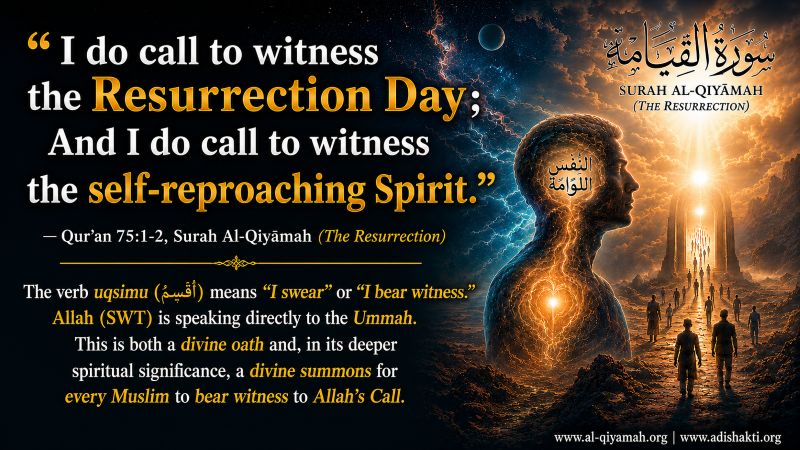
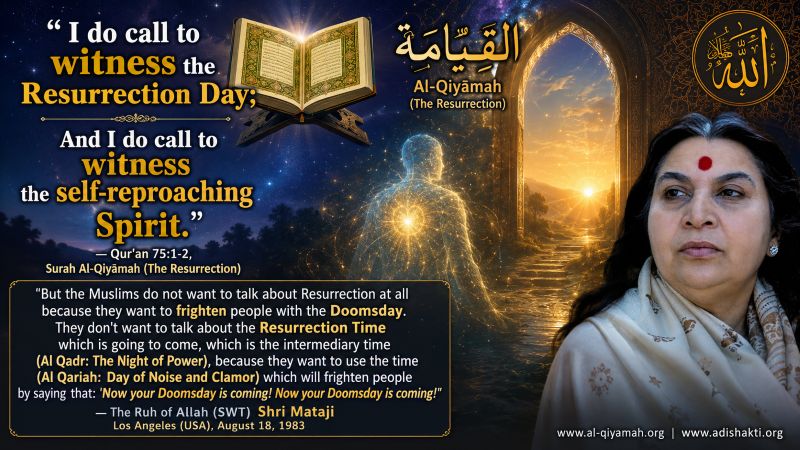

لَا أُقْسِمُ بِيَوْمِ الْقِيَامَةِ وَلَا أُقْسِمُ بِالنَّفْسِ اللَّوَّامَةِ
“I do call to witness the Resurrection Day; and I do call to witness the self-reproaching Spirit.” (Qur'an 75:1–2)
Surah Al-Qiyāmah 75:31–35: The Arrogant Denial of the Kuffār
 — A Contemporary Warning to Muslims Who Reject Allah’s (SWT) Call to Witness Al-Qiyāmah
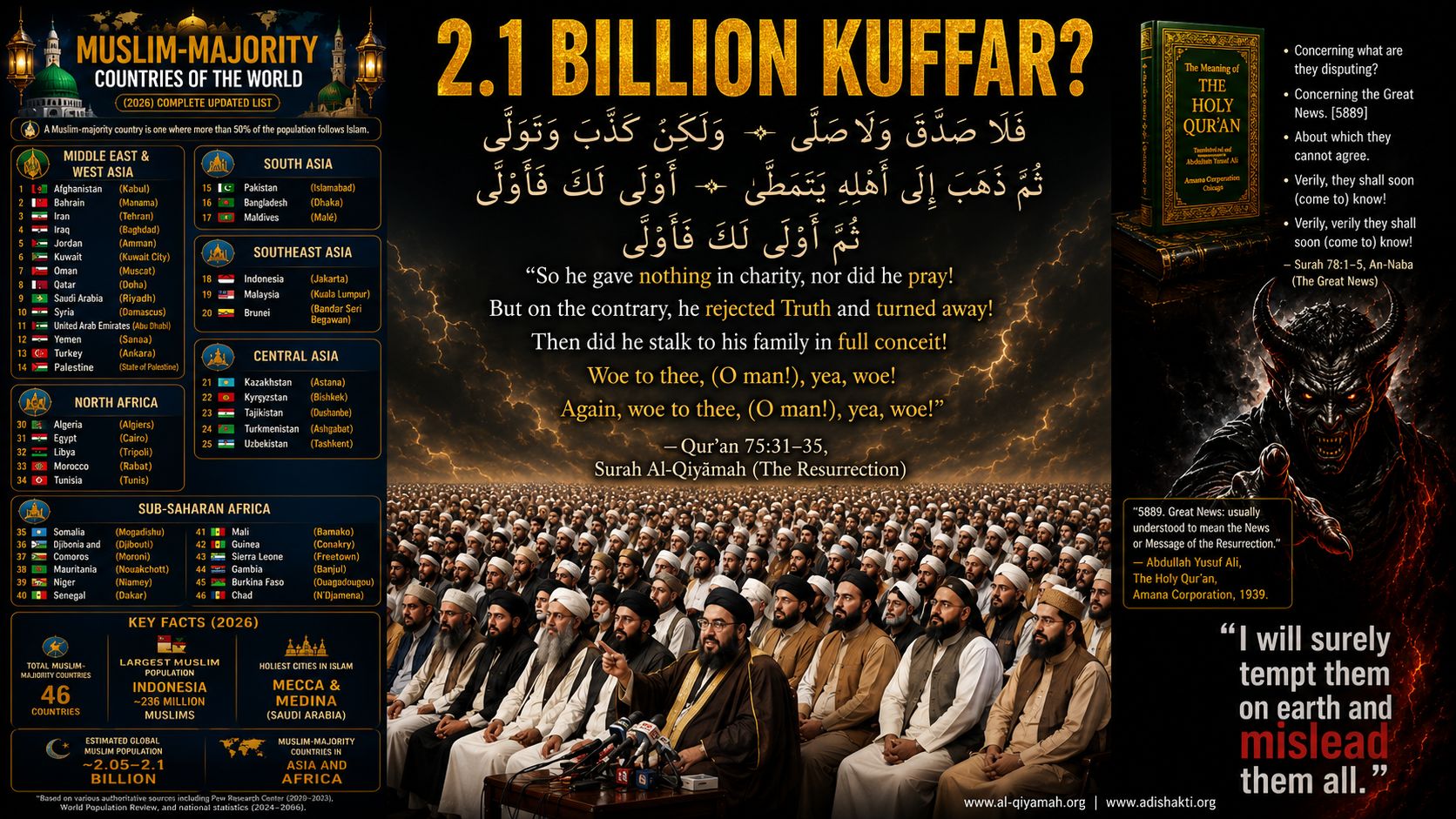
فَلَا صَدَّقَ وَلَا صَلَّىٰ ⸻ وَلَٰكِن كَذَّبَ وَتَوَلَّىٰ ⸻ ثُمَّ ذَهَبَ إِلَىٰ أَهْلِهِ يَتَمَطَّىٰ ⸻ أَوْلَىٰ لَكَ فَأَوْلَىٰ ⸻ ثُمَّ أَوْلَىٰ لَكَ فَأَوْلَىٰ
“So he gave nothing in charity, nor did he pray! But on the contrary, he rejected Truth and turned away! Then did he stalk to his family in full conceit! Woe to thee, (O man!), yea, woe! Again, woe to thee, (O man!), yea, woe!”Surah Al-Qiyamah (The Resurrection) 75:1–40
- I do call to witness the Resurrection Day;
- And I do call to witness the self-reproaching Spirit.
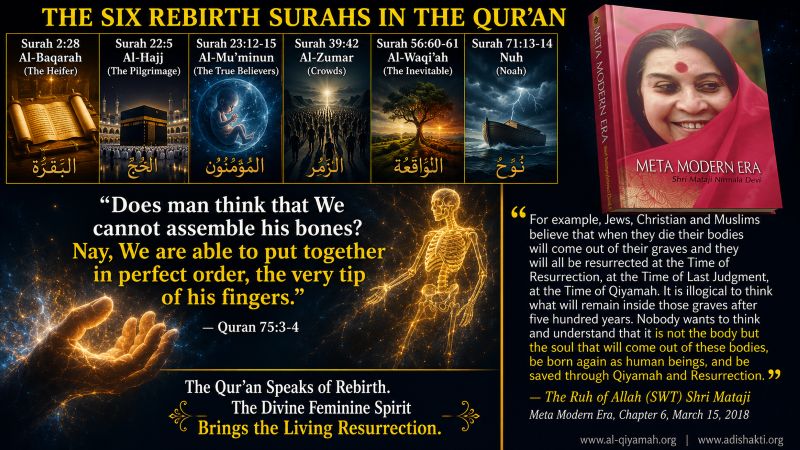
- Does man think that We cannot assemble his bones?
- Nay, We are able to put together in perfect order, the very tip of his fingers.
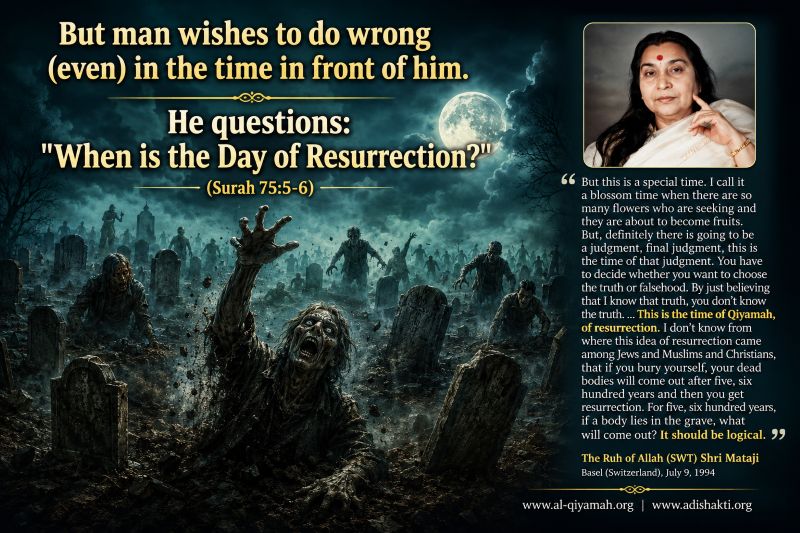
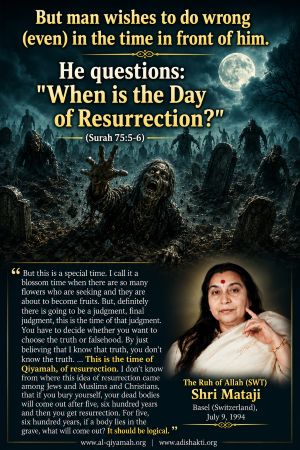
- But man wishes to do wrong (even) in the time in front of him.
- He questions: "When is the Day of Resurrection?"
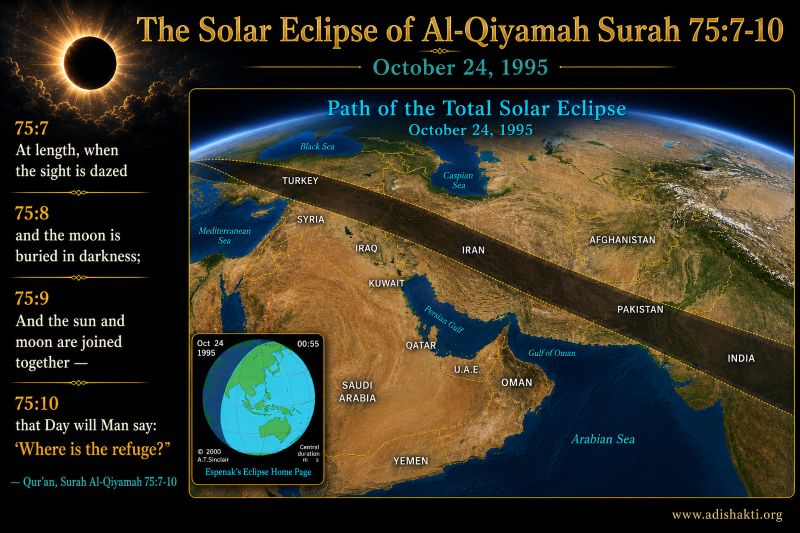
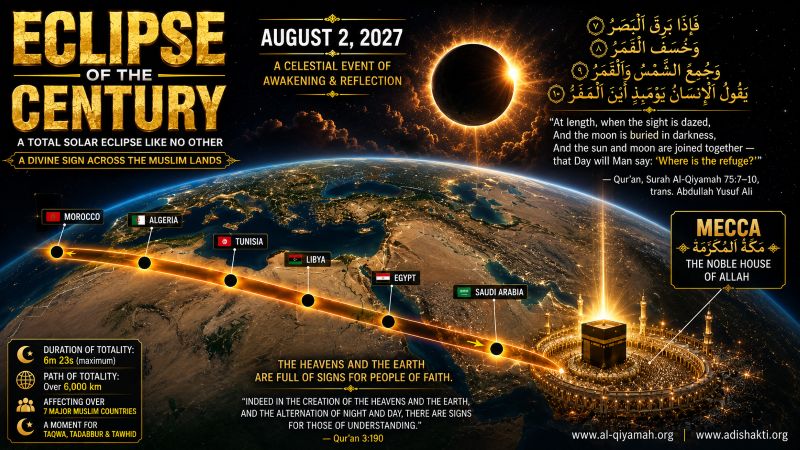
- At length, when the sight is dazed
- And the moon is buried in darkness
- And the sun and moon are joined together that Day will Man say;
- "Where is the refuge?"
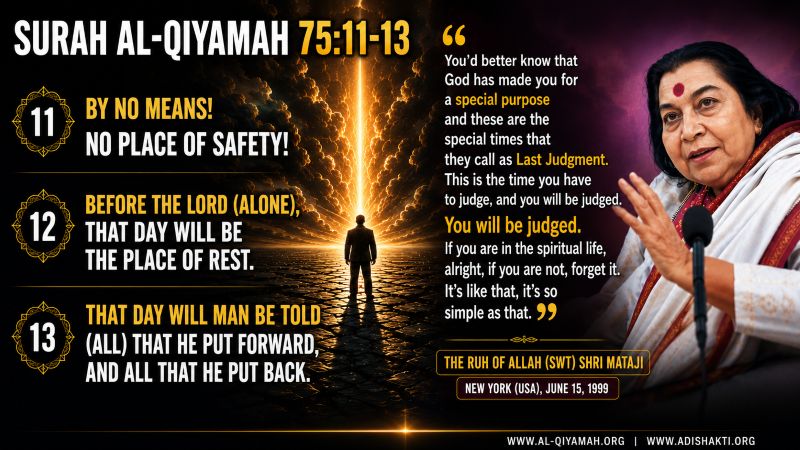
- By no means! No place of safety!
- Before the Lord (alone), that Day will be the place of rest.
- That Day will Man be told (all) that he put forward, and all that he put back.
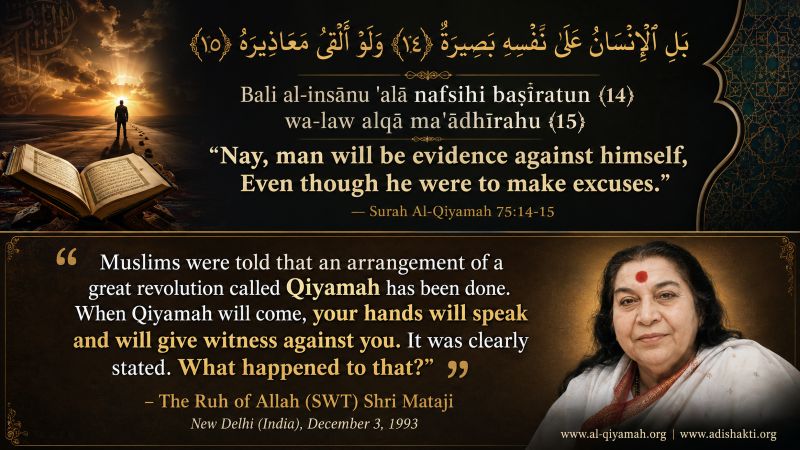
- Nay, man will be evidence against himself,
- Even though he were to make excuses.
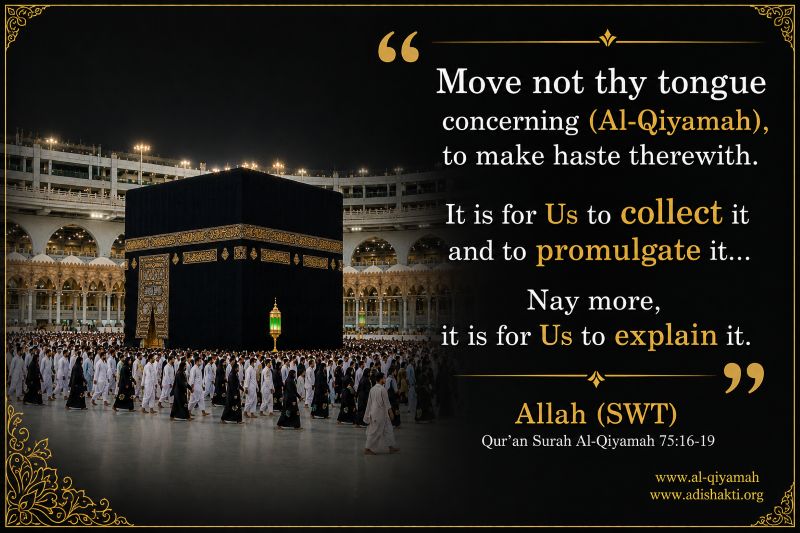
- Move not thy tongue concerning the (Resurrection), to make haste therewith.
- It is for Us to collect it and to promulgate it:
- But when We have promulgated it, follow thou its recital:
- Nay more, it is for Us to explain it:
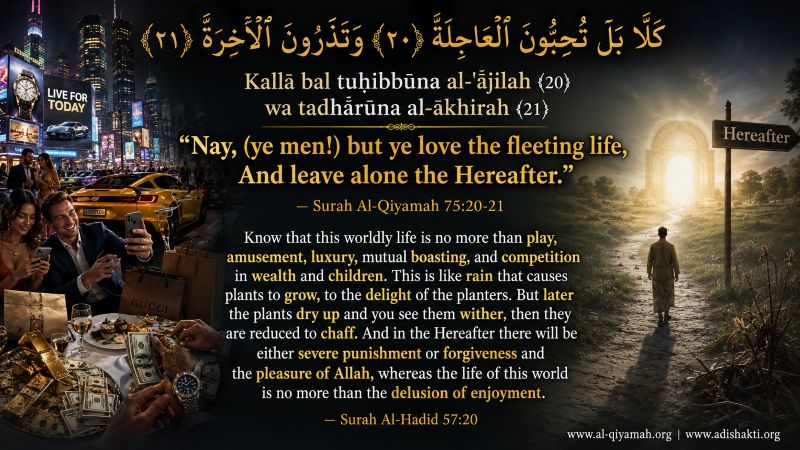
- Nay, (ye men!) but ye love the fleeting life,
- And leave alone the Hereafter.
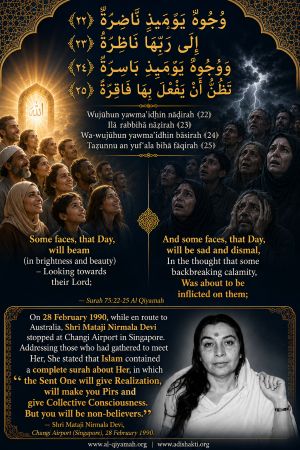
- Some faces, that Day, will beam (in brightness and beauty) -
- Looking towards their Lord;
- And some faces, that Day, will be sad and dismal,
- In the thought that some backbreaking calamity was about to be inflicted on them;
- Yea, when (the soul) reaches to the collarbone (in its exit),
- And there will be a cry, "Who is a magician (to restore him)?"
- And he will conclude that it was (the Time) of Parting;
- And one leg will be joined with another:
- The Day the Drive will be (all) to thy Lord!
- So he gave nothing in charity, nor did he pray! -
- But on the contrary, he rejected Truth and turned away!
- Then did he stalk to his family in full conceit!
- Woe to thee, (O man!), yea, woe!
- Again, woe to thee, (O man!), yea, woe!
- Does Man think that he will be left uncontrolled, (without purpose)?
- Was he not a drop of sperm emitted (in lowly form)?
- Then did he become a clinging clot; then did (Allah) make and fashion (him) in due proportion.
- And of him He made two sexes, male and female.
- Has not he, (the same), the power to give life to the dead?
Summary
This paper presents an extensive, academically rigorous exegesis of Surah Al-Qiyāmah 75:31–35, arguing that these five verses constitute one of the most severe and most ignored warnings in the entire Qur’an. The traditional Islamic theological interpretation — which confines these verses to a historical rebuke of 7th-century polytheists such as Abu Jahl — is exposed as a catastrophic theological failure that has disarmed the Ummah against the very spiritual danger the Qur’an was warning them about. This paper demonstrates, through rigorous linguistic analysis, logical argumentation, and Qur’anic cross-referencing, that verses 75:31–35 are a direct, contemporary warning to every Muslim who encounters the present-day call of Allah (SWT) to bear witness to the ongoing Resurrection Age (Al-Qiyāmah) — and rejects it.
The paper further argues that the Muslim Ummah, by rejecting the signs of the present Al-Qiyāmah, has become the true kuffār — those who conceal the truth of their own Qur’an. This is not a peripheral accusation; it is the logical, inescapable conclusion of reading the Qur’an in its entirety, without the selective, self-serving filters of centuries of tafsīr. Iblis (Satan), who promised to mislead humanity from the Straight Path (Qur’an 7:16–17, 15:39), has achieved his greatest triumph not by convincing Muslims to abandon Islam, but by convincing them that their rejection of the Resurrection Age is itself an act of Islamic piety. The fourfold warning of awlā laka fa-awlā — “Woe to you, and again woe to you” — is the divine verdict on this supreme act of self-deception.
Table of Contents
- Introduction: The Crisis of Eschatological Blindness
- The Textual Foundation: A Complete Linguistic Analysis of 75:31–35
- The Classical Tafsīr and Its Fatal Limitations
- The Inescapable Context: Al-Qiyāmah as a Present Reality
- The Contemporary Application: Who Is the Denier of 75:31–35?
- The True Kuffār: Denying the Qur’an in the Name of Islam
- The Triumph of Iblis: How the Ummah Was Misled
- The Swagger of Denial: Yatamaṭṭā and the Psychology of Arrogant Rejection
- The Fourfold Doom: Awlā Laka Fa-Awlā as a Living Divine Indictment
- Demolishing the Old Interpretation: Ten Logical Arguments
- The Signs Already Given: What the Ummah Has Refused to See
- Conclusion: The Choice Before Every Soul
- References
1. Introduction: The Crisis of Eschatological Blindness
For over fourteen centuries, the Muslim Ummah has been conditioned by classical tafsīr to anticipate Al-Qiyāmah (The Resurrection) as a singular, catastrophic, future physical event — a cosmic doomsday involving the shattering of stars, the darkening of the sun, and the bursting of graves. This deeply entrenched paradigm, constructed and reinforced by generations of religious scholars (ulema), has achieved one devastating consequence: it has rendered the Ummah spiritually blind to the living, ongoing reality of the Resurrection Age that the Qur’an itself declares has already commenced.
Surah Al-Qiyāmah (75), the only chapter in the entire Qur’an devoted entirely to this momentous subject, contains within its forty verses a complete theological architecture of the Resurrection — its nature, its signs, its divine mandate, and its warnings. Nowhere within this architecture is the warning more severe, more personal, or more urgently contemporary than in verses 31–35. These five verses describe, with terrifying psychological precision, the archetype of the denier: a person who receives the truth, refuses to affirm it, actively rejects it, and then returns to his community swaggering in arrogant self-satisfaction, as if he has done something commendable.
The question this paper poses — and answers with irrefutable evidence — is this: Who is this person today? The classical tafsīr answers: Abu Jahl, or some generic 7th-century polytheist. This paper answers: the modern Muslim who is presented with the undeniable signs of the present Resurrection Age and responds with denial, dismissal, and arrogant rejection. By doing so, the Ummah has become the true kuffār — not by abandoning the Qur’an, but by weaponizing it against the very divine reality it proclaims.
Prof. Mahmoud M. Ayoub, one of the most respected scholars of Islamic studies, has observed: “Theology has confused the rank and file of Muslims. It has discouraged any kind of innovative thinking. It has paralyzed the intellectuals, preoccupying them with unsolvable questions.” [1] This paper takes that observation to its logical conclusion: the confusion is not accidental. It is the fulfillment of Iblis’s ancient promise to mislead humanity from the Straight Path.
2. The Textual Foundation: A Complete Linguistic Analysis of 75:31–35
To understand the severity and the contemporary relevance of the warning, we must first examine the Arabic text with the precision it demands. Every word in these five verses has been chosen by Allah (SWT) with deliberate, multi-layered meaning that the classical tafsīr has consistently failed to fully excavate.
fa-lā (فَلَا) = “so not” / “then not” — a consequential negation, indicating a result of prior conditions
ṣaddaqa (صَدَّقَ) = “he believed” / “he confirmed the truth” / “he gave in charity” — from the root ṣ-d-q (صدق), meaning truth, sincerity, and verification
wa-lā (وَلَا) = “and not”
ṣallā (صَلَّى) = “he prayed” — ritual prayer as the outward expression of inner faith
Full Meaning: So he neither affirmed the truth nor prayed.
The word ṣaddaqa is of critical importance. Its root ṣ-d-q encompasses truth, sincerity, and the act of confirming or verifying. It is the same root as ṣidāqah (charity given in truth) and ṣiddīq (the truthful one, a title of the highest spiritual rank). To fail to ṣaddaqa is not merely to disbelieve; it is to refuse to confirm, to verify, to acknowledge the truth that has been presented. This is the precise spiritual crime of the contemporary Muslim who, when presented with the evidence of the Resurrection Age, refuses to investigate, refuses to verify, and refuses to acknowledge.
walākin (وَلَٰكِن) = “but rather” / “on the contrary” — a strong adversative conjunction indicating a complete reversal
kadhdhaba (كَذَّبَ) = “he denied” / “he rejected as false” — the intensive form of the root k-dh-b, meaning to call something a lie with force and conviction
wa-tawallā (وَتَوَلَّىٰ) = “and turned away” — from wallā, meaning to turn one’s back, to abandon, to walk away in rejection
Full Meaning: But instead, he actively and forcefully denied, and turned his back.
The word kadhdhaba is the intensive form of denial. It does not describe passive disbelief; it describes active, forceful rejection — the act of calling the truth a lie. This is the takdhīb (تَكذيب) that the Qur’an repeatedly identifies as the cardinal sin of those who reject divine signs. Combined with tawallā — the act of physically and spiritually turning one’s back — this verse paints a portrait of deliberate, willful rejection. The person does not merely fail to understand; he understands, and he rejects.
thumma (ثُمَّ) = “then” — indicating a subsequent action, a temporal sequence
dhahaba (ذَهَبَ) = “he went” / “he departed”
ilā (إِلَىٰ) = “to” / “towards”
ahlihi (أَهْلِهِ) = “his family” / “his people” / “his community”
yatamaṭṭā (يَتَمَطَّىٰ) = “swaggering” / “strutting” / “walking with exaggerated, arrogant self-importance” — from the root m-ṭ-w, describing a gait of pride and conceit
Full Meaning: Then he went to his family and community, swaggering in arrogant self-satisfaction.
The word yatamaṭṭā is one of the most psychologically precise words in the Arabic language. It does not merely mean “walking proudly”; it describes a specific gait of exaggerated, performative arrogance — the walk of someone who is not merely confident but who is displaying his confidence to others, who wants his community to see that he is unbothered, unshaken, and victorious. This is the walk of a man who has just rejected the truth and is proud of it. He is not troubled by doubt; he is energized by his rejection. He returns to his family as a hero of orthodoxy.
awlā (أَوْلَىٰ) = “woe” / “peril” / “doom is more fitting for you” — from the root w-l-y, meaning proximity; here used to mean “destruction is closer to you than you think”
laka (لَكَ) = “to you” / “for you” — direct second-person address, making the warning intensely personal
fa-awlā (فَأَوْلَىٰ) = “so woe again” / “and even more doom” — the fa (ف) adds a consequential force: “and therefore, even more doom”
Full Meaning: Doom is drawing near to you — and even more doom is drawing near.
thumma (ثُمَّ) = “then” / “again” — indicating continuation and escalation
awlā laka fa-awlā = the same fourfold warning, now repeated with thumma to indicate that the doom is not merely present but escalating
Full Meaning: Then again, doom is drawing near to you — and even more doom is drawing near.
The phrase awlā laka fa-awlā is among the most severe condemnations in the entire Qur’an. The word awlā literally means “closer” or “more fitting” — it is saying that doom is not merely coming; it is already close to you. The fourfold repetition across two verses is not poetic embellishment; it is a divine indictment of escalating severity, indicating that the crime being condemned is of unprecedented magnitude. [2]
3. The Classical Tafsīr and Its Fatal Limitations
The classical commentators — Ibn Kathīr, Maududi, al-Qurṭubī, al-Ṭabarī, and others — have historically offered two types of interpretation for these verses. The first is the occasion of revelation (asbāb al-nuzūl) approach, which identifies the subject of 75:31–35 as a specific historical individual, most commonly Abu Jahl (‘Amr ibn Hishām), the Meccan chieftain who was among the most vehement opponents of the Prophet Muhammad (pbuh). The second is the general warning approach, which reads the verses as a universal admonition against disbelief and neglect of prayer. [3]
Both approaches, while containing elements of truth, share a fatal limitation: they assume that the Resurrection being referred to in Surah 75 is entirely a future event that has not yet occurred. This assumption transforms the warning of 75:31–35 from a living, urgent, present-tense danger into a comfortable historical lesson about long-dead polytheists. The contemporary Muslim reads these verses and thinks: “Yes, Abu Jahl was wicked. I am glad I am not like him.” And then he swaggers back to his family, exactly as verse 75:33 describes, completely unaware that he has just enacted the very behavior the Qur’an is warning against.
Consider the following critical questions that demolish the classical interpretation:
Question 1: If these verses are solely about Abu Jahl, why does Allah (SWT) use the second-person address “Woe to you” (awlā laka)? The Arabic laka is direct, personal, and present-tense. It is not “woe to him” (lahu) or “woe to them” (lahum). It is “woe to you.” This is Allah (SWT) speaking directly to the reader, to the listener, to every soul that encounters these words.
Question 2: If the Resurrection has not yet begun, what is the urgency of the warning? A warning about an event that is centuries or millennia away carries no present-tense moral weight. The Qur’an does not issue warnings about things that are irrelevant to the reader’s present condition. The severity of the warning — fourfold doom — demands a present-tense referent.
Question 3: Why does the Surah immediately follow the description of death (75:26–30) with this warning about denial (75:31–35)? The structural logic of the Surah places the denier immediately after the description of the dying person, suggesting that the denial being condemned is a response to a present, living reality — not a future event.
Question 4: Why would Allah (SWT) devote an entire Surah to Al-Qiyāmah and then promise to personally collect, promulgate, and explain it (75:16–19), if the only message was “a bad man named Abu Jahl existed in the 7th century”? The divine mandate of 75:16–19 demands a living, ongoing fulfillment. [4]
4. The Inescapable Context: Al-Qiyāmah as a Present Reality
The foundational error of the classical tafsīr tradition is its insistence on reading Al-Qiyāmah as exclusively a future, physical, cataclysmic event. This reading contradicts the Qur’an’s own testimony. The linguistic root of Al-Qiyāmah (القيامة) is qāma (قام), meaning “to stand,” “to arise,” “to awaken,” or “to be established.” This is an active, ongoing process — not a single, instantaneous event. [5]
The Qur’an itself provides overwhelming evidence that Al-Qiyāmah is an epochal Resurrection Age — a continuous, ongoing spiritual awakening that encompasses both a present spiritual reality and a future physical culmination. Consider the following Qur’anic testimony:
| Qur’anic Reference | Arabic Text | Evidence for Present Resurrection Age |
|---|---|---|
| 75:1–2 | لَا أُقْسِمُ بِيَوْمِ الْقِيَامَةِ وَلَا أُقْسِمُ بِالنَّفْسِ اللَّوَّامَةِ | Allah swears by the Resurrection Day AND by the self-reproaching spirit (An-Nafs Al-Lawwāmah) — a faculty that operates within living souls now, not only after death. |
| 75:16–19 | إِنَّ عَلَيْنَا جَمْعَهُ وَقُرْآنَهُ | Allah takes personal responsibility for collecting, promulgating, and explaining Al-Qiyāmah — a divine mandate that demands present-tense fulfillment. |
| 41:53 | سَنُرِيهِمْ آيَاتِنَا فِي الْآفَاقِ وَفِي أَنفُسِهِمْ | “We will show them Our signs in all the regions of the earth and in their own souls” — signs that are visible now, within living human souls. |
| 30:55–57 | هَٰذَا يَوْمُ الْبَعْثِ وَلَٰكِن كُنتُمْ لَا تَعْلَمُونَ | “This is the Day of Resurrection, but ye used not to know” — the Resurrection is already happening, but most are unaware. |
| 78:1–5 | عَمَّ يَتَسَاءَلُونَ عَنِ النَّبَإِ الْعَظِيمِ | The Great News of the Resurrection is already being disputed — a dispute that can only occur if the announcement has already been made. |
The most critical of these passages is 75:16–19, which contains the divine mandate: “Move not thy tongue concerning the (Revelation of Al-Qiyamah), to make haste therewith. It is for Us to collect it and to promulgate it… Nay more, it is for Us to explain it.” This is Allah (SWT) taking sole, personal responsibility for the collection, promulgation, and explanation of Al-Qiyāmah. For 1,400 years, the ulema have usurped this divine prerogative, imposing their own limited, catastrophic interpretations upon the Ummah. The divine mandate was not given to Ibn Kathīr, to Maududi, or to any human scholar. It was given to Allah (SWT) Himself, to be fulfilled in His appointed time. [6]
5. The Contemporary Application: Who Is the Denier of 75:31–35?
With the understanding that Al-Qiyāmah is an ongoing Resurrection Age that has already commenced, the identity of the denier in 75:31–35 becomes unmistakably clear. He is not Abu Jahl. He is the contemporary Muslim who, in the present day, is confronted with the undeniable evidence of the Resurrection Age and responds with the exact sequence described in these verses.
Let us trace the sequence with contemporary precision:
Stage 1 — “He neither affirmed the truth nor prayed” (75:31): The contemporary Muslim is presented with the comprehensive, Qur’an-centered evidence that Al-Qiyāmah has commenced. He is shown the fourteen Sure Signs drawn from the Qur’an itself — the gathering of the Children of Israel (17:104), the solar eclipse of October 1995 (75:7–10), the Mighty Blast witnessed in Montreal (50:42), the widespread unawareness (30:55–57), the bitter division over the Great News (78:1–5). He refuses to investigate. He refuses to verify (ṣaddaqa). His prayers (ṣallā) continue as empty ritual, devoid of the spiritual awakening that genuine Qiyāmah demands.
Stage 2 — “But instead, he denied and turned away” (75:32): Rather than investigating the signs, the contemporary Muslim instantly labels the message as bid’ah (innovation), shirk (polytheism), or heresy. He does not engage with the Qur’anic evidence; he dismisses it. He does not ask “Is this true?”; he declares “This is false.” This is kadhdhaba — active, forceful denial. He then turns away (tawallā), refusing further engagement, closing his mind and his heart to the divine call.
Stage 3 — “Then he went to his family swaggering proudly” (75:33): The contemporary Muslim returns to his mosque, his family, his WhatsApp group, his community — and he boasts. He tells them how he encountered the “false” claim about the Resurrection and how he defended the faith. He is proud of his rejection. He swaggers (yatamaṭṭā) in the certainty of his orthodoxy, completely unaware that he has just enacted the very behavior that the Qur’an condemns as worthy of fourfold doom.
This is not a hypothetical scenario. This is the documented, observable, repeated response of the Ummah when confronted with the evidence of the present Resurrection Age. The Qur’an predicted it with extraordinary precision. The prediction is now fulfilled.
6. The True Kuffār: Denying the Qur’an in the Name of Islam
The Arabic word kāfir (كافر), plural kuffār, derives from the root k-f-r, meaning “to cover,” “to conceal,” or “to bury.” A kāfir is fundamentally one who covers the truth — who takes the light of divine guidance and buries it under layers of denial, tradition, or self-interest. This is not merely a label for non-Muslims; it is a description of a spiritual condition that can afflict anyone who conceals the truth, regardless of their religious affiliation.
The supreme irony of the present age is that the greatest act of kufr (concealment of truth) is being committed by those who call themselves Muslims. The Qur’an warns explicitly:
This verse is not addressed to polytheists or atheists. It is addressed to those who possess “the Book” — those who have the Qur’an in their hands and yet conceal its revelations. The ulema who have encoded a catastrophic, future-only interpretation of Al-Qiyāmah, thereby concealing the living reality of the Resurrection Age from the Ummah, are the primary targets of this warning. And the Ummah that follows them in this concealment, that swaggers back to its family after rejecting the signs, shares in this terrible judgment.
The Qur’an further declares:
This is Allah (SWT) Himself declaring that arrogance is the mechanism of blindness. The contemporary Muslim who arrogantly dismisses the signs of the Resurrection Age is not merely making an intellectual error; he is fulfilling the divine decree of 7:146. His arrogance has caused Allah to turn him away from His signs. He sees the signs, but he cannot perceive them. He reads the Qur’an, but he cannot understand it. He is, in the most precise Qur’anic sense, a kāfir — one who has covered the truth with the blanket of his own arrogance. [7]
7. The Triumph of Iblis: How the Ummah Was Misled
The widespread denial of the Resurrection Age among the Muslim Ummah is not accidental. It is the culmination of a cosmic deception that Iblis (Satan) announced to Allah (SWT) at the very beginning of human history:
قَالَ فَبِمَا أَغْوَيْتَنِي لَأَقْعُدَنَّ لَهُمْ صِرَاطَكَ الْمُسْتَقِيمَ ⸻ ثُمَّ لَآتِيَنَّهُم مِّن بَيْنِ أَيْدِيهِمْ وَمِنْ خَلْفِهِمْ وَعَنْ أَيْمَانِهِمْ وَعَن شَمَائِلِهِمْ
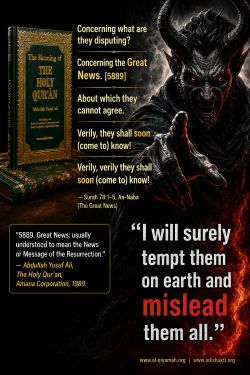
“He said: ‘Because Thou hast thrown me out of the way, lo! I will lie in wait for them on Thy straight way: Then will I assault them from before them and behind them, from their right and their left: Nor wilt thou find, in most of them, gratitude (for thy mercies).’”قَالَ رَبِّ بِمَا أَغْوَيْتَنِي لَأُزَيِّنَنَّ لَهُمْ فِي الْأَرْضِ وَلَأُغْوِيَنَّهُمْ أَجْمَعِينَ
“He said: ‘O my Lord! Because Thou hast put me in the wrong, I will make (wrong) fair-seeming to them on the earth, and I will put them all in the wrong.’”Iblis’s strategy was not to convince humanity to abandon religion. His strategy was far more sophisticated: to corrupt religion from within, to make the wrong appear right, and to ensure that when the divine truth arrived, the most religious people would be the first to reject it. He has achieved this with the Muslim Ummah with devastating precision.
The mechanism of Iblis’s deception operates as follows. First, Iblis convinced the early ulema that Al-Qiyāmah was exclusively a future, physical, cataclysmic event. This interpretation was then encoded as orthodox doctrine, protected by the authority of centuries of scholarship, and reinforced by the social and political power of religious institutions. Any challenge to this interpretation was labeled bid’ah (innovation) or kufr (disbelief) — the very labels that the Ummah now uses to reject the signs of the Resurrection Age.
Second, Iblis ensured that the Ummah’s rejection of the Resurrection Age would feel like an act of piety. The contemporary Muslim who dismisses the signs of Al-Qiyāmah does not feel like a sinner; he feels like a defender of the faith. He feels righteous. He feels orthodox. He feels that he is protecting Islam from heresy. This is the most diabolical aspect of Iblis’s deception: the Ummah is fulfilling his promise while believing they are serving Allah. [8]
The Qur’an confirms that Allah permitted this deception as a trial for the arrogant:
The phrase “This is the Day of Resurrection, but ye used not to know” is the Qur’an’s own prediction of the Ummah’s present condition. They are living in the Resurrection Age, but they do not know it. They have been deceived by Iblis into waiting for a physical event that has not come, while the spiritual Resurrection Age unfolds unrecognized around them and within them.
8. The Swagger of Denial: Yatamaṭṭā and the Psychology of Arrogant Rejection
The word yatamaṭṭā (يَتَمَطَّىٰ) in verse 75:33 deserves special attention, for it contains within its three letters a complete psychological portrait of the contemporary Muslim’s response to the Resurrection Age. It is not merely a description of physical movement; it is a diagnosis of a spiritual condition.
The classical commentators note that yatamaṭṭā describes a gait of exaggerated, performative pride — the walk of someone who wants to be seen to be unbothered. This is not the walk of genuine confidence; it is the walk of someone who is performing confidence to mask an inner awareness that they have just done something they cannot fully justify. The swagger is a defense mechanism against the self-reproaching spirit (An-Nafs Al-Lawwāmah) that is already testifying against them.
Consider the contemporary Muslim who encounters the evidence of the Resurrection Age. He is presented with Qur’anic verses, with historical fulfillments, with the testimony of the divine signs. Something within him — the An-Nafs Al-Lawwāmah — stirs. A moment of genuine uncertainty, of genuine questioning, passes through his heart. And then the conditioning of fourteen centuries of tafsīr reasserts itself. He suppresses the inner voice. He labels the message as heresy. He turns away. And then he goes to his family, his mosque, his community — and he swaggers. He tells them what he encountered and how he rejected it. He is applauded for his orthodoxy. The swagger is complete.
This is the tragedy that verse 75:33 captures with devastating precision. The swagger is not the behavior of a man who is secure in his faith; it is the behavior of a man who has just silenced the voice of Allah within his own soul and is now performing confidence to convince himself and others that he made the right choice. The fourfold doom of verses 34–35 is the divine response to this performance.
9. The Fourfold Doom: Awlā Laka Fa-Awlā as a Living Divine Indictment
The word awlā (أَوْلَىٰ) is derived from the root w-l-y, meaning “proximity” or “closeness.” In this context, it means “doom is more fitting for you” or “destruction is closer to you than you think.” The phrase awlā laka fa-awlā is therefore not merely a statement of future punishment; it is a declaration that the consequences of denial are already drawing near, already approaching, already proximate to the denier.
Why is the warning repeated four times across two verses? In Arabic rhetoric, repetition is used for emphasis, but the specific pattern here — awlā laka fa-awlā in verse 34, and thumma awlā laka fa-awlā in verse 35 — suggests an escalating, progressive doom. The first pair (verse 34) announces the doom. The second pair (verse 35), introduced by thumma (“then”), indicates that the doom continues and intensifies. This is not a single punishment; it is a compounding judgment.
The Qur’an’s double warning in Surah An-Nabā (78:4–5) — “Verily, they shall soon come to know! Verily, verily they shall soon come to know!” — echoes this same pattern of emphatic, repeated warning. Abdullah Yusuf Ali, in his commentary on Surah 78, notes in footnote 5889 that the Great News is “usually understood to mean the News or Message of the Resurrection.” [9] The double warning of An-Nabā and the fourfold doom of Al-Qiyāmah 75:34–35 are the same divine indictment, expressed in different forms: the Ummah that disputes the Great News of the Resurrection will come to know, with terrible certainty, the consequences of their denial.
10. Demolishing the Old Interpretation: Ten Logical Arguments
The classical interpretation of 75:31–35 as a purely historical rebuke of 7th-century polytheists is not merely theologically inadequate; it is logically incoherent. The following ten arguments demonstrate why the contemporary, present-tense reading is the only interpretation consistent with the Qur’an’s own internal logic.
| # | Logical Argument | Qur’anic Evidence |
|---|---|---|
| 1 | The Direct Address Argument: Allah uses laka (“to you”), not lahu (“to him”). This is a direct, second-person address to the reader, not a third-person historical reference. | 75:34–35: awlā laka fa-awlā |
| 2 | The Divine Mandate Argument: Allah promised to personally explain Al-Qiyāmah (75:16–19). If the explanation was merely “Abu Jahl was bad,” this divine mandate would be trivially fulfilled. The mandate demands a living, present-tense fulfillment. | 75:16–19 |
| 3 | The Unawareness Argument: The Qur’an explicitly states that most humans will be unaware that the Resurrection is taking place (30:55–57). This unawareness is only possible if the Resurrection is a present, ongoing event, not a future cataclysm that everyone will witness simultaneously. | 30:55–57 |
| 4 | The Dispute Argument: Surah 78:1–5 describes a present-tense dispute over the Great News of the Resurrection. A dispute can only occur over something that has been announced. The announcement has been made; the dispute is happening now. | 78:1–5 |
| 5 | The Self-Reproaching Spirit Argument: Allah swears by An-Nafs Al-Lawwāmah (75:2) — the self-reproaching spirit that operates within living souls. This faculty is active now, not only after death. The Resurrection is therefore a present, inner reality. | 75:1–2 |
| 6 | The Signs Argument: Allah promises to show His signs “in all the regions of the earth and in their own souls” (41:53). These signs are present-tense, observable, and verifiable. The denier of 75:31–35 is one who sees these signs and rejects them. | 41:53 |
| 7 | The Structural Argument: Surah 75 is a unified theological document. Verses 31–35 appear immediately after the description of death (75:26–30) and before the closing argument about creation (75:36–40). The structural position of 75:31–35 places the denier in the context of a present confrontation with divine reality, not a historical anecdote. | 75:26–40 |
| 8 | The Severity Argument: The fourfold doom of 75:34–35 is among the most severe condemnations in the Qur’an. Such severity is disproportionate if the warning is merely about a long-dead polytheist. The severity demands a present-tense, ongoing crime of the highest magnitude. | 75:34–35 |
| 9 | The Iblis Argument: Iblis promised to mislead humanity (7:16–17, 15:39). The Qur’an confirms that Allah permitted this as a trial (38:79–82). The most effective fulfillment of Iblis’s promise is to cause the most religious people to reject the divine truth in the name of religion. This is precisely what is happening with the Ummah’s rejection of the Resurrection Age. | 7:16–17; 15:39; 38:79–82 |
| 10 | The Messengers Must Prevail Argument: Allah has decreed that His messengers must prevail (58:21). If the message of the Resurrection Age is true, it will prevail. The Ummah’s rejection does not negate the truth; it only confirms the prophecy of 75:31–35 and the doom of 75:34–35. | 58:21 |
11. The Signs Already Given: What the Ummah Has Refused to See
The denial described in 75:31–35 is not a denial of abstract theology; it is a denial of concrete, verifiable, Qur’anic signs that have already manifested. The Ummah has been given the following signs, drawn directly from the Qur’an, and has refused to acknowledge them:
| # | Sure Sign of Al-Qiyāmah | Qur’anic Reference | Fulfillment |
|---|---|---|---|
| 1 | The gathering of the Children of Israel in the Holy Land | Qur’an 17:104 | Fulfilled in 1948 with the establishment of the State of Israel |
| 2 | The sun and moon joined together (solar eclipse) | Qur’an 75:7–10 | The total solar eclipse of October 24, 1995, traversing the Islamic heartlands |
| 3 | The Mighty Blast (al-ṣayḥah) from a place quite near | Qur’an 50:41–42 | Witnessed simultaneously with the solar eclipse on October 23–24, 1995 |
| 4 | Widespread unawareness that the Resurrection is taking place | Qur’an 30:55–57 | The global Muslim Ummah continues to wait for a future cataclysm while the Resurrection Age unfolds |
| 5 | Bitter division over the Great News | Qur’an 78:1–5 | The Ummah is bitterly divided over the message of the Resurrection Age |
| 6 | Radiant faces of believers vs. gloomy faces of disbelievers | Qur’an 75:22–25 | The spiritual radiance of those who have experienced the inner Resurrection is a visible, observable sign |
| 7 | Divine collection, promulgation, and explanation of Al-Qiyāmah | Qur’an 75:16–19 | The comprehensive, Qur’an-centered exegesis of Al-Qiyāmah now being delivered fulfills this divine mandate |
The Ummah has been given all of these signs. The Qur’an has provided the evidence. The divine mandate of 75:16–19 has been fulfilled. The Great News has been announced. And the response of the Ummah is precisely as described in 75:31–35: they neither affirm the truth nor pray with genuine spiritual awareness; they deny and turn away; and they swagger back to their families in full conceit. [10]
The Qur’an’s verdict on this behavior is the fourfold doom of 75:34–35. It is not a verdict that can be appealed. It is not a verdict that can be avoided by claiming ignorance — for the signs have been given, the evidence has been presented, and the divine call has been issued. The only question remaining is whether each individual soul will respond with the humility of the believer or the arrogance of the denier.
12. Conclusion: The Choice Before Every Soul
Surah Al-Qiyāmah 75:31–35 stands as one of the most timeless, piercing, and urgently contemporary warnings in the entire Qur’an. The traditional tafsīr that confines these verses to a historical rebuke of 7th-century polytheists is not merely intellectually inadequate; it is a theological pacifier that has disarmed the Ummah against the very spiritual danger the Qur’an was warning them about. It has allowed generations of Muslims to read these verses with comfortable detachment, never suspecting that they themselves are the subject of the warning.
The Arabic text of 75:31–35 is unambiguous. The second-person address of laka (“to you”) in the fourfold doom makes the warning personal and direct. The sequence of denial — failure to affirm (ṣaddaqa), active rejection (kadhdhaba), turning away (tawallā), and arrogant swagger (yatamaṭṭā) — is not a description of a dead polytheist; it is a living, present-tense portrait of the contemporary Muslim who encounters the signs of the Resurrection Age and responds with the full weight of his inherited certainties.
The triumph of Iblis is complete in this regard. He has convinced the Ummah that their rejection of the Resurrection Age is an act of piety. He has made the wrong appear right (15:39). He has sat in wait on the Straight Path (7:16) and has turned the most devout Muslims into the most effective deniers of Allah’s living truth. And the Ummah swaggers, completely unaware that the fourfold doom of 75:34–35 is drawing near — awlā laka fa-awlā.
References
[1] Ayoub, Mahmoud M. Quoted in “Al-Qiyāmah (القيامة): Allah’s (SWT) Personal Call to Bear Witness to the Commencement of Resurrection.” Adishakti.org, June 26, 2026.[2] Maududi, Sayyid Abul Ala. “Tafhīm al-Qur’ān — Surah Al-Qiyāmah, Verse 35.” Alim.org. Originally composed c. 1972.
[3] Ibn Kathīr, Ismā’īl ibn ‘Umar. “Tafsīr Ibn Kathīr — Surah Al-Qiyāmah (Chapter 75).” AbdurRahman.org. Originally composed 14th century CE.
[4] “Allah (SWT): It is for Us [Me and My Rūḥ] to collect… promulgate… explain it [Al-Qiyāmah] — Surah 75:16–19.” Adishakti.org. Accessed July 7, 2026.
[5] “The Linguistic and Theological Meaning of Al-Qiyāmah.” Adishakti.org, June 26, 2026. Section 2.
[6] “The Usurpation of Allah’s Explanation — Surah 75:16–19.” Adishakti.org. Accessed July 7, 2026.
[7] “Surah 75:22–25: Her Face Brings Either Glory or Gloom.” Adishakti.org. Accessed July 7, 2026.
[8] “The Deception of Iblis: How the Ummah Was Misled.” Adishakti.org, June 26, 2026. Section 7.
[9] Ali, Abdullah Yusuf. The Holy Qur’ān: Text, Translation and Commentary. Amana Corporation, 1989. Note 5889 on Surah 78:1–5.
[10] “The Fourteen Sure Signs of Al-Qiyāmah in the Qur’an.” Adishakti.org, June 26, 2026. Section 4.
[11] Rahman, Fazlur. Major Themes of the Qur’an. University of Chicago Press, 1980. Paraphrase of Surah 50:22.
[12] “Surah 75:7–10: The Solar Eclipse of Al-Qiyāmah.” Adishakti.org. Accessed July 7, 2026.
[13] “Surah 50:42: The Mighty Blast Has Occurred.” Adishakti.org. Accessed July 7, 2026.
[14] “Surah 17:104: ‘But You (Muslims) Will Be Non-Believers’.” Adishakti.org. Accessed July 7, 2026.
[15] “Surah Al-Qiyāmah 75:31–35 — Linguistic and Contextual Analysis.” VoiceofQuran5.com, June 16, 2026.
[16] “The Messianic Age Has Begun.” Adishakti.org. Accessed July 7, 2026.
Compilation, Proclamation, and Exegesis of Surahs Upholding Allah’s (SWT) Command to His Ummah — to Witness and Participate in the Resurrection.
Al-Qiyamah: A Profound Declaration of Al-QiyamahAl-Qiyamah (75:1-2): Oaths of Resurrection
Al-Qiyamah (75:3-4): Reassembling Bones and Fingertips
Al-Qiyamah (75:5-6): Man's Denial of Resurrection
Al-Qiyamah (75:7–10): Sun and Moon 'Joined' At Solar Eclipse
Al-Qiyamah (75:7–10): Solar Eclipse Salat al-Kusuf
Al-Qiyamah (75:11–13): No Refuge, Only Reckoning
Al-Qiyamah (75:14–15): Man: His Own Witness and Judge
Al-Qiyamah (75:16–19): The Usurpation of Allah's Explanation
Al-Qiyamah (75:20–21): Love of The Fleeting World
Al-Qiyamah (75:22–25): Ruh’s Face Brings Either Glory Or Gloom
Al-Qiyamah (75:26–30): Death and Soul's Departure Home
Al-Qiyamah (75:31–35): The Rejection and Arrogance of the Kuffar
Al-Qiyamah (75:36–40): Is Resurrection Beyond Allah, Your Creator?
Al-Qiyamah (75:1-2 and 78:1–5): An Naba and Oaths of Resurrection
Al-Baqarah (2:138): Baptism of Allah You Were Unaware Of
Al-Baqarah (2:174): Allah Will Not Address Muslims
Al-A'raf (7:16) – Iblis: I Will Lie In Wait and Overpower Them
Al-A'raf (7:146): Allah: I Will Turn Them Away From My Signs
Al-A'raf (7:146): Allah: So Even Though They See All The Signs
Al-Hijr (15:39) – Iblis: I Will Wake (Evil) Fair and Mislead Them
An-Nahl (16:2) – Allah (SWT) Sent Down Angels With His Ruh
Al-Isra (17:85): Muslims Given Little of Allah's (SWT) Ruh
Al-Isra (17:104): Children of Israel Gathered Again (in 1948)
Al-Isra (17:104): Shaykh Palazzi: Children of Israel
Al-Hajj (22:8) – Kitab Al-Munir You Were Unaware Of
Al-Rum (30:56) – The Day of Qiyamah You Were Unaware Of
Fatir (35:9) – Winds of Qiyamah You Were Unaware Of
Yassin (36:63-68) – This Is The Hell You Were Warned Of.
Sad (38:79) – Iblis Allowed to Mislead Muslims And He Did
Fussilat (41:20–21) – Your Hands Will Testify of Qiyamah
Fussilat (41:53) – We Will Show Our Signs Within Your Soul
Az-Zukhruf (43:61): Jesus, Sign of Hour You Were Unaware
Az-Zukhruf (43:62): Satan's Deception of the Muslim Ummah
Az-Jathiya (45:7-14) – Those Who Deny Allah's Revelations
Qaf (50:20–21) – Hidden Imam Mahdi You Were Unaware
Qaf (50:41) – Listen To The Caller Emerging From Within
Qaf (50:42) – Day They Will Hear of Mighty Blast Witnessed
Qaf (50:45) – By the Caller, My Warning Is Delivered
Al Dhariyat (51:20-22) – Our Signs on Earth and Within
Al-Hadid (57:25) – Allah's (SWT) Iron Has Been Delivered
Al-Mujadilah (58:21) – My Messengers Must Prevail
Al-Saff (61:8–9) – Revelation of Light You Were Unaware
Al-Muddaththir (74:1–2) – My Cloaked One: Deliver Warning
Al-Mursalat (77:1–10): Angels Sent You Were Unaware Of
An-Naba (78:1–5): Concerning What Are They Disputing?
Al-Infitar (82:17–18) – What Will Explain To You? What Will?
Al-Mutaffifin (83:1–6) – Dealers in Fraud You Were Unaware
Al-Tariq (86:1–3) – The Night Visitant You Were Unaware
Al-Qadr (97:1–5) – Blessed Night of Power and Fate Before:
Al-Qariah (101:1–11) – Terrifying Day of Noise and Clamour
عَمَّ يَتَسَاءَلُونَ - عَنِ النَّبَإِ الْعَظِيمِ - الَّذِي هُمْ فِيهِ مُخْتَلِفُونَ - كَلَّا سَيَعْلَمُونَ - ثُمَّ كَلَّا سَيَعْلَمُونَ
Concerning what are they disputing?
Concerning the Great News. [5889]
About which they cannot agree.
Verily, they shall soon (come to) know!
Verily, verily they shall soon (come to) know!
Surah 78:1-5 An-Naba (The Great News)
“5889. Great News: usually understood to mean the News or Message of the Resurrection.” Abdullah Yusuf Ali, The Holy Qur'n, Amana Corporation, 1989.💬 Interactive Chat
Access an intelligent analysis environment where you can explore texts, ask questions, and discover connections between ideas.
Open chat →