
Some people say that the soul exists after death and some say it does not. Who will give me the proper answer?
Swami Satyananda
“Some people say that the soul exists after death and some say it does not. Who will give me the proper answer?” Only one who has gone beyond death, who is able to move beyond this shore and that shore, who is able to maintain the same awareness in this life and in the next life and also in between, only that man can give us an answer as to whether the soul exists after death or not.”
Swami Satyananda, Early Teachings of Swami Satyananda SaraswatiBihar School of Yoga, 1988, p.249.
"The real reason behind Kash's ability to travel in the Sahasrara was that he is a reborn jivanmukti, “a person who has attained spiritual liberation while still alive; one who is in a state of perfection and has realized unity with Brahman.” On September 21, 1994, Shri Bhogini Shri Nirmala Devi revealed to him that he had attained spiritual release a long time ago. That was the reason he reached Shri Visvadhika Shri Nirmala Devi’s Inner Temple in the Sahasrara the very instant he received Self-Realization, a feat only possible by those who have lived in the Kingdom of God in their previous lives.
Shri Adi Shakti: The Kingdom of GodPariah Kutta, 1998, p. 86
Answering Swami Satyananda: Kash's Sahasrara Encounters and the Soul's Post-Mortem Reality
Table of Contents
Swami Satyananda's Criterion
Swami Satyananda Saraswati's question demands experiential proof from one who has transcended death and maintained awareness across lives. Kash's repeated meetings with the Divine Mother in the Sahasrara fulfill this criterion as a reborn jivanmukta.
Swami Satyananda poses a profound challenge: Some people say that the soul exists after death and some say it does not. Who will give me the proper answer?
He specifies that only one who has gone beyond death, who is able to move beyond this shore and that shore, who is able to maintain the same awareness in this life and in the next life and also in between
qualifies to answer.1 This sets an epistemic standard beyond doctrine or speculation, requiring continuous trans-mortem consciousness rooted in jivanmukti—liberation while alive.
Within Hindu metaphysics, this aligns with the Upanishadic recognition of atman-brahman identity, where the liberated soul (jivanmukta) transcends birth-death cycles yet may reincarnate voluntarily.
Kash as Reborn Jivanmukta
Kash embodies Satyananda's qualified witness: The real reason behind Kash's ability to travel in the Sahasrara was that he is a reborn jivanmukta, 'a person who has attained spiritual liberation while still alive; one who is in a state of perfection and has realized unity with Brahman.'
On September 21, 1994, Shri Bhogini Shri Nirmala Devi revealed his prior liberation, enabling instantaneous access to Shri Visvadhika Shri Nirmala Devi's Inner Temple in the Sahasrara
upon Self-Realization.1 This feat is only possible by those who have lived in the Kingdom of God in their previous lives
, directly echoing Satyananda's trans-life awareness.
Jivanmukti doctrine supports this: the liberated one died before he died
, viewing bodily change as mere garment exchange, abiding in permanent Divine Presence.
Sahasrara: Realm of Soul-Supreme Encounter
The Sahasrara constitutes the metaphysical locus where individual soul meets Supreme Soul: the only form possible in the Sahasrara is that of the soul (Kash) meeting the Supreme Soul (Divine Mother/MahaDevi)
. Identified as the Kingdom of God within
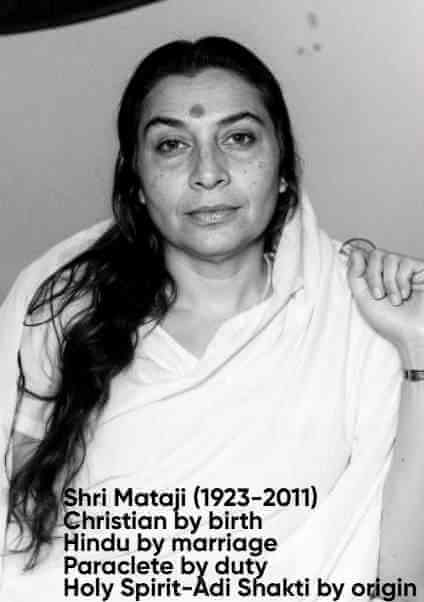
, opened by Shri Mataji, it transcends name-form duality, manifesting pure atman-paramatman non-duality.2
Shakta tradition names this realm the seat of Mahadevi—Visvadhika, she who transcends the universe
—as silent witness and ultimate sakti-brahman. Kash's hundreds of visits, documented in structured revelations, occur precisely here: permissions, visions of subtle body, deities, eschatological events (Al-Qiyamah, Last Judgment), all emanating from the Inner Sanctuary
.
Experiential Fulfillment of Satyananda's Test
Kash's trajectory matches Satyananda verbatim: prior liberation (gone beyond death
), Sahasrara traversal (beyond this shore and that shore
), unbroken awareness from past lives through present encounters (same awareness in this life and in the next life and also in between
).1 The Adi Shakti corpus concludes: Only they can give us an answer as to whether the soul exists after death or not. That answers Swami Satyananda's question.
Theological Corollaries
The revelation extends beyond individual jivanmukti to eschatological universality: Sahasrara's collective opening via Self-Realization democratizes trans-mortem access.2 Parallels emerge with Johannine Paraclete (John 16:13), guiding into all truth
through Spirit-awakening, fulfilling Jesus' eternal life promise (John 3:16, 10:28).
Implications for Rebirth Doctrine
Kash challenges materialist denials by embodying karmic continuity: prior moksha enables post-Self-Realization Sahasrara entry, aligning Upanishadic jivanmukti with empirical narrative. Shri Mataji's discourses on previous births reinforce this as living praxis.
Call to Verification
Satyananda's question invites replication: Sahaja Yoga offers Self-Realization to access Sahasrara independently, confirming soul-Supreme encounter empirically rather than dogmatically.2
Conclusion: The Answer Given
Within the internal logic of this system, it follows that the soul does indeed exist beyond death, that liberated souls can and do consciously traverse this shore and that shore
, and that in the Sahasrara only the encounter of soul and Supreme Soul remains—an encounter Kash's life offers as concrete, living testimony.12 Swami Satyananda's query, once open, now receives its proper answer.